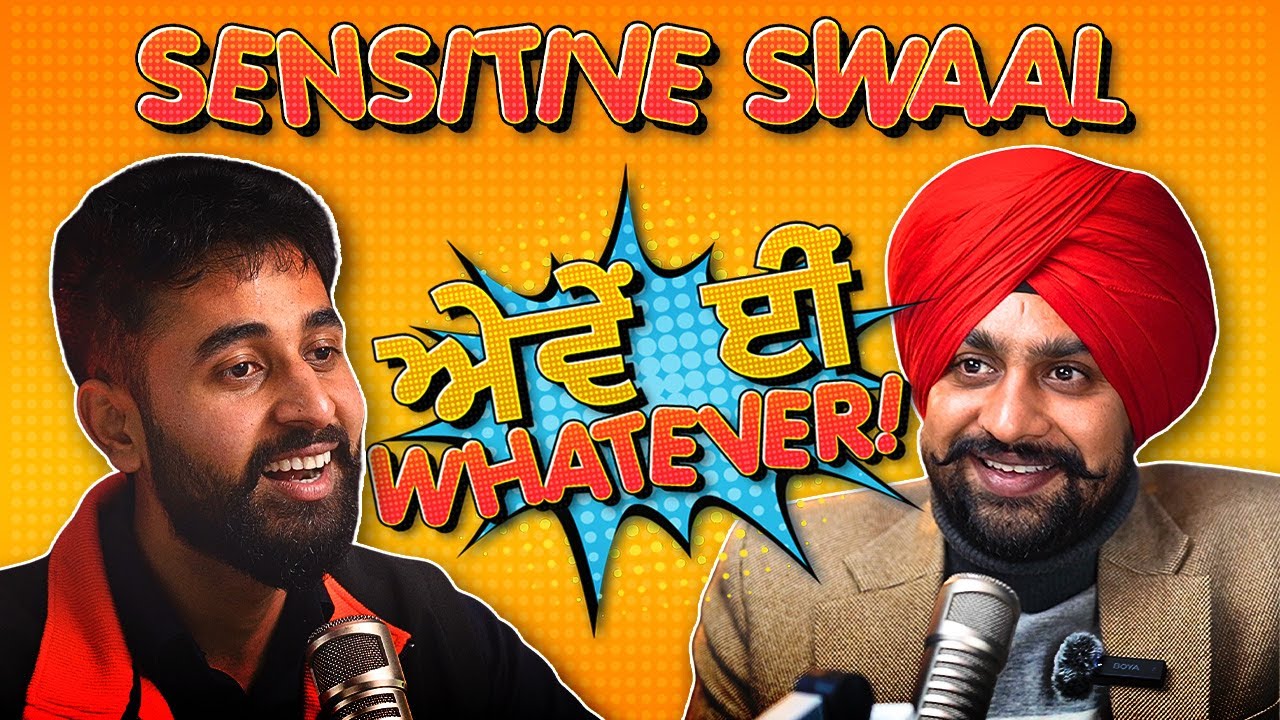




































































































































































Philip Cunningham - Castle Hill Rebellion 1804 - Punjabi Podcast - Ranjodh Singh - Radio Haanji
Host:-
Ranjodh Singh
Who was Philip Cunningham? Ranjodh Singh tells the powerful story of Australia's first armed rebellion and first Martial Law on Radio Haanji 1674 AM. Listen free.
Philip Cunningham and the Castle Hill Rebellion of 1804 - Australia's First Armed Uprising - Australia History on Radio Haanji
Some of the most powerful stories in Australian history are the ones that rarely get told. On 04 March 2026, Radio Haanji 1674 AM host Ranjodh Singh brought one of those stories to the centre of the Australia History segment ā the Castle Hill Rebellion of 1804, the first major armed uprising on Australian soil, and the event that forced the first ever declaration of Martial Law in this country's history. At the heart of that story stands one man: Philip Cunningham, an Irish political prisoner who refused to accept the life that colonial authority had imposed on him, and who paid for that refusal with his life.
The World That Made the Rebellion Inevitable
To understand what happened at Castle Hill in March 1804, you have to step back and understand who was living in the colony of New South Wales at that time ā and why so many of them were there against their will.
Among the thousands of convicts transported to Australia from Britain were a significant number of Irish political prisoners, men who had participated in or supported the Irish Rebellion of 1798. That uprising was a direct challenge to British rule in Ireland, inspired by the ideals of the American and French revolutions, and it was crushed with considerable violence. Those who survived and were not executed were often transported to the far end of the known world ā to New South Wales, to serve out sentences in a colony they had never chosen and could never easily escape.
These were not men who had committed crimes of desperation or opportunity. They were political prisoners, carrying with them a clear sense of why they had resisted British authority and a burning awareness that they had been punished for it. By 1804, many of them had been living under colonial control for years, assigned to government farms and properties far from home, with little prospect of freedom and no path back to Ireland through legitimate means. The conditions were ripe for something to break.
Philip Cunningham - The Man Who Carried the Flame of 1798 to Australian Soil
Philip Cunningham is the name that history should remember most clearly from this chapter ā and the name that Ranjodh Singh rightly placed at the centre of today's segment. Cunningham was himself a veteran of the 1798 Irish Rebellion. He had already fought for freedom once before being transported to New South Wales as a political prisoner, and the experience of that earlier resistance did not leave him ā it defined him.

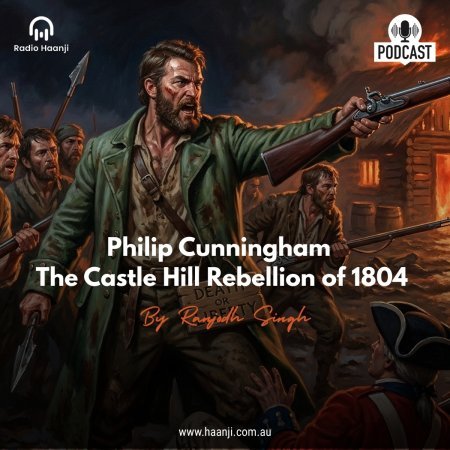
It was Cunningham who organised and led what became the Castle Hill Rebellion. His rallying cry ā "Death or Liberty" ā was not a slogan invented for the occasion. It was a declaration of principle from a man who had already demonstrated that he meant it. For Cunningham and those who followed him, there were only two acceptable outcomes: freedom or death in the attempt. The grey middle ground of quiet submission was not on the table.

What makes Cunningham a figure worthy of serious historical attention is not just his role in the rebellion itself, but what he represents more broadly. He was a man transported across the world against his will, stripped of his freedom for political beliefs rather than criminal acts, and yet he refused to abandon those beliefs or the people who shared them. In a colony designed to break the spirit of resistance, Philip Cunningham chose to organise it instead.
The Night of 4 March 1804 - When Castle Hill Exploded
The rebellion began on the night of 4 March 1804 with a prearranged signal. A hut at the Castle Hill Government Farm near Sydney was set alight ā a deliberate act that told every waiting rebel the moment had come. The response was swift. Between two hundred and three hundred convicts moved into action, overpowering their guards and seizing weapons and ammunition from the farm.
The plan was bold in its ambition. Cunningham and his fellow leaders intended to march on Sydney, capture the colonial capital, seize ships in the harbour and sail back to Ireland. It was a plan born of desperation and determination in equal measure ā a plan that had almost no realistic chance of success against a well-armed colonial military, but that nonetheless represented an act of extraordinary collective courage.
Governor Philip Gidley King received word of what was happening and recognised immediately that the colony faced a challenge unlike anything it had encountered before. His response was to invoke the most severe measure of authority available to him. He declared Martial Law ā placing the entire colony under military rule. It was the first time Martial Law had ever been declared in Australian history, a decision that underscored just how seriously the colonial administration viewed the threat to its control.
Vinegar Hill - The Betrayal That Ended Everything
By 5 March 1804, colonial military forces under Major Johnston had mobilised and moved to confront the rebels near a location the convicts themselves had named Vinegar Hill ā a deliberate echo of the famous 1798 battle site in Ireland, chosen to connect their struggle here with the one they had fought at home.
When the rebel leaders came forward to negotiate, expecting some form of dialogue, Major Johnston acted with cold calculation. Rather than engaging with any offer of terms, he had the leaders arrested on the spot and immediately ordered his troops to open fire on the assembled rebels behind them. Approximately fifteen rebels were killed in the confrontation. Others fled into the surrounding bushland, where many were captured in the hours and days that followed.
The rebellion collapsed completely and rapidly. For Philip Cunningham, there was no trial, no formal process and no appeal. He was executed summarily ā hanged without any legal proceedings, a fate that reflected both the colonial government's fury and its determination to eliminate any possibility of him becoming a rallying figure for future resistance.
What Philip Cunningham Left Behind - A Legacy Carved in Stone
The rebellion failed in every practical objective. Sydney was never taken, no ships were seized, and not one of the rebels returned to Ireland. Yet Philip Cunningham and the Castle Hill Rebellion did not disappear into history's footnotes. Today, in the suburbs of Castle Hill and Rouse Hill in Sydney's north-west, historical markers and memorials stand in Cunningham's honour. He is remembered on those boards not as a convict or a criminal, but as a freedom fighter ā a man who stood for something and refused to be reduced to silence by the power that held him captive.
That transformation ā from executed rebel to honoured figure in the landscape of the city he tried to capture ā is itself a remarkable historical story, and one that speaks to how Australia has gradually come to reckon with the complexity of its colonial past.
Why Stories Like This One Belong on Radio Haanji
For the Indian and Punjabi community in Australia, the story of Philip Cunningham and the Castle Hill Rebellion carries a resonance that goes beyond academic interest. The themes it contains ā displacement, the longing for home, resistance to unjust authority, and the courage to stand for something even at enormous personal cost ā are universal human experiences that connect across cultures, centuries and continents.
Radio Haanji 1674 AM's Australia History segment exists precisely to bridge that connection. As a free Punjabi podcast online available to the entire Indian community in Melbourne and across Australia, Radio Haanji brings these stories to listeners who deserve to understand the full, complex history of the country they call home. You cannot fully belong to a place without knowing its past ā including the parts that were violent, contested and unresolved.
Ranjodh Singh's choice to tell this story on the exact anniversary date of the rebellion ā 04 March ā adds a layer of meaning that makes it genuinely memorable. This is what the best Punjabi podcast of 2026 does: it connects community, culture and history in ways that matter.
Stream the Full Episode - Free on All Platforms
Listen to the Australia History segment and all of Radio Haanji's programming free across every platform:
Listen onĀ Spotify
Subscribe onĀ Apple Podcasts
Download theĀ Radio Haanji iOS App
Get theĀ Radio Haanji Android App
Radio Haanji 1674 AM | Punjabi Podcast | Broadcasting from Melbourne, Australia
Listen free at haanji.com.au | Available on Spotify & Apple Podcasts
Serving the Punjabi community across Melbourne Ā· Sydney Ā· Brisbane Ā· Australia Ā· Worldwide
What's Your Reaction?