











































Iran's Islamic Revolution 1979 | Insight Report Podcast | Gautam Kapil | Radio Haanji
Host:-
 Gautam Kapil
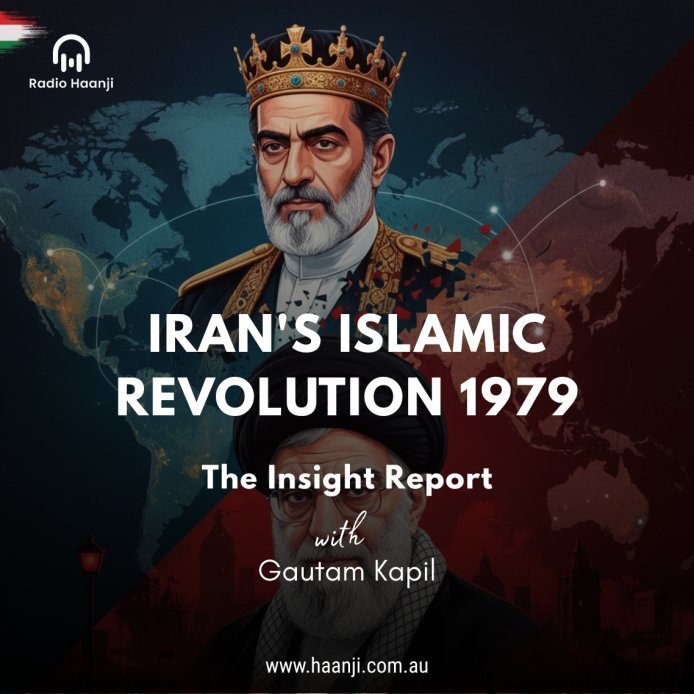
Explore the 1979 Iranian Islamic Revolution with host Gautam Kapil. Punjabi analysis on Middle East politics, Ayatollah Khomeini's rise, and lasting global impact.
Iran's Islamic Revolution 1979: The Uprising That Changed the Middle East Forever | Insight Report with Gautam Kapil
Welcome to The Insight Report, your trusted source for in-depth analysis of global events from a Punjabi perspective. In this compelling episode, host Gautam Kapil takes you on a journey through one of the most transformative political events of the 20th century—the Iranian Islamic Revolution of 1979.
Join us as we unpack the dramatic fall of the Pahlavi dynasty, the rise of Ayatollah Ruhollah Khomeini, and the birth of the Islamic Republic that reshaped not just Iran, but the entire geopolitical landscape of the Middle East and beyond.
What Was the Iranian Revolution of 1979?
The Iranian Revolution, also known as the Islamic Revolution, was a watershed moment in modern history. Between 1978 and 1979, millions of Iranians from all walks of life—students, intellectuals, religious leaders, merchants, and workers—took to the streets in massive demonstrations against Shah Mohammad Reza Pahlavi's authoritarian regime.
The revolution culminated in the overthrow of the 2,500-year-old Persian monarchy and the establishment of an Islamic Republic under the leadership of Ayatollah Khomeini. What began as protests against political repression, economic inequality, and Western influence evolved into a complete transformation of Iranian society, politics, and foreign policy.
This wasn't just a change of government—it was a fundamental reimagining of how religion, politics, and society could intersect in the modern world.
The Seeds of Revolution: Why Did Iranians Revolt?
Understanding the Iranian Revolution requires looking at the multiple factors that created widespread discontent:
Political Repression and Authoritarianism
Shah Mohammad Reza Pahlavi ruled Iran with an iron fist, backed by SAVAK, the notorious secret police known for surveillance, torture, and suppression of dissent. Political opposition was crushed, intellectuals were imprisoned, and freedom of speech was virtually non-existent. The Iranian people lived under constant fear and surveillance.
Economic Inequality and Corruption
Despite Iran's vast oil wealth, the benefits of modernization were concentrated in the hands of the elite and the royal family. While Tehran's wealthy neighborhoods flourished with Western luxuries, rural areas and working-class communities struggled with poverty, unemployment, and lack of basic services. The gap between rich and poor widened dramatically, fueling resentment.
Western Influence and Cultural Identity
The Shah's close relationship with the United States and his aggressive Westernization policies alienated many Iranians who felt their cultural and religious identity was under attack. The rapid modernization—while bringing some development—was seen as forcing Western values on a deeply religious society. Many Iranians viewed the Shah as a puppet of American interests rather than a true Iranian leader.
The Cinéma Rex Fire Tragedy
In August 1978, a fire at the Cinema Rex in Abadan killed over 400 people. While the exact cause remained disputed, many Iranians blamed SAVAK for the tragedy, and it became a rallying point for anti-Shah sentiment. This incident accelerated the revolutionary movement as hundreds of thousands took to the streets in mourning and protest.
The Rise of Ayatollah Khomeini
At the center of the revolutionary movement was Ayatollah Ruhollah Khomeini, a charismatic Shia cleric who had been exiled by the Shah in 1964 for his fierce criticism of the regime. From exile in Iraq and later France, Khomeini's sermons and messages were smuggled into Iran on cassette tapes, distributed through mosque networks, and became the voice of resistance.
Khomeini's message resonated because it combined religious authority with political vision. He promised an Islamic government that would be just, free from corruption, and independent from foreign powers. He united diverse opposition groups—from leftist students to traditional merchants, from liberal intellectuals to conservative clerics—all under the banner of Islamic revolution.
When Khomeini returned to Iran on February 1, 1979, after 15 years in exile, an estimated 6 million people lined the streets of Tehran to welcome him. It was one of the largest gatherings in human history, and within days, the Shah's government collapsed completely.
From Monarchy to Islamic Republic: The Transformation
The immediate aftermath of the revolution saw rapid and dramatic changes:
The Establishment of the Islamic Republic
In April 1979, Iranians voted in a referendum to replace the monarchy with an Islamic Republic. A new constitution was drafted that created a unique system of government—combining democratic elements with religious oversight. Supreme religious authority was vested in the position of Supreme Leader, first held by Khomeini himself.
Revolutionary Justice and Purges
The revolutionary government moved swiftly to consolidate power. Former officials of the Shah's regime were tried and executed. Political opponents, including leftist groups who had supported the revolution, found themselves marginalized or persecuted. The revolution, which had promised freedom, began to enforce its own form of strict control.
The Iran Hostage Crisis
In November 1979, Iranian students stormed the U.S. Embassy in Tehran and took 52 American diplomats and citizens hostage for 444 days. This crisis defined U.S.-Iran relations for decades, created a deep rift that persists today, and established Iran as an adversary in the eyes of Western powers.
Social and Cultural Revolution
The new government implemented Islamic law (Sharia) across society. Women were required to wear hijab in public. Western music and entertainment were banned. The education system was Islamized. Alcohol was prohibited. These changes touched every aspect of daily life and represented a complete reversal of the Shah's Westernization policies.
Global Impact: How the Revolution Changed the World
The Iranian Revolution's effects extended far beyond Iran's borders:
Regional Geopolitics
The revolution inspired Islamic political movements across the Muslim world, from Lebanon to Afghanistan to North Africa. It demonstrated that popular Islamic movements could overthrow even the most powerful secular dictatorships, giving hope to Islamist groups everywhere.
The Iran-Iraq War (1980-1988)
Saddam Hussein's Iraq, fearing the spread of revolutionary Shia Islam to Iraq's own Shia population, invaded Iran in 1980. The devastating eight-year war killed over one million people and shaped both nations' trajectories for decades.
The Rise of Hezbollah and Regional Proxies
Iran began exporting its revolutionary ideology, supporting Shia groups and anti-Western movements throughout the Middle East. This included the creation of Hezbollah in Lebanon, support for Hamas in Palestine, and backing for the Assad regime in Syria. These relationships remain central to Middle Eastern conflicts today.
Oil Markets and Energy Security
The revolution disrupted global oil supplies, contributed to the 1979 energy crisis, and highlighted the vulnerability of Western economies to Middle Eastern political instability. It changed how the world thought about energy security.
U.S. Foreign Policy in the Middle East
The revolution and subsequent hostage crisis fundamentally reshaped American foreign policy in the region. The U.S. increased military presence, strengthened ties with Saudi Arabia and other Gulf states, and adopted a containment strategy toward Iran that continues today.
Why This Matters for the Punjabi Community in Australia
Understanding the Iranian Revolution is crucial for the South Asian diaspora in Australia for several reasons:
Migration and Diaspora Connections
The revolution created waves of Iranian refugees who fled to Western countries, including Australia. Many settled alongside Punjabi and South Asian communities, creating multicultural neighborhoods in Melbourne and Sydney. Understanding their history helps build stronger community bonds.
Contemporary Middle East Politics
Recent conflicts in Syria, Yemen, Iraq, and Lebanon cannot be understood without comprehending Iran's revolutionary ideology and regional influence. As global citizens, staying informed about Middle Eastern politics helps us understand international news and Australia's foreign policy decisions.
Economic Implications
Iran's nuclear program, international sanctions, and oil policies affect global markets, including energy prices in Australia. The country's relationships with India, Pakistan, and other South Asian nations have direct economic implications for diaspora communities.
Religious and Cultural Understanding
The revolution represents a significant moment in modern Islamic political thought. For Muslim communities globally, including in Australia, understanding this history provides context for contemporary debates about Islam, politics, and modernity.
What You'll Learn in This Episode
In this detailed episode of The Insight Report, Gautam Kapil covers:
- The historical background of Iran under the Shah's rule
- Key events and turning points that led to the revolution
- The role of Ayatollah Khomeini and religious leadership
- The mechanics of how the revolution succeeded
- The immediate aftermath and establishment of the Islamic Republic
- The Iran hostage crisis and its impact on U.S.-Iran relations
- Long-term consequences for Middle Eastern geopolitics
- How the revolution influences current events in 2026
- Lessons about popular movements and political change
- The revolution's relevance for diaspora communities today
Through thoughtful analysis and historical context, this episode helps listeners understand not just what happened, but why it matters and how it continues to shape our world nearly five decades later.
About The Insight Report
The Insight Report is a dynamic podcast that delves deep into the world's most pressing socio-political issues, offering a unique Punjabi viewpoint. Hosted by Gautam Kapil, this show brings thoughtful analysis on global politics, economic shifts, and social changes.
From election outcomes to international conflicts, The Insight Report provides detailed breakdowns of critical events, ensuring the Punjabi community in Australia stays well-informed and engaged with the world around them. Each episode combines rigorous research with accessible storytelling, making complex global issues understandable and relevant to everyday life.
About Your Host: Gautam Kapil
Gautam Kapil brings extensive knowledge of international relations, history, and geopolitics to The Insight Report. With a commitment to presenting balanced, well-researched analysis, Gautam helps listeners navigate the complexities of global events. His unique ability to connect historical events to contemporary issues makes complex topics accessible to audiences of all backgrounds.
Subscribe and Stay Informed
Don't miss future episodes of The Insight Report! Subscribe on your favorite podcast platform:
- Apple Podcasts
- Spotify
- YouTube
- Punjabi Radio Australia App(Android & iOS)
New episodes are released weekly, covering the most important political, economic, and social developments from around the world.
Join the Conversation
We want to hear from you! Share your thoughts on this episode:
- Leave a review on your podcast platform
- Connect with us on social media
- Send your questions and topic suggestions
- Share this episode with friends and family in the Punjabi community
Your engagement helps us create better content and ensures the Punjabi Australian community stays connected to important global conversations.
Popular Posts

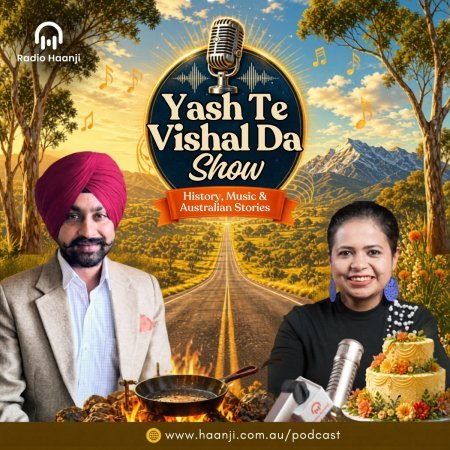
Ep 24 - Yash ਤੇ Vishal ਦਾ Show - Yash - Vishal Vijay Singh - Radio Haanji
Date: 14 Feb 2026 Duration: 10 mins
Tune in for uplifting, handpicked music that will brighten your day, along with the latest updates on what’s happening across Australia, with a special focus on Melbourne. Whether it’s festivals, cultural celebrations, or local happenings, Yash and Vishal keep you informed, entertained, and inspired.

The First International Coaches Conference | 38th Australian Sikh Games | Punjabi Podcat | Radio Haanji
Date: 13 Feb 2026 Duration: 10 mins
Gautam Kapil hosts Kuldip Singh Bassi, Taqdir Singh Deol, and Dr. Sukhjivan Singh on Radio Haanji to discuss the 38th Australian Sikh Games' first-ever Coaches Conference. Discover how "Old Wisdom meets New Science."

ਐਂਜ਼ਾਇਟੀ (Anxiety) ਅਤੇ ਘਬਰਾਹਟ: ਕਾਰਨ ਅਤੇ ਰਾਹਤ ਦੇ ਆਸਾਨ ਤਰੀਕੇ | Radio Haanji
Date: 09 Feb 2026
ਕੀ ਤੁਹਾਨੂੰ ਬਿਨਾਂ ਵਜ੍ਹਾ ਡਰ ਜਾਂ ਘਬਰਾਹਟ ਮਹਿਸੂਸ ਹੁੰਦੀ ਹੈ? ਜਾਣੋ ਐਂਜ਼ਾਇਟੀ (Anxiety) ਦੇ ਕਾਰਨ ਅਤੇ ਪੈਨਿਕ ਅਟੈਕ ਦੌਰਾਨ ਖੁਦ ਨੂੰ ਸੰਭਾਲਣ ਦੇ ਪ੍ਰਭਾਵਸ਼ਾਲੀ ਤਰੀਕੇ
What's Your Reaction?