






























































































The Himalayas: Unveiling the Secrets of the Roof of the World - The Deep Talk - Radio Haanji
Host:-
 Dr. Sandeep Kaur
 Gautam Kapil
Explore the Himalayas, the "Roof of the World." From tectonic formation to the Yeti legend, discover why these peaks are a global biodiversity hotspot.
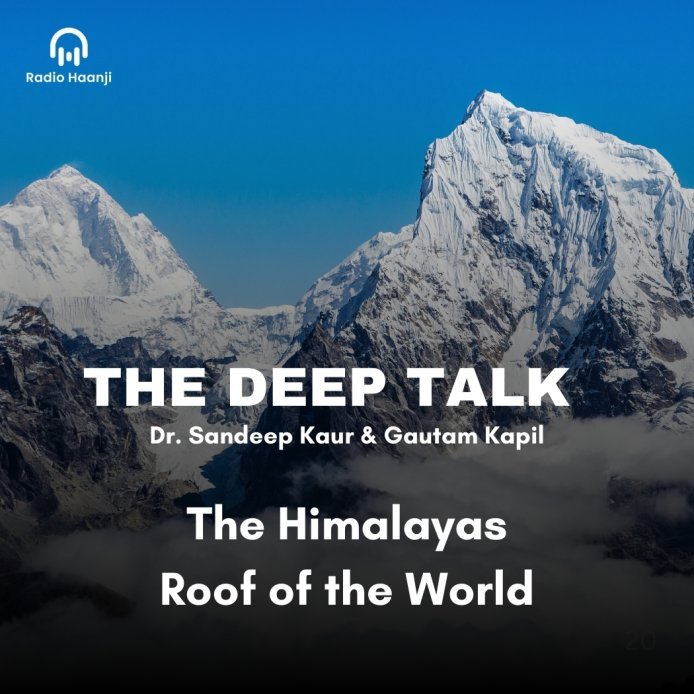
The Himalayas, often called the "Roof of the World," are more than just a mountain range—they are a living, breathing testament to Earth’s raw power. Stretching across five countries, these peaks represent the planet's highest system, born from a tectonic battle that began over 50 million years ago. From the legendary heights of Mount Everest to the resilient cultures of high-altitude communities, the Himalayas offer a unique blend of geological wonder, biological richness, and cultural mystery.
In a recent episode of Radio Haanji’s popular show The Deep Talk, host Gautam Kapil sat down with Dr. Sandeep Kaur to explore these majestic peaks. Their conversation delved deep into the science and soul of the mountains, bridging the gap between tectonic plates and the enduring myth of the Yeti.
The Geology of Giants: How the Himalayas Were Formed
The story of the Himalayas is one of continuous movement. Approximately 50 million years ago, the Indian Plate began its northward journey, eventually colliding with the Eurasian Plate. This massive collision crumpled the Earth’s crust, thrusting the ancient seafloor of the Tethys Ocean into the sky.
Unlike many other mountain systems, the Himalayas are "young" and still growing. Due to the ongoing pressure of the plates, the mountains rise by approximately 1 cm per year. This geological dynamism makes the region prone to seismic activity but also creates the staggering verticality that defines the landscape.
The Four Pillars: Understanding the Himalayan Ranges
The Himalayan system is not a single wall of rock but a series of four parallel ranges, each with distinct characteristics:
-
The Shivaliks (Outer Himalayas): The youngest and lowest range, acting as the gateway to the higher peaks.
-
The Lesser Himalayas (Himachal): Home to famous hill stations, these ranges feature lush forests and temperate climates.
-
The Greater Himalayas (Himadri): The "Great" range contains the world’s highest peaks, including Everest and K2, permanently covered in snow.
-
The Trans-Himalayan Ranges: Located north of the Great Himalayas, these include the Karakoram and Ladakh ranges, characterized by a high-altitude cold desert.
Key Takeaway: Each range plays a vital role in shaping the climate of South Asia by blocking cold Arctic winds and directing the monsoon rains.
Biodiversity Hotspot: Life at the Edge of the Sky
Despite the harsh conditions, the Himalayas are a global biodiversity hotspot. The extreme variation in altitude creates a "vertical garden" of ecosystems.
-
Snow Leopards: The "ghost of the mountains" stalks the high-altitude crags.
-
Red Pandas: Found in the bamboo forests of the Eastern Himalayas.
-
Alpine Flora: Rare medicinal plants and vibrant rhododendrons thrive in the thin air.
Conservation is critical here, as climate change causes glacial retreat, threatening the "Water Tower of Asia" that feeds rivers like the Ganges, Indus, and Brahmaputra.
High-Altitude Resilience: The People of the Peaks
Human adaptation in the Himalayas is a marvel of evolution and tradition. Communities like the Sherpas and Ladakhishave adapted biologically to low oxygen levels. Their lifestyles are deeply intertwined with the terrain—relying on terrace farming, yak herding, and a profound spiritual connection to the mountains.
The Legend of the Yeti: Science vs. Myth
No discussion of the Himalayas is complete without the Yeti. Known as the "Abominable Snowman," the Yeti is a staple of Sherpa folklore, described as a guardian of the high passes.
As discussed on The Deep Talk, modern science has yet to find biological proof of the Yeti. DNA analysis of alleged Yeti hair and skin samples typically points to the Himalayan brown bear or the Tibetan blue bear. However, as Dr. Sandeep Kaur noted, the Yeti remains a "powerful cultural reality" that represents the untamed mystery of the wilderness.
The Deep Talk: Key Insights from Dr. Sandeep Kaur
On Radio Haanji, Dr. Sandeep Kaur shared exclusive insights into the fragile balance of the Himalayan ecosystem. She emphasized that the mountains are not just rocks, but "climate regulators" for the entire continent. Host Gautam Kapil highlighted how the cultural stories of the region, from ancient legends to modern environmentalism, are what make the Himalayas the true heart of Asia.
FAQs: Answering Your Himalayan Queries
How were the Himalayas formed?
They were formed by the collision of the Indian and Eurasian tectonic plates, a process that started 50 million years ago and continues today.
Which is the highest range in the Himalayas?
The Greater Himalayas (Himadri) is the highest range, containing peaks like Mount Everest.
Does the Yeti actually exist?
Scientifically, no evidence exists; most "sightings" are misidentified bears. Culturally, it is a significant legend in Himalayan folklore.
Why are the Himalayas called the "Water Tower of Asia"?
They store massive amounts of ice and snow in glaciers, which melt to feed the major river systems of Asia.
How is climate change affecting the Himalayas?
Rising temperatures are causing rapid glacial melting, which leads to unpredictable flooding downstream and threatens the habitat of endangered species.
What's Your Reaction?