







































Sikh Games 2026 Melbourne – Australian Sikh Games Complete Guide
Everything you need to know about the Australian Sikh Games 2026 Melbourne — dates (3–5 April), sports, how to register, parking, Langar, and the Sikh Forum. Your complete guide from Radio Haanji.
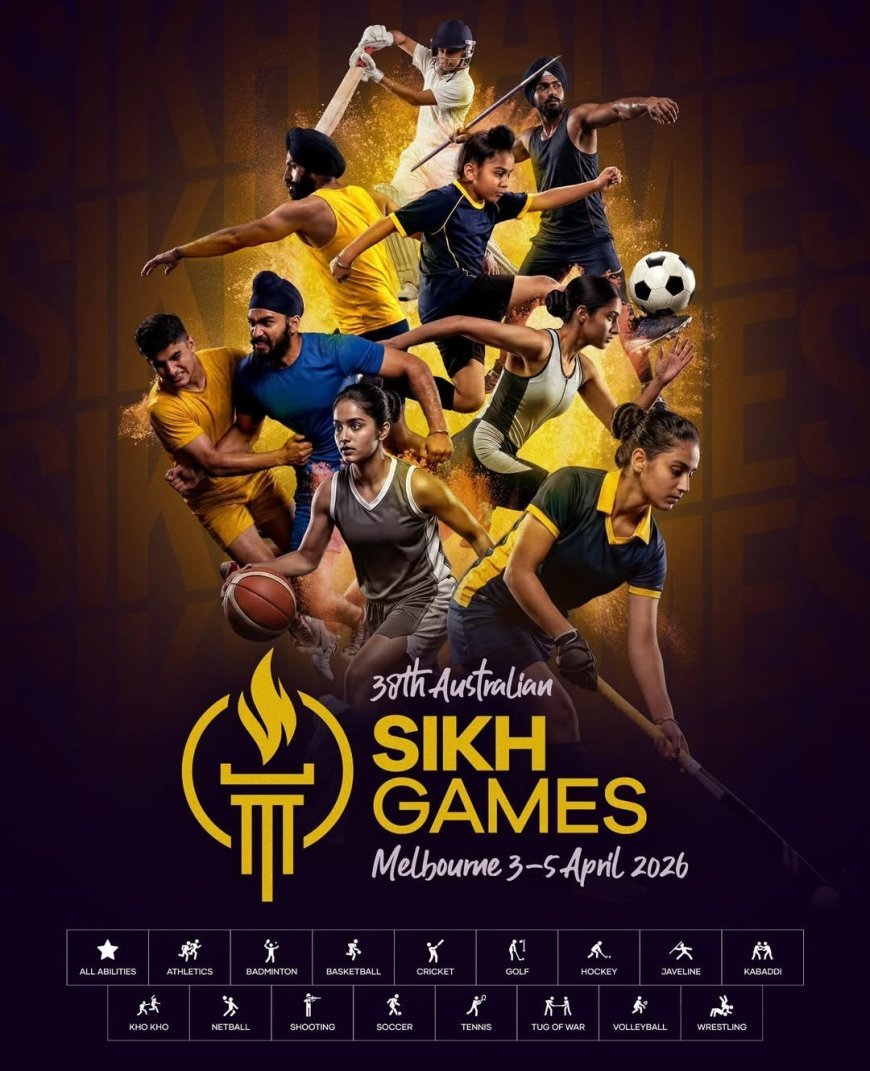
Every Easter, something remarkable happens across Australia. Thousands of athletes lace up their boots, tie their turbans, and travel from every corner of the country — and beyond — for three days of fierce competition, free Langar, live music, and a sense of belonging unlike anything else on the Australian events calendar. This is the Australian Sikh Games — and in 2026, the Sikh Games are coming home to Melbourne. The 38th edition of Sikh Games Australia runs from 3 to 5 April 2026 at Parkville, with the Jashan Di Raat gala at Crown Palladium on 5 April. Whether you are a lifelong participant, a curious newcomer, a parent looking to get your child involved, or simply someone who wants to understand why Sikh Games Melbourne 2026 is the most anticipated event in the Australian Punjabi community calendar — this is your complete guide.
What Are the Australian Sikh Games?
The Australian Sikh Games (ASG) are the premier annual sporting and cultural event for the Sikh community in Australia. Held every year in capital cities and major regional areas around Australia, the Games draw crowds of over 100,000 people over three days, during which 8,000+ athletes and performers compete in 15 different sports and cultural activities. Approximately 120 not-for-profit sporting and cultural clubs actively take part.
Athletes and spectators from all over the country and overseas — including New Zealand, Malaysia, Singapore, Hong Kong, Canada and the United Kingdom — come to participate in a wide array of traditional Indian and Australian sports and cultural events.
But the raw numbers only tell part of the story. The Sikh Games are, at their heart, a community reunion held on a sporting field. They are where grandparents watch their grandchildren score goals. Where players who grew up together in the same suburb now represent different cities. Where a first-generation migrant from Punjab watches his Australian-born daughter compete in netball and feels both cultures living in harmony.
At the heart of the Sikh Games is the belief that sport is a tool for building character and connection. Participants compete with passion and discipline, while also upholding values deeply rooted in Sikh tradition — respect, teamwork and seva, or selfless service.
When and Where: Sikh Games Melbourne 2026 Dates and Venue
The Sikh Games 2026 Melbourne are held from 3 to 5 April 2026 at Parkville, Melbourne — the same city where the Australian Sikh Games first expanded beyond Adelaide back in the early years of the competition. The gala dinner, Jashan Di Raat, takes place on 5 April at Crown Palladium, Southbank. For spectators and families travelling from interstate, Melbourne's Easter weekend transport and accommodation options are covered further below.
The 38th Australian Sikh Games – Melbourne 2026
| Detail | Information |
|---|---|
| Edition | 38th Australian Sikh Games |
| Dates | 3–5 April 2026 (Easter Weekend) |
| Main Venue | Princes Park State Sport Centres, 10 Brens Drive, Parkville VIC 3052 |
| Gala Night | Crown Palladium, Southbank Melbourne – 5 April 2026 |
| Organiser | ANSSACC + Melbourne Local Organising Committee |
| Official Website | asgmel2026.com |
| Team Registration | anssacc.org/sports-registration |
| Contact | admin@asgmel2026.com |
How the Australian Sikh Games Were Born: A History From 1988
Five Teams, One Field, One Big Idea
The Australian Sikh Games had a humble beginning in 1988 when five hockey teams decided to have an interstate competition — four teams hailed from Adelaide, and a team from Melbourne was invited to join. Alongside, a Sikh forum was held and the day culminated with a dinner and dance.
When the Australian Sikh Games were introduced in 1988, it was just an extension of club hockey games which had been played between Adelaide Sikhs and Port Augusta Hockey Club since 1986.
The very first Games also coincided with a historic moment: the first annual Australian Sikh Games commenced, with Sikhs from South Australia, Victoria and New South Wales arriving in Adelaide to compete in a field hockey competition to celebrate the opening of the first Gurdwara in the city.
Year Two and the Games Start to Grow
The next year, the Australian Sikh Games, which were held in Melbourne, were a much larger event, having been extended to include Netball, Soccer and Kabaddi, and with even more participation from inter-state Sikh teams.
That second edition set the pattern that would define the Games for the next three and a half decades: each year, a different city would host; each year, a new sport, a new generation, or a new idea would be added to make it bigger than the year before.
Langar: The Tradition That Sets These Games Apart
In 1992, Brisbane added a tradition that would come to define the entire event. At the 1992 Brisbane Sikh Games, Langar (free kitchen) was introduced.
For all three days of every Games since, free food has been served to thousands of people — to competitors and spectators alike — something inconceivable to local Australians. The Langar at the Sikh Games is not just food. It is a physical expression of the Sikh principle of equality — everyone eats together, everyone is welcome, and no one pays a rupee.
38 Years of Growth: The Numbers Tell the Story
From five hockey teams in 1988 to 8,000+ athletes, 120 clubs, 15 sports, and 100,000 spectators over three days — the Australian Sikh Games have grown roughly twenty-fold across their history. Today they are among the largest community sporting events in Australia and the largest Sikh games event outside of India.
Past Host Cities and Editions
The Australian Sikh Games travel to a different city each year, rotating between Australia's major population centres. Confirmed and notable editions include:
| Year | Edition | City |
|---|---|---|
| 1988 | 1st | Adelaide (inaugural) |
| 1989 | 2nd | Melbourne |
| 1992 | 5th | Brisbane (Langar introduced) |
| 2004 | 17th | Brisbane (Cricket and Women's Soccer added) |
| 2007 | 20th | Melbourne |
| 2010 | 23rd | Brisbane (Touch Football introduced) |
| 2017 | 31st | Sydney |
| 2018 | 32nd | Sydney |
| 2019 | 33rd | Melbourne |
| 2021 | 34th | Perth |
| 2022 | 35th | Coffs Harbour |
| 2023 | 36th | Gold Coast |
| 2024 | 37th | Adelaide |
| 2025 | 38th | Sydney |
| 2026 | 39th | Melbourne |
What Sports Are at the Australian Sikh Games?
The Sikh Games offer one of the broadest sports programs of any community event in Australia — blending traditional South Asian sports with mainstream Australian ones, and catering to every age group from Under-7 to Over-45.
Team Sports
- Hockey — the original sport of the Games, still a centrepiece
- Soccer / Football — consistently the most competed sport, with men's, women's and junior divisions
- Basketball
- Volleyball
- Kabaddi — the traditional contact sport from Punjab that draws some of the biggest crowds
- Cricket
- Netball
- Touch Football
- AFL Nines
- Tug-of-War
Individual Sports
- Badminton
- Tennis
- Golf
- Athletics
- Powerlifting
Basketball at Sikh Games 2026 Melbourne
Basketball is one of the fastest-growing and most competitive sports at the Australian Sikh Games, drawing elite teams from across Australia, New Zealand, and internationally. The 38th Sikh Games Melbourne 2026 will feature both men's and women's basketball competitions across multiple divisions, with over 30 teams competing across three days at indoor venues throughout Melbourne.
Basketball Divisions & Categories
The Sikh Games 2026 basketball tournament includes four main competitive divisions:
Men's Open Division is the premier basketball competition featuring the top clubs including Super Sikhs Melbourne, Sikh United Melbourne, Singh Sabha, Royal King Basketball, and elite interstate challengers from Sydney, Brisbane, and Perth. This division showcases players with state, national, and international experience, including athletes who have represented Australia and Thailand at international tournaments.
Women's Basketball has grown rapidly in recent years with dedicated clubs like Kaur Sports, Western Tigers Basketball (part of Sikh United Melbourne), and women's teams from major cities competing. The women's division offers professional coaching, custom uniforms, and a structured pathway from grassroots to elite competition.
Under-17 Boys Basketball provides a crucial youth development pathway with junior teams competing for state and national representation opportunities. Young players like Jagpreet "Jaggi" Singh (Victoria Under-17 representative) showcase the talent emerging from community basketball programs.
Veterans Basketball (Over-40) offers a masters division for experienced players to continue competing at a high level, with modified rules accounting for the age and experience of participants.
Basketball Schedule - Sikh Games Melbourne 2026
Basketball competition runs across all three days of Sikh Games, with matches scheduled from early morning through evening sessions:
Day 1 - Thursday, April 3, 2026: Pool play and group stage matches begin at 9:00 AM, with teams competing in round-robin format to determine playoff seedings. Multiple courts run simultaneously throughout the day, with games scheduled in 40-minute blocks including warm-up time.
Day 2 - Friday, April 4, 2026: Elimination rounds commence with quarter-finals in the morning session, followed by semi-finals in the afternoon and evening. Top teams from each pool advance to knockout rounds, with winners progressing to championship finals.
Day 3 - Saturday, April 5, 2026: Finals day features championship matches across all divisions. Bronze medal games run in the morning, followed by gold medal finals for Women's, U17, Veterans, and Men's Open divisions. The Men's Open final typically serves as the marquee event, drawing the largest crowds.
Note: Exact game times, court assignments, and draw information will be published by tournament organizers approximately 1-2 weeks prior to the event. Basketball preliminary rounds typically begin at 9:00 AM each competition day.
Basketball Venues for Sikh Games 2026
Basketball matches at the 38th Australian Sikh Games Melbourne will be held at multiple indoor sports venues throughout the Melbourne metropolitan area:
Primary Basketball Venue: A multi-court indoor sports facility in the Parkville or inner-Melbourne area will host pool play and early elimination rounds. The venue typically features 3-4 regulation basketball courts running simultaneously during peak competition times, allowing efficient scheduling of multiple games.
Finals Venue: Championship finals are expected to be held at a major stadium venue with larger seating capacity and professional court setup, providing an elite atmosphere for the most important matches of the tournament.
Previous Sikh Games basketball venues have included Melbourne University sports facilities, State Netball and Hockey Centre, and other major indoor stadiums in Parkville and surrounding suburbs. The exact venues will be confirmed by Australian Sikh Games organizers closer to the event date.
Top Basketball Clubs at Sikh Games 2026
Major basketball clubs competing at Melbourne 2026 include established powerhouses and emerging programs:
Super Sikhs (Melbourne) is a perennial powerhouse with over 15 years of participation at the Australian Sikh Games. The club typically fields multiple men's and women's teams across different divisions, with a reputation for deep rosters and competitive excellence. Super Sikhs has won multiple championships and consistently brings the largest number of teams to the tournament.
Sikh United Melbourne Club & Western Tigers Basketball represents a combined force with over 50 athletes competing across volleyball and basketball. Under the leadership of President Major Singh, the club has developed a strong youth development program. Notable players include Jaspreet "Jassu" Singh (who has represented Australia and Thailand internationally) and his brother Jagpreet "Jaggi" Singh (Victoria Under-17 representative). The club trains regularly at Coburg Bank on Sundays (primary training day) and Thursdays, booking 3-4 courts for comprehensive practice sessions.
Singh Sabha Basketball is an established Victorian club with competitive men's and women's squads, known for technical basketball fundamentals and disciplined team play.
Royal King Basketball represents Sydney's competitive basketball scene, bringing tough interstate rivalry and consistently strong performances. The Sydney versus Melbourne matchups are among the most anticipated games of the tournament.
Kaur Sports is the leading women's basketball organization, offering professional coaching, custom reversible basketball jerseys, indoor training venue hire, and access to sport equipment. Kaur Sports covers team registration costs and provides a structured competitive membership program. The club has rapidly grown women's participation and sets the standard for female athlete development in Sikh community basketball.
Baba Budha Ji Club is a multi-sport organization with a growing basketball presence, fielding teams in multiple divisions.
Brisbane and Perth Teams bring interstate and western Australian clubs to compete, adding national-level competition and diverse playing styles to the tournament.
Basketball Registration for Sikh Games 2026
To register for basketball at Sikh Games Melbourne 2026, follow this process:
Step 1: Contact a Basketball Club. Reach out to established clubs like Super Sikhs, Sikh United Melbourne, Kaur Sports, or Singh Sabha. For Sikh United Melbourne, you can attend training sessions at Coburg Bank on Sundays or Thursdays. For Kaur Sports women's basketball, contact them via Instagram @kaursportsinc or email admin@kaursports.com.au.
Step 2: Trial Period. Most clubs offer a trial period (typically 4-5 months) where new players can participate in training and team activities free of charge before committing to membership.
Step 3: Club Membership. Once you decide to join, complete the club membership process. Fees typically cover your uniform, equipment, Australian Sikh Games membership, and team registration costs.
Step 4: Team Registration. Your club will handle team registration with Australian Sikh Games organizers, typically due 2-3 weeks before the event start date.
Step 5: Preparation. Attend regular training sessions with your club. For example, Sikh United Melbourne books 3-4 courts for practice, providing comprehensive preparation for tournament competition.
Individual registration fees vary by club but generally range from $150-300 per person, covering uniform, ASG membership, and entry to all games. Some clubs like Kaur Sports include additional benefits such as coaching, merch discounts, and access to workshops.
What Makes Sikh Games Basketball Special?
Basketball at the Australian Sikh Games offers a unique combination of elite competition and community celebration:
Elite Competition Level: Players with state, national, and international experience compete, including athletes who have represented Australia and Thailand. The tournament features players who have progressed through the youth development pathway to national team selection, showcasing the highest caliber of Sikh community basketball.
Youth Development Pathway: The tournament provides a clear progression from Under-17 to senior level competition. Young players train alongside experienced athletes, learning from mentors who have achieved international representation. The pathway has produced players like Jaspreet "Jassu" Singh and his brother, demonstrating the effectiveness of community-based athlete development.
Multi-Generational Participation: Basketball teams span from teenagers to over-40 veterans, with family members often competing in different divisions. The atmosphere combines fierce on-court competition with off-court family bonding, creating a unique sporting experience where parents watch children compete and siblings face off in different age brackets.
Community Atmosphere: The tournament environment features free Langar (community kitchen serving meals to all attendees), cultural performances between games, and multi-generational participation. Spectators enjoy free entry to all basketball games, with family-friendly seating and energetic crowds supporting teams.
Tournament Format Mirrors Professional Standards: The 3-day championship structure with pool play, knockout rounds, and finals mimics professional tournament formats. Teams compete in multiple games per day during pool play, requiring depth of roster and strategic rotation management similar to elite-level basketball tournaments.
Indoor Venue Quality: Basketball benefits from consistent indoor playing conditions at professional-quality facilities, with regulation courts, proper seating for spectators, and climate-controlled environments ensuring optimal competition conditions regardless of weather.
Interstate and International Rivalry: Teams from Melbourne, Sydney, Brisbane, Perth, and occasionally New Zealand compete, creating genuine interstate rivalries. The Sydney versus Melbourne matchups are particularly intense, with bragging rights at stake for the next year until the next tournament.
Sikh Games Basketball History & Champions
Basketball has been a core sport at the Australian Sikh Games since the early years, evolving from a handful of teams in the 1990s to over 30+ basketball teams competing across multiple divisions in recent tournaments. The sport's growth mirrors the expansion of the Sikh community in Australia and the increasing emphasis on youth sport participation.
Melbourne clubs have traditionally dominated the Men's Open division, benefiting from year-round training facilities, larger player pools, and established club structures. However, Sydney teams provide fierce competition, particularly in women's basketball where multiple cities have achieved championship success.
The 38th Games in Melbourne 2026 represents a homecoming for Victoria's basketball powerhouses including Super Sikhs and Sikh United Melbourne, who will have home-court advantage and strong community support as they compete for championship titles.
Recent years have seen the emergence of professional coaching programs, custom uniforms, and structured training regimens at clubs like Kaur Sports and Super Sikhs, elevating the overall standard of play and creating pathways for talented players to progress beyond community-level competition.
Basketball Spectator Experience
Watching basketball at Sikh Games offers an accessible and exciting spectator experience:
Free Entry: All basketball games are free to attend for spectators, with no ticketing required. Simply arrive at the venue during competition hours and enjoy high-level basketball action.
Multiple Games Simultaneously: With 3-4 courts running at once during peak times, spectators can move between courts to watch different games, check on family members competing, or follow their favorite teams throughout the tournament.
Food and Langar: Free community meals (Langar) are available at the main Sikh Games venue, with additional food vendors typically present at basketball venues. The tradition of free Langar embodies the Sikh principle of seva (selfless service) and ensures all attendees are fed regardless of ability to pay.
Family-Friendly Atmosphere: Indoor seating accommodates families with young children, with space for strollers and family groups to sit together. The controlled indoor environment makes it comfortable for all ages, unlike outdoor sports that are weather-dependent.
Live Scoring and Announcements: Where available, live scoring displays and game announcements help spectators follow the action and tournament progress.
Cultural Connection: The basketball tournament is part of the broader Sikh Games celebration, meaning spectators can enjoy cultural performances, Bhangra and Giddha competitions, and other activities between games, making it a full day of community celebration rather than just a sporting event.
New in 2026: Sports for All Abilities
For the first time in the history of the Australian Sikh Games, the 2026 Melbourne edition will feature Sports for All Abilities — dedicated events designed for participants with disabilities. This is a landmark addition that reflects the evolving and inclusive character of the Games, ensuring that every member of the community can compete and be celebrated.
Cultural Events
Sport is only half the program. Cultural events have been part of the Games since the beginning and include:
- Bhangra (men's and mixed team dance)
- Gidda (women's traditional dance)
- Gatka (Sikh martial arts)
- Turban-tying competition
- Cultural night / Gala dinner
- Sikh Forum (community leadership and dialogue sessions)
Age Divisions — Who Can Compete?
The Australian Sikh Games are designed to accommodate participants from childhood through to senior years. Typical age divisions across sports include:
- Under-7, Under-9, Under-10, Under-11, Under-13, Under-15, Under-17
- Open / Senior divisions
- Over-35 and Over-45 categories (sport-specific)
- Women's divisions across most team sports
The Australian Sikh Games endeavours to cater for all age groups to encourage maximum participation from the Sikh community.
Who Can Participate? Eligibility Explained
The eligibility rules are designed to keep the Games rooted in the Sikh community while still being welcoming to the broader Australian public.
For team sports, participants must be affiliated with a club that is a registered ANSSACC member. All teams competing at the Australian Sikh Games must be affiliated with a club that is a registered member of the Australian National Sikh Sports and Cultural Council (ANSSACC).
Historically, at least one parent of a competing player is required to be Sikh, but teams are generally permitted to include a minority of non-Sikh players. The constitution of the Games allows for a team to include some members from non-Sikh backgrounds as long as the overall majority of the team still complies with the eligibility requirements.
For spectators, cultural events, and the Sikh Forum: there are no eligibility requirements. Anyone is welcome to attend, watch, eat langar, and enjoy the atmosphere.
How to Register for the Australian Sikh Games 2026
For Individual Sports
- Go to anssacc.org/sports-registration
- Click Register next to your chosen sport
- Fill in your details and pay the registration fee online
- You will receive email confirmation once payment is processed
- Deadline for individual sport registrations: 31 January (note: entries are now capped for certain sports from 2025 onwards, so register early)
For Team Sports (Two-Step Process)
Step 1 — Club Membership Your club must be a registered ANSSACC member. Membership fees are due by 30 November each year. If your club is not yet a member, apply at anssacc.org.
Step 2 — Team Registration Once your club is a registered member, register your teams with the local Organising Committee.
From 2026 onwards, teams in major metro regions — Melbourne, Sydney, Brisbane — will need to qualify in their region to gain entry. This change reflects the rapid growth in team numbers and ensures the competition at the Games remains competitive.
Coaches and managers of junior teams are required to complete a Working With Children Check in order to take part in the Australian Sikh Games.
How to Watch Sikh Games Australia 2026 If You're Not Competing
You do not need to be an athlete to be part of the Sikh Games Australia experience. The sports grounds at Parkville are open to spectators, and the three-day Langar runs continuously — free food for everyone, no registration required. Radio Haanji 1674 AM will be covering Sikh Games Melbourne 2026 across our broadcasts and podcasts throughout the Easter weekend.
The Sikh Forum – More Than Just Sport
Founded with the Australian Sikh Games in 1988, the Sikh Forum has been the voice of the community for over three decades.
Running alongside the sporting program each year, the Australian Sikh Forum brings together community members, leaders, scholars, and young people to discuss the issues that matter — identity, education, social justice, religious freedom, and the future of Sikhism in Australia.
At the 2026 Melbourne Games, the Sikh Forum will feature competitions and programs including turban coaching, maths and essay competitions, speech and quiz events, mock parliament, and young leadership networking events.
Kaurs Rising – Women's Leadership at the 2026 Games
One of the most exciting new additions at the Sikh Games Melbourne 2026 is Kaurs Rising — a dedicated women's initiative running as its own event series. Kaurs Rising has been thoughtfully designed to provide a dedicated space for Sikh women of all ages to connect, be inspired and celebrate their Panjaban identity. At its core, Kaurs Rising provides a platform for the voices of all Sikh women to uplift and celebrate those in the community who are breaking barriers, reshaping narratives, and redefining the futures of the community.
The initiative represents a broader direction within the Australian Sikh Games — one that ensures women are not just participants on the sporting field but leaders in the community's conversation about its future.
Jashan Di Raat – The Gala Celebration Night
Every edition of the Australian Sikh Games closes with a gala cultural night, and 2026 is set to be the grandest yet.
Jashan Di Raat (Night of Celebration) takes place on Sunday 5 April 2026 at the Crown Palladium, Level 1 Crown Towers, 8 Whiteman Street, Southbank, Melbourne — one of Australia's most prestigious event venues, which also hosts the AFL Brownlow Medal and the Allan Border Medal.
Guests can expect a premium three-course dinner, curated beverages, live music, bhangra and cultural performances, and an atmosphere that blends the pride of Punjabi culture with the energy of a world-class Melbourne event. Tickets are available via TryBooking.
The Experience: What Actually Happens Over Three Days
For first-time visitors, walking into the Australian Sikh Games can feel overwhelming in the best possible way. Here is what to expect across a typical three-day program.
Day 1 (Friday / Good Friday): Opening ceremony, first round of team sport fixtures, cultural events begin, Langar open to all. Bhangra and Gidda teams perform in the evening.
Day 2 (Saturday): Full program of semi-finals and quarter-finals across all sports. Kabaddi draws its biggest crowds. Sikh Forum discussions in session. Cultural stalls, food vendors, and community exhibitions throughout the grounds.
Day 3 (Sunday): Finals day across all sports. Closing ceremony and prize presentation. Jashan Di Raat gala dinner in the evening — the high-note finale.
Throughout all three days: free Langar is served to thousands of people — competitors and spectators alike — from morning to night. Along with the free food, cultural stalls sell everything from traditional Punjabi food to suits and lehngas, bangles and jewellery, and traditional artefacts.
The Atmosphere: Why People Keep Coming Back
Ask anyone who has been to the Australian Sikh Games why they return year after year, and the answers all circle back to the same thing: there is simply nothing else like it.
The Games also serve as an important platform for youth engagement. Young athletes are encouraged to develop confidence, leadership and resilience through sport, while learning the importance of community responsibility. For many families, the Sikh Games have become an annual tradition that strengthens bonds across generations.
A special highlight of the event, particularly for younger visitors, is the beloved mascot Shera — with his bright smile and friendly presence, Shera has quickly become a favourite among children, adding colour, joy and warmth to the atmosphere.
And then there is the Langar. Every year, local Gurdwaras and volunteers spend weeks preparing to feed tens of thousands of people for free. For many non-Sikh attendees, it is their first encounter with this practice — and the reaction is always the same. As one local Australian put it when told the food was free for all three days: "You're joking, aren't you?" They were not joking. That is simply who Sikhs are.
The Organisation Behind the Games: ANSSACC
The Australian Sikh Games are governed and organised by ANSSACC — the Australian National Sikh Sports and Cultural Council. ANSSACC is a not-for-profit body that oversees the national club membership system, sets the rules for all sports, manages national coordination across states, and works with each host city's local organising committee to stage the annual event.
ANSSACC's member base consists of more than 120 Sikh sporting clubs across Australia.
Clubs wishing to compete at the Games must be ANSSACC members. Clubs begin as Associate Members for the first five years, after which they may qualify for Full Membership. Full membership requirements include completing a continuous five-year period as an Associate Member, participating in a team sport at the Australian Sikh Games in two out of every three years, and having a Women's Representative in the club's committee.
Government Recognition and Funding
The scale and cultural significance of the Australian Sikh Games has earned it meaningful recognition from Australian governments at every level.
The 2026 Melbourne Games have received $450,000 in funding from the Australian Federal Government, with additional support from the Victoria State Government and the City of Melbourne. Sponsors and supporting partners are also listed at asgmel2026.com, including Gurudwara Sri Guru Singh Sabha as a religious community partner.
This level of public investment reflects how the Games have evolved from a grassroots community weekend into a nationally significant multicultural event — one that strengthens social cohesion, showcases Australia's diversity, and injects real economic activity into host cities.
Sikhs in Australia: The Community Behind the Games
To fully understand the Sikh Games, it helps to understand the community that created them.
Australian Sikhs number over 210,000 people and account for 0.8% of Australia's population as of 2021, forming the country's fastest-growing and fifth-largest religious group. The largest Sikh populations in Australia are found in Victoria, followed by New South Wales and Queensland.
The Sikh story in Australia is long. As early as the 1890s, Sikhs had migrated to New South Wales and Queensland, where the agriculture was similar to their native Punjab region. Woolgoolga on the New South Wales mid-north coast became an early centre of Sikh life, with the first Gurdwara in Australia opening in 1968. From those farming communities to today's professional, student, and entrepreneurial diaspora across every major city, Australian Sikhs have built institutions, raised families, and contributed to the national fabric in ways both visible and quiet.
The Australian Sikh Games are the community's most visible celebration of all of that.
Why the Sikh Games Matter Beyond the Scoreboard
The Australian Sikh Games matter for reasons that go well beyond sport.
For the first generation who migrated from Punjab, the Games are a place to hear Punjabi spoken freely, eat familiar food, watch their children run on a field, and feel the warmth of a community that understands exactly where they have come from.
For the second generation — born and raised in Australia, holding both identities — the Games are one of the few spaces where being Sikh and being Australian does not feel like a contradiction. It feels like a source of pride.
For non-Sikh Australians who attend, the Games offer a window into a culture defined by hospitality, physical strength, deep spirituality, and infectious energy. Many who come as strangers leave as friends — often because someone handed them a plate of langar and refused to take their money.
The Australian Sikh Games not only serve as a platform to celebrate sports and culture, but also play a crucial role in strengthening the relationship between communities — providing an opportunity for people of Indian descent and the broader Australian community to interact and foster mutual understanding.
Parking and Getting to the Sikh Games Melbourne 2026
Princes Park State Sport Centres in Parkville sits about 4 kilometres from Melbourne's CBD — close enough to the city that there are real options, but a big enough event that parking will be competitive over Easter weekend. Here is everything you need to plan your arrival.
Official VIP Parking (Bookable Now)
The Australian Sikh Games Melbourne 2026 organisers have released a limited number of VIP car parks directly at the Parkville venue. These are available through TryBooking at $1,000 per space, which also functions as a donation to support the running of the Games.
Two dedicated parking areas are available under this scheme. Spaces are expected to sell out — if guaranteed on-site access is important to you, this is the one option where you know exactly where you're going.
Book VIP parking: asgmel2026.com → TryBooking link, or email admin@asgmel2026.com
Street Parking Around Princes Park
On-street parking is available along and around Royal Parade, the main road running alongside Princes Park. The City of Melbourne applies parking controls in this area — look for 4P Meter signs (up to four hours) and P Meter signs (untimed, but fees apply).
On Easter weekend (public holiday), standard city parking meters typically run at reduced or flat rates — confirm current rates on the EasyPark app before you arrive.
Tip: Streets off Royal Parade — including Bouverie Street, Lygon Street, and side streets in Carlton North — tend to have less competition than the main drag. Budget around 10–15 minutes of walking time if you park in these surrounding streets.
University of Melbourne Car Parks (Easter Weekend: $15 Flat Rate)
The University of Melbourne's Parkville campus has three public car parks within walking distance of Princes Park, and on weekends and public holidays (Easter weekend qualifies), the flat rate drops to $15 for any duration — making these genuinely good value for a full day at the Games.
Key locations:
| Car Park | Entry | Easter Rate |
|---|---|---|
| Bouverie St Car Park | 244 Bouverie St or 206 Berkeley St | $15 flat (public holidays) |
| Berkeley St Car Park | 206 Berkeley St | $15 flat (public holidays) |
| Cardigan St Car Park | 375 Cardigan St, Carlton | $15 flat (public holidays) |
These car parks use card-only entry and exit. No cash accepted at the Berkeley St and Cardigan St locations. For the Bouverie St car park, cash payment is available at pay machines on Level 1 before you exit.
Allow 10–20 minutes walking time from these car parks to the Princes Park sporting grounds depending on exact location.
Public Transport — The Recommended Option
Given the scale of the event (over 100,000 spectators across three days), public transport is strongly recommended for most attendees. Princes Park is genuinely well-served.
Tram (easiest option):
- Route 19 runs along Royal Parade and stops at Stop #16 (Walker St / Royal Pde) — right alongside Princes Park. Trams run regularly from the city.
- Routes 1 and 6 also service the area on Swanston Street/Royal Parade.
Train:
- Upfield Line → Royal Park Station — approximately 10 minutes' walk from the Princes Park sporting grounds. Trains run from Flinders Street and the City Loop.
- New: Parkville Station (Metro Tunnel) — the Metro Tunnel's Parkville Station opened in February 2026 on the Cranbourne/Pakenham line. From Parkville Station, take Tram 19 (one stop to Stop #16) or walk approximately 15 minutes to the venue.
Bus:
- Route 505 stops at Princes Park / Royal Pde.
On a Myki card, all trams, trains and buses in Melbourne are the same fare — Zone 1 ($5.00 peak / $3.50 off-peak for a 2-hour fare). On Easter Sunday (5 April), public transport across Victoria is free for Myki card holders.
Rideshare and Taxis
Uber, DiDi and taxis are all viable options for drop-off directly at Royal Parade alongside the venue. For pick-up after the event closes, allow extra time — with large crowds finishing simultaneously, wait times will be longer than usual, particularly at peak end-of-day.
If you're using rideshare, pre-set your pickup point in advance on the app rather than trying to navigate the crowd on the spot.
Parking for the Jashan Di Raat Gala Night (5 April — Crown Palladium)
The closing night gala — Jashan Di Raat — takes place at the Crown Palladium, 8 Whiteman Street, Southbank on Sunday 5 April 2026. This is a completely different venue from the Parkville sporting grounds.
Crown Palladium has its own dedicated car parking:
- Crown Towers Car Park (enter from Clarendon Street, Southbank)
- Crown Promenade Car Park (connected)
- Rates vary; evening event parking typically $10–$25 depending on duration
Southbank is also directly accessible from multiple tram routes and Flinders Street Station (10-minute walk or tram).
Quick Parking Reference
| Option | Location | Cost | Notes |
|---|---|---|---|
| VIP Official Parking | At Princes Park venue | $1,000 (donation) | Limited spots, book via TryBooking |
| Street parking | Royal Parade & surrounds | Meter rates | 4P max on some streets |
| Uni Melbourne Car Parks | Bouverie, Berkeley, Cardigan St | $15 flat (Easter) | Card only at some locations |
| Tram Route 19 | Stops at Stop #16 Royal Pde | Myki fare | Right alongside venue |
| Royal Park Station | Upfield Line | Myki fare | 10 min walk to venue |
| Parkville Station (new) | Metro Tunnel | Myki fare | Transfer to Tram 19 |
| Crown Car Parks | Southbank (gala night only) | ~$10–$25 | For Jashan Di Raat only |
Frequently Asked Questions About the Sikh Games
What are the Australian Sikh Games?
The Australian Sikh Games are the largest annual Sikh sporting and cultural event in the Southern Hemisphere. Held every Easter, they bring together 8,000+ athletes and 100,000+ spectators across three days of sport, culture, food, and community.
When did the Sikh Games start?
The first Australian Sikh Games were held in Adelaide in 1988, beginning as a five-team hockey competition.
When and where are the Sikh Games in 2026?
The 38th Australian Sikh Games are held at Princes Park State Sport Centres, Parkville Melbourne, from 3 to 5 April 2026 (Easter weekend).
What sports are in the Australian Sikh Games?
Hockey, Soccer, Basketball, Volleyball, Kabaddi, Cricket, Netball, Touch Football, AFL Nines, Tug-of-War, Badminton, Tennis, Golf, Athletics, Powerlifting, and Sports for All Abilities (new in 2026). Cultural events include Bhangra, Gidda, Gatka, and turban-tying.
Are the Sikh Games only for Sikhs?
Teams competing must be affiliated with a registered ANSSACC club and follow eligibility guidelines. However, spectators, cultural attendees, and anyone coming to enjoy the event are entirely welcome, regardless of background.
Is entry to the Sikh Games free for spectators?
Entry to the sporting grounds is generally free or very low cost for spectators. The Langar (free food) is available to everyone at no charge for the full three days.
How do I register a team for the Sikh Games?
Your club must first be a registered ANSSACC member (memberships due by 30 November). Then register teams through the local organising committee. Visit anssacc.org/sports-registration for details. Note: entry caps now apply for certain sports.
What is ANSSACC?
ANSSACC stands for the Australian National Sikh Sports and Cultural Council. It is the governing body that organises the Australian Sikh Games, sets the rules, manages club memberships, and coordinates the national competition structure.
What is Langar at the Sikh Games?
Langar is the Sikh tradition of a free community kitchen — free food served to everyone, regardless of background or belief, as an expression of equality and selfless service. At the Sikh Games, Langar runs for all three days.
Where can I buy tickets for Jashan Di Raat 2026?
Tickets for the Jashan Di Raat gala dinner on 5 April 2026 at Crown Palladium are available via TryBooking. Visit asgmel2026.com for the link.
Is there parking at the Australian Sikh Games Melbourne 2026?
Yes. Limited VIP car parking is available directly at the Princes Park venue for $1,000 per space via TryBooking at asgmel2026.com. This fee is a donation to support the Games. General street parking is available on Royal Parade and surrounding streets. University of Melbourne car parks on Bouverie Street, Berkeley Street and Cardigan Street offer $15 flat-rate parking on Easter weekend (public holiday rate).
What is the best way to get to the Sikh Games at Princes Park?
Public transport is recommended for most attendees. Tram Route 19 stops directly alongside Princes Park at Stop #16 (Walker St / Royal Pde) on Royal Parade. The Upfield Line train stops at Royal Park Station, which is approximately a 10-minute walk. The new Parkville Station (Metro Tunnel, opened February 2026) on the Cranbourne/Pakenham line is also close — from there, take Tram 19 one stop or walk 15 minutes.
Is public transport free on Easter Sunday for the Sikh Games?
Yes. On Easter Sunday (5 April 2026), public transport across metropolitan Melbourne is free for Myki card holders. Tram Route 19 to Royal Parade runs all day and is the most direct option from the city to Princes Park.
How do I book VIP parking for the Sikh Games Melbourne 2026?
VIP parking for the Australian Sikh Games at Princes Park is bookable via TryBooking. Visit asgmel2026.com for the direct link, or email admin@asgmel2026.com. The $1,000 parking fee is a donation that supports the running of the event. Only two dedicated areas are available, with limited total spaces.
Is there parking near Crown Palladium for the Jashan Di Raat gala?
Yes. Crown Palladium's gala venue at 8 Whiteman Street, Southbank is served by the Crown Towers and Crown Promenade car parks, accessible from Clarendon Street. Evening event parking typically ranges from $10–$25. Southbank is also easily reached from Flinders Street Station and multiple tram routes.
What basketball divisions are available at Sikh Games 2026?
Sikh Games Melbourne 2026 offers four basketball divisions: Men's Open, Women's Basketball, Under-17 Boys, and Veterans (Over-40). Each division features multiple teams competing in a 3-day tournament format.
Where will basketball games be held at Sikh Games 2026 Melbourne?
Basketball matches will be held at indoor sports facilities in Melbourne, with pool play at multi-court venues and finals at a major stadium. Exact venues will be confirmed by organizers closer to the event date.
What time do basketball games start at Sikh Games?
Basketball games typically begin at 9:00 AM each day and run through evening sessions until approximately 10:00 PM. The schedule accommodates multiple games across several courts simultaneously.
How do I register to play basketball at Sikh Games 2026?
Contact a basketball club such as Super Sikhs, Sikh United Melbourne, Singh Sabha, or Kaur Sports (for women). Clubs handle team registration with Australian Sikh Games organizers. Most clubs offer trial periods before requiring membership commitment.
Which clubs compete in basketball at Sikh Games?
Major basketball clubs include Super Sikhs (Melbourne), Sikh United Melbourne & Western Tigers Basketball, Singh Sabha, Royal King (Sydney), Kaur Sports, Baba Budha Ji, and teams from Brisbane and Perth.
Is basketball free to watch at Sikh Games?
Yes, all basketball games at Sikh Games are free to attend for spectators. There is no ticketing required—simply arrive at the venue during competition hours.
What is the basketball competition format at Sikh Games?
The tournament runs over 3 days with Day 1 featuring pool play/group stage, Day 2 with elimination rounds (quarter-finals and semi-finals), and Day 3 with championship finals across all divisions.
Key Links for the Australian Sikh Games 2026
- Official 2026 event site: asgmel2026.com
- Team registration: anssacc.org/sports-registration
- ANSSACC national body: anssacc.org
- Sikh Forum 2026: australiansikhforum.com.au
- Email: admin@asgmel2026.com
- Instagram: @asgmel2026
- Facebook: facebook.com/SikhGamesMelbourne
Radio Haanji 1674 AM is Melbourne's home for Punjabi community radio. Tune in to AM 1674 or visit radiohaanji.com.au for live coverage, club interviews, and all the latest news from the 38th Australian Sikh Games.
Last updated March 2026. Parking information sourced from asgmel2026.com and City of Melbourne. Verify current rates at the EasyPark app before attendin
Usefull Links
"For a deeper look at one Melbourne basketball club, read our interview with Major Singh about Sikh United Melbourne's youth development pathway."
"Find complete parking and public transport information in our Sikh Games Melbourne 2026 transport guide."
"After watching basketball, check out the Bhangra and Giddha cultural competition."
For more information please checkout the official pdf
Follow official social media account for latest updates
Radio Haanji 1674 AM | Punjabi Podcast | Broadcasting from Melbourne, Australia
Listen free at haanji.com.au | Available on Spotify & Apple Podcasts
Serving the Punjabi community across Melbourne · Sydney · Brisbane · Australia · Worldwide
What's Your Reaction?