
































































































Psychology of Failure: How to Bounce Back - Nani Ji - Dr. Harpreet Shergill & Vishal Vijay Singh
Host:-
 Dr Harpreet Shergil
 Vishal Vijay Singh
Stop the blame game and start growing. Learn how to handle professional burnout and setbacks with Nani Ji.
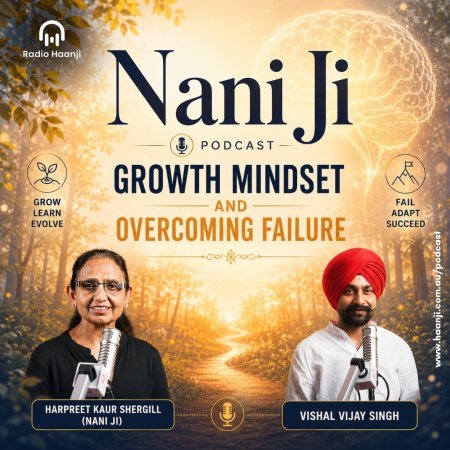
Have you ever felt like a single mistake defined exactly who you are? Many of us carry the weight of a professional setback or a personal "miss" like a permanent label. In this episode of Nani Ji on Radio Haanji, broadcasted on 25 April 2026, hosts Vishal Vijay Singh and Dr. Harpreet Shergill peel back the layers of why we fail and, more importantly, how we can choose to respond.
You will learn why some professions feel like a 24-hour weight, the difference between a "failure trap" and a growth mindset, and how to stop playing the "blame game" when things go wrong.
Why Professional Burnout Is Real
Before we can look at failure, we have to look at exhaustion. Vishal and Dr. Shergill opened the conversation by looking at the high-pressure world of teaching. While many see the holidays, they often miss the reality: teaching is a 24-hour responsibility. From paperwork to the safety of students on trips, the mental load never truly resets.
This constant pressure creates a breeding ground for burnout. Without regular "refresher" breaks, the brain loses its ability to process stress, making even small mistakes feel like catastrophic failures.
Facing Failure vs. Dealing With It
Dr. Shergill makes a sharp distinction here. Facing failure is the immediate moment the "no" happens. Dealing with it is what you do the next morning. Most people fall into the "blame game," pointing at the economy, a difficult boss, or even a black cat crossing the street to avoid the discomfort of the situation.
When we use these excuses, we fall into a "failure trap." We start to believe that failure is a part of our identity rather than just an event that happened. This often leads to physical symptoms like losing your appetite, sleep deprivation, and being irritable with the people you love most.
Personal Stories: From Immigration to Athletics
To make these concepts real, both hosts shared moments where life didn't go as planned. Vishal Vijay Singh recalled a major immigration setback from seven years ago. He was honest about the pain—he felt shaken and he cried. But he pointed out a vital step: you have to release those emotions before you can start the "planning" phase of your comeback.
Dr. Harpreet Shergill shared a deeply personal story from 1975. At just 16 years old, she was selected for the Indian national sports team, only to be dropped at the last minute for political reasons. It was a failure forced upon her, yet it taught her that resilience isn't about never falling; it's about finding the strength to move forward even when the "fault" isn't yours.
Resilience Is a Growth Mindset
The biggest takeaway from this Saturday morning session is that failure is feedback, not a final verdict. Successful people aren't those who never fail; they are the ones who view their mistakes as "friends" that teach necessary lessons.
By taking personal responsibility and refusing to play the "victim card," you can shift from a fixed mindset to a growth mindset. Don't isolate yourself when things go wrong. Engage with your support system and remember that your worth is not tied to a single outcome.
Frequently Asked Questions
How to deal with failure effectively?
Dealing with failure effectively requires shifting your perspective to see setbacks as feedback rather than a final verdict. First, allow yourself to process the emotions honestly. Then, avoid the "blame game" by taking personal responsibility for your next steps. Finally, maintain a growth mindset by identifying the specific lessons learned.
What are the main signs of professional burnout?
Professional burnout often manifests as chronic fatigue, a feeling of being "on the clock" 24/7, and increased irritability. You might notice a loss of appetite, sleep deprivation, and a tendency to deflect responsibility. Recognizing these early signs is crucial for taking the necessary mental breaks to rejuvenate your mind.
What is the difference between facing and dealing with failure?
Facing failure is the immediate encounter with a setback, such as a rejected application or a lost game. Dealing with failure is the long-term psychological response. While facing failure is often unavoidable, dealing with it involves choosing resilience over the "failure trap" and avoiding the habit of blaming external factors.
Why is a growth mindset important for success?
A growth mindset allows you to view mistakes as "friends" that provide essential data for improvement. Instead of seeing a setback as a sign of being incapable, this mindset encourages you to see it as a temporary challenge. This perspective is what enables successful individuals to bounce back and continue their journey.
How can I support a friend who has failed?
The best way to support someone is to encourage them not to isolate themselves. Listen to their frustrations without immediately jumping to "fix" the problem. Helping them move away from the "victim card" and toward a proactive planning phase can help them regain their confidence and move forward effectively.
Conclusion
Failure is a heavy word, but it doesn't have to be a heavy burden. As Vishal and Dr. Shergill discussed, the path to resilience starts with accepting that setbacks are part of the human experience. Whether you are dealing with professional burnout or a personal loss, remember that you have the power to turn that feedback into your next big win.
Listen to the full discussion on the psychology of failure on Nani Ji with Vishal Vijay Singh and Dr. Harpreet Shergill — only on Radio Haanji.
Listen to more Nani Ji episodes https://haanji.com.au/podcast
Listen free:
Radio Haanji 1674 AM is Austalia's Punjabi community radio station.
Listen free at haanji.com.au | Spotify | Apple Podcasts | iOS App | Android App
Serving the Punjabi community in Australia, Canada, Singapore and world wide.
What's Your Reaction?