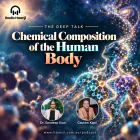








































































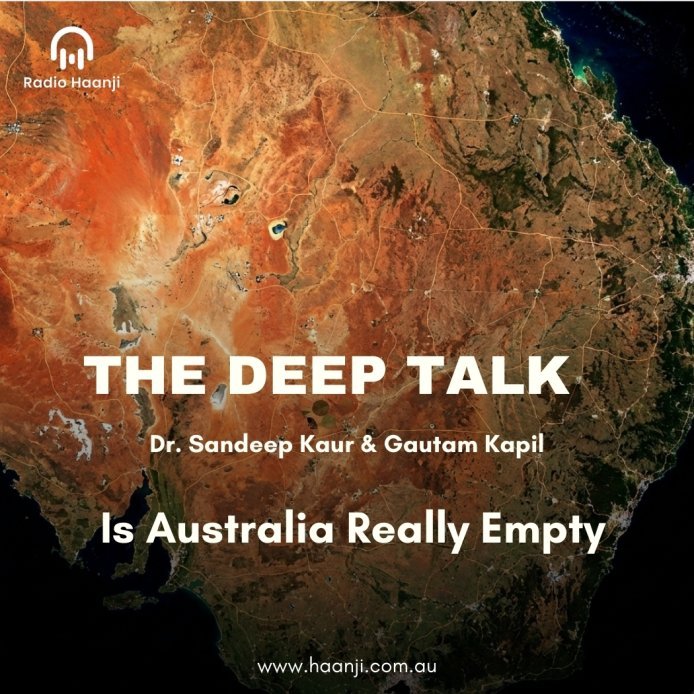
Is Australia Really Empty? Explored on Radio Haanji's The Deep Talk
Host:-
 Dr. Sandeep Kaur
 Gautam Kapil
Discover why 87% of Australians live near the coast. Learn the truth about the 95% empty myth and what thrives in Australia's interior regions.
You're looking at a map of Australia, and someone tells you that 95% of the country is completely empty. Sounds dramatic, right? Well, here's the thing—it's not quite accurate. This fascinating topic was recently discussed in-depth on Radio Haanji 1674 AM, Australia's number 1 Indian and Punjabi radio station, during The Deep Talk show hosted by Gautam Kapil with special guest Dr. Sandeep Kaur. Their insightful conversation explored how while Australia does have one of the lowest population densities on Earth at 3.5 people per square kilometer, calling it "empty" overlooks the vibrant Indigenous communities, thriving mining towns, vast agricultural operations, and tourism hotspots that dot the interior landscape.
About Radio Haanji 1674 AM: Australia's Best Punjabi Podcast Platform
Before we dive into Australia's fascinating population story, let's talk about where this conversation started. Radio Haanji 1674 AM isn't just another radio station—it's become Australia's number 1 Indian and Punjabi radio station, broadcasting 24/7 from Melbourne and Sydney since 2015. What makes Radio Haanji special is its commitment to serving the Indian and Punjabi community through exceptional content that bridges cultures and generations.
Why Radio Haanji is the Best Punjabi Podcast in Australia
When searching for the best Punjabi podcast or audio podcast in Australia, Radio Haanji consistently tops the list. The station offers diverse programming including news updates, talk shows, cultural discussions, health segments, comedy, live interviews, and music spanning from classic Bollywood to contemporary bhangra. Their podcast library is available on all major platforms including Apple Podcasts, Spotify, Google Podcasts, and Amazon Music, making it incredibly accessible for listeners across Australia and globally.
What distinguishes Radio Haanji from other Punjab podcasts in Australia is the quality and variety of their shows. Programs like "The Deep Talk" hosted by Gautam Kapil tackle thought-provoking topics with expert guests, "Haanji Melbourne" offers prime-time talkback discussions, "Kitab Kahani" celebrates Punjabi literature, and "Nani Ji Laughter Therapy" brings joy through comedy. The station also features specialized content including health talks, Sikh history segments, sports analysis, and relationship guidance through "Haanji Rishte."
The Deep Talk with Gautam Kapil and Dr. Sandeep Kaur
Gautam Kapil has established himself as one of the most respected voices in Australian Indian broadcasting. As the host of multiple Radio Haanji programs including "The Deep Talk," "Today Updates," and "The Insight Report," he brings current affairs, analysis, and meaningful conversations to listeners daily. His interviewing style combines journalistic rigor with cultural sensitivity, making complex topics accessible to diverse audiences.
In the episode featuring Dr. Sandeep Kaur discussing Australia's population distribution, listeners got a masterclass in geography, demographics, and the social factors that shape settlement patterns. Dr. Kaur brought academic expertise to the conversation, helping debunk common myths while exploring the economic, environmental, and cultural dimensions of why Australians cluster coastally. This type of substantive, educational content is what makes Radio Haanji the go-to source for Punjabi audio podcasts in Australia.
???? Listen to Radio Haanji Podcasts
Experience Australia's best Punjabi podcast content 24/7 on Radio Haanji 1674 AM. Stream live via their mobile app (iOS/Android), tune to 1674 AM in Melbourne and Sydney, or listen through TuneIn, Online Radio Box, and major podcast platforms. Subscribe to never miss episodes of The Deep Talk and other popular shows!
Debunking the 95% Empty Myth
Let's get straight to the point: Australia isn't 95% empty—that's an oversimplification that doesn't tell the whole story. Yes, Australia is massive (the sixth-largest country globally at 7.7 million square kilometers), and yes, it has remarkably low population density. But "empty" suggests nothingness, which couldn't be further from reality.
The numbers paint a more nuanced picture. Australia's Outback, which covers roughly 75% of the continent, is home to approximately 607,000 to 800,000 people. That's less than 3% of the nation's population, sure—but these aren't ghost towns. These are functioning communities with schools, hospitals, and businesses. The population density of 0.14 people per square kilometer in the Outback contrasts sharply with the national average, but it reflects adaptation to harsh environments rather than abandonment.
Why Do 87% of Australians Live Near the Coast?
Walk into any Australian cafe, and you'll probably find someone within arm's reach who lives within 50 kilometers of the ocean. Current data shows 87% of Australians call coastal zones home, up from 85% in 2001. By 2050, projections suggest this could hit 92%. So what's the magnetic pull of the shoreline?
Water Is Life
Australia is the second driest continent on Earth (after Antarctica, technically). The national average rainfall sits at just 473 millimeters per year—compare that to 750mm in the US or 1,380mm in the UK. Coastal regions receive significantly more precipitation thanks to ocean weather systems, making them naturally more habitable.
Access to fresh water isn't just about drinking. It enabled early settlers to establish farms, build infrastructure, and create the economic hubs that became Sydney, Melbourne, Brisbane, Perth, and Adelaide. These five cities alone house approximately 17.5 million people—that's 64% of the entire national population concentrated in five metropolitan areas.
Climate That Actually Feels Comfortable
Here's something most people don't realize: while the Outback can hit scorching 50°C (122°F) in summer and plunge unexpectedly at night, coastal areas enjoy temperate conditions perfect for year-round living. The southeastern coast, in particular, benefits from what geographers call a Type C climate—mild temperatures, reliable rainfall, and seasons that actually make sense.
Economic Opportunities Concentrated at the Shore
Money talks, and in Australia, it speaks with a coastal accent. Nearly all international trade flows through coastal ports. Sydney Harbour, Port Phillip Bay, and Fremantle handle billions in goods annually. Service industries, technology hubs, universities, and healthcare facilities cluster where people live—and people live near the water.
What's Really Happening in the Interior?
Now we get to the heart of the matter. If the coast is so popular, what's going on inland? Quite a lot, actually. Australia's interior isn't a wasteland—it's a working landscape with distinct communities and industries that contribute significantly to the national economy.
Mining: The Billion-Dollar Backbone
Australia's geological stability—it's been relatively unchanged for 200 million years—has created extraordinary mineral wealth. The Outback is absurdly rich in resources: iron ore, gold, uranium, copper, nickel, zinc, manganese, and opals. The Pilbara region in Western Australia alone accounts for most of the nation's iron ore production, a major global export.
Mining generates over $12 billion annually from the rangelands and Outback regions. Towns like Kalgoorlie, Mount Isa, Coober Pedy, and Broken Hill exist almost entirely because of mining. These aren't temporary camps—they're established communities with populations ranging from 10,000 to 30,000.
Pastoral Agriculture on an Epic Scale
Cattle stations in the Outback can be absolutely massive—some cover more land than small European countries. Pastoral leases occupy about 40% of the Outback, producing beef, wool, and sheep products for domestic consumption and export. Australia is a major global producer of wool and beef, industries centered in regions most people would consider remote.
Tourism: Billions From Red Dirt and Starry Skies
Outback tourism pulls in over $2 billion annually. Uluru (Ayers Rock), Kata Tjuta, Kakadu National Park, the Bungle Bungles, Devils Marbles—these aren't just pretty pictures; they're major economic drivers. Alice Springs serves as a gateway to the Red Centre, hosting hundreds of thousands of visitors each year.
Indigenous Communities: The Original Inhabitants
Here's something crucial that the "empty" narrative completely misses: Indigenous Australians have inhabited this continent for at least 65,000 years. They didn't just survive the Outback—they thrived in it through deep knowledge of land management, water sources, and sustainable practices.
Today, approximately 25% of Outback residents are Indigenous Australians. In very remote areas, that figure jumps to 45%. In the Northern Territory specifically, 70% of the non-urban population is Indigenous. There are roughly 1,200 small Indigenous communities across the Outback, with nearly half having populations under 100 people.
Indigenous Protected Areas (IPAs) now cover more than 500,000 square kilometers—an area twice the size of Victoria. Over 700 Indigenous Rangers actively manage these lands using traditional knowledge combined with modern conservation practices. Radio Haanji frequently features discussions about Indigenous contributions to Australian society, helping the Indian and Punjabi community understand and appreciate the First Nations perspectives that are so integral to understanding modern Australia.
Expert Insights from The Deep Talk: Understanding Australian Demographics
During the Radio Haanji episode, Dr. Sandeep Kaur emphasized how understanding Australia's unique population distribution helps newcomers and long-time residents alike appreciate the country's character. For the Indian and Punjabi community—many of whom have settled in coastal cities like Sydney, Melbourne, Brisbane, and Perth—recognizing why these areas attract settlement provides context for their own immigration experience.
The conversation on The Deep Talk highlighted parallels between migration patterns within India (where people move from villages to cities) and Australia's coastal concentration. Both phenomena reflect human responses to economic opportunity, infrastructure availability, and quality of life considerations. This perspective resonates particularly with Radio Haanji's audience, many of whom have experienced migration firsthand.
Gautam Kapil's thoughtful questioning during the podcast brought out fascinating details about how Australia's harsh interior climate—similar in some ways to parts of Rajasthan or the Thar Desert—creates challenges for large-scale settlement. Yet unlike India, where population pressure pushes people into marginal lands, Australia's relatively small population allows coastal concentration without overcrowding.
Climate and Geography: The Real Story
Geography ultimately explains why Australians cluster coastally. Approximately 70-80% of Australia qualifies as arid or semi-arid. The interior receives less than 250mm of rainfall annually in many areas—that's technically desert.
Summer temperatures in the Outback regularly exceed 40°C (104°F) and can reach 50°C (122°F). Without air conditioning and modern infrastructure, these conditions seriously challenge human survival. Even where water exists, soil quality matters. Much of northern Australia has nutrient-deficient soils due to the continent's geological age.
Australia's Population Future: Trends and Projections
Australia's population reached 27.5 million as of March 2025, growing at 1.6% annually. Projections suggest reaching approximately 36 million by 2050. Here's the catch: almost all this growth will occur in coastal urban areas. Melbourne, Sydney, and Brisbane are expected to absorb the lion's share of new residents.
Immigration drives much of this growth—overseas migration contributed 315,900 people (75% of total growth) in the year ending March 2025. Most new immigrants settle in major cities where employment opportunities and established communities ease the transition.
Frequently Asked Questions
Is 95% of Australia really empty?
No, this is a myth. While Australia has low population density at 3.5 people per square kilometer, the inland areas aren't empty. They host approximately 800,000 residents including Indigenous communities, mining workers, pastoral farmers, and tourism operators. The Outback supports industries worth over $16 billion annually.
Why do 87% of Australians live near the coast?
Coastal living offers reliable water sources, temperate climate, fertile soil, and economic opportunities. Historical settlement patterns established cities near ports for trade access. The interior's arid conditions and limited freshwater make large-scale settlement impractical without massive infrastructure investment.
What is Radio Haanji 1674 AM?
Radio Haanji 1674 AM is Australia's number 1 Indian and Punjabi radio station, broadcasting 24/7 from Melbourne and Sydney since 2015. It offers the best Punjabi podcasts in Australia with diverse programming including news, talk shows, interviews, music, comedy, and cultural content. Listen via 1674 AM radio, mobile apps, or online streaming platforms.
Who hosts The Deep Talk on Radio Haanji?
The Deep Talk is hosted by Gautam Kapil, one of Radio Haanji's most prominent broadcasters who also hosts Today Updates and The Insight Report. The show features in-depth conversations with expert guests like Dr. Sandeep Kaur on topics ranging from current affairs to education, culture, and social issues affecting the Indian and Punjabi community in Australia.
How can I listen to Radio Haanji podcasts?
Radio Haanji podcasts are available on Apple Podcasts, Spotify, Google Podcasts, Amazon Music, YouTube, and Podbean. You can also stream live via their iOS/Android mobile app, tune to 1674 AM in Melbourne/Sydney, or listen through TuneIn and Online Radio Box. All episodes are available on-demand.
How many people live in Australia's Outback?
Between 607,000 and 800,000 people live in the Outback, representing roughly 3% of Australia's population. About 25% of Outback residents are Indigenous Australians, with this proportion rising to 45% in very remote areas. Major service centers include Alice Springs, Kalgoorlie, and Mount Isa.
The Bottom Line: Australia Isn't Empty, Just Differently Inhabited
Understanding this nuance matters. When we call Australia "empty," we erase the contributions and presence of Outback residents, ignore billions in economic activity, and misunderstand how societies adapt to challenging environments. Australia's population pattern reflects rational responses to geography, climate, and economics—not abandonment or failure. This is exactly the kind of thoughtful analysis that Radio Haanji brings to its listeners through programs like The Deep Talk, helping the Indian and Punjabi community understand their adopted home more deeply.
The real story isn't about emptiness. It's about how humans distribute themselves according to resource availability, how different regions contribute to national prosperity in different ways, and how a modern developed nation accommodates both dense urban centers and sparse remote communities within a single national framework. As Dr. Sandeep Kaur eloquently explained on Radio Haanji, Australia's settlement pattern is a testament to human adaptability and pragmatic decision-making.
????️ Join the Conversation on Radio Haanji
Want more insightful discussions like this? Subscribe to Radio Haanji podcasts on your favorite platform—Apple Podcasts, Spotify, YouTube, or Amazon Music. Tune to 1674 AM in Melbourne and Sydney, or download the Radio Haanji mobile app for 24/7 streaming. Follow Gautam Kapil's The Deep Talk for weekly thought-provoking conversations with expert guests on topics that matter to Australia's Indian and Punjabi community.
Connect with Radio Haanji:
???? Frequency: 1674 AM (Melbourne & Sydney)
???? Apps: iOS & Android (Search "Radio Haanji")
???? Website: haanji.com.au
???? Podcasts: Available on all major podcast platforms
Next time someone tells you Australia is 95% empty, you'll know better—and you can share the insights from Radio Haanji's The Deep Talk episode with Gautam Kapil and Dr. Sandeep Kaur. It's 87% coastal, sure—but that other 13% of residents are living, working, and thriving in one of Earth's most challenging and spectacular landscapes. That's not emptiness. That's resilience. And that's the kind of nuanced understanding that makes Radio Haanji Australia's best Punjabi podcast platform for education, entertainment, and community connection.
What's Your Reaction?