





















































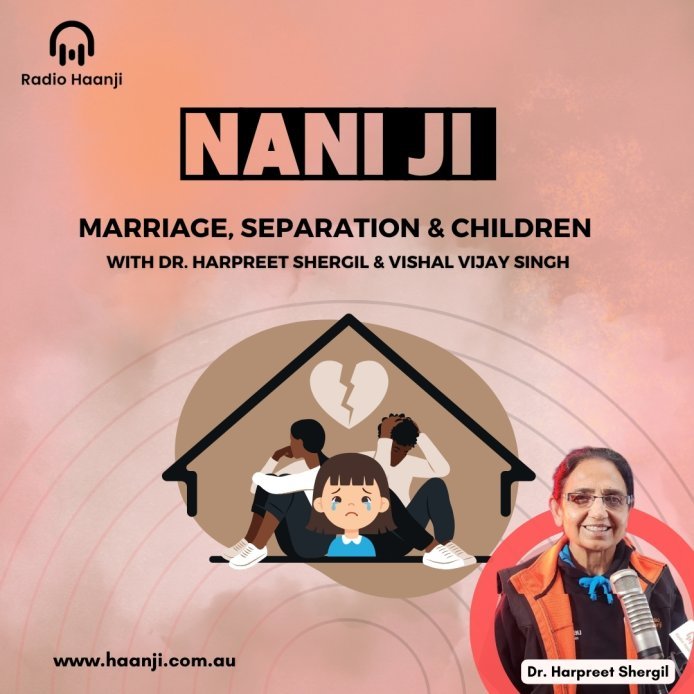
Marriage, Separation & Children — Nani Ji | Punjabi Podcast | Radio Haanji 1674 AM
Host:-
 Dr Harpreet Shergil
 Vishal Vijay Singh
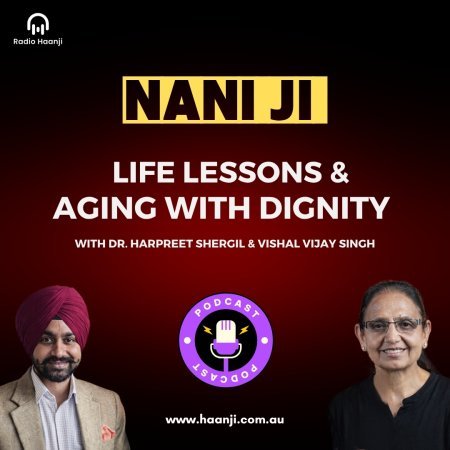
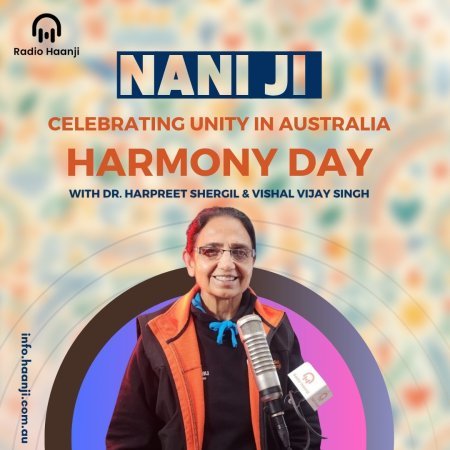
Vishal Vijay Singh & Dr. Harpreet Shergil discuss toxic marriages, separation's impact on children & how to rebuild love and respect. Nani Ji Podcast, Radio Haanji 1674 AM.
When Two Worlds Fall Apart — A Conversation on Marriage, Separation and the Silent Suffering of Children | Nani Ji Podcast on Radio Haanji 1674 AM
Some conversations need to be had, even when they are uncomfortable. In a deeply thoughtful episode of the Nani Ji Podcast on Radio Haanji 1674 AM, host Vishal Vijay Singh sat down with Dr. Harpreet Shergil for an honest and compassionate discussion about one of the most quietly painful realities in our community — the breakdown of marriages, the silent suffering it leaves behind in the hearts of children, and the difficult truth that a life lived together in bitterness can be just as damaging as one lived apart. This is a conversation that touched many hearts, and it deserves to be heard by every couple, every parent, and every family.
The Children in the Middle — The Ones Who Never Asked for Any of It
When two people decide they can no longer live together, the announcement is made between adults. But the ones who carry the weight of that decision the longest are often the ones who had no say in it at all — the children.
When parents separate, children who are in the middle of parental conflict can feel insecure, confused, and guilty. That guilt — the quiet, irrational belief that a child somehow caused the collapse of their parents' world — is one of the most enduring and damaging emotional burdens a young person can carry. It does not announce itself loudly. It lives in a child's hesitation to make friends, their reluctance to trust, their sudden withdrawal from things they once loved.
Children whose parents are divorced tend to have a higher risk of developing mental health disorders compared to children who come from intact families. The effects of divorce on a child's mental health can vary, from anxiety and depression to declining academic performance and social difficulties that follow them well into adulthood. Research published in the International Journal of Social Science and Humanity confirms this pattern consistently — parental conflict and family instability are among the most significant predictors of mental health struggles in children, regardless of culture or geography.
When a child lives primarily with their mother, they grow up missing the particular warmth and security of a father's presence — his voice, his laughter, his way of making them feel safe in the world. When they live with their father, they miss their mother in a way that no amount of weekend visits can fully repair. Children are not designed to live with that absence as a permanent feature of their daily life. They adapt, certainly — children are resilient. But adaptation is not the same as being whole. And parental divorce and separation can have negative short and long-term effects on children, from decreased mental health and wellbeing, to reductions in educational attainment.
There are the practical ruptures, too — the school moves, the changed neighbourhoods, the new financial pressures that follow a family split, the awkwardness of school events where both parents sit on opposite sides of the room. Divorce often leads to significant changes in family structure and dynamics, which can have a direct impact on the psychological well-being of children. And in communities like ours — where family is not just a unit but an entire ecosystem of grandparents, aunts, uncles, cousins and shared history — the fracture of a marriage does not stay between two people. It ripples outward, touching every relationship the child has ever known.
When Staying Together Becomes Its Own Kind of Prison
In the same conversation, Dr. Harpreet Shergil raised a truth that many in our community have lived but few have heard spoken aloud openly: that a marriage kept intact purely for appearances, or out of fear, or for the sake of the children, can sometimes cause as much harm as one that ends.
This is not an argument for giving up. It is an acknowledgment that two people sharing a roof while sharing nothing else — no warmth, no respect, no kindness, no genuine connection — are not truly together in any way that matters. And the children living inside that silence know it. They feel the tension at dinner. They hear what is not being said. They watch their parents become strangers to each other, and they quietly learn that this is what love looks like.
Children and adolescents whose parents had an unhappy relationship but were not divorced experience more depressive and anxiety symptoms, non-suicidal self-injury, and suicide risk than other peers. This is one of the most confronting findings in modern family psychology — that in many cases, children in families with unhappy marriages may be chronically exposed to parental conflict, potentially increasing the risk of mental health problems more than divorce itself.
The adults in a toxic marriage suffer deeply too, in ways that are rarely acknowledged because the shame of a troubled marriage leads many people to suffer in silence. Negative verbal and nonverbal exchanges with a spouse that persist over time might incur permanent autonomic, endocrine, and immunological changes. The body does not distinguish between emotional pain and physical danger — it responds to chronic marital conflict with the same stress hormones it would produce in response to a physical threat. Men who were unhappy in their marriages had almost double the risk of having a stroke and a 21% higher risk of dying from any cause compared to those who were satisfied in their marriages.
A toxic marriage can affect your mental and physical health more than perhaps any other factor in your life. It leads to confusion, anger, sadness, depression, anxiety and social isolation — a loneliness that is in some ways more painful than being truly alone, because it is experienced while standing next to someone who was supposed to be your closest companion. Individuals who stay in unhappy marriages tend to have lower self-esteem, overall health, happiness, and life satisfaction. They lose themselves gradually, quietly, in a relationship that has become a performance rather than a partnership.
What Is Missing — And What Can Be Found Again
The central message of this episode of the Nani Ji Podcast was not one of despair. It was one of possibility. Dr. Harpreet Shergil and Vishal Vijay Singh kept returning to a simple, profound truth: most marriages do not break because the love was never real. They break because the love was never tended to.
Respect is the foundation that holds everything else together. Not the performative respect of public gestures, but the daily, quiet, private respect of listening when your partner speaks, of not dismissing what matters to them, of choosing kindness even on the days when you are tired and frustrated. In our community, we talk about izzat — honour — in relation to the world outside our homes. But the izzat that matters most is the izzat we show each other behind closed doors, when no one is watching.
Acceptance is equally essential, and equally undervalued. We enter marriages with an image of who our partner should become, and we spend years quietly resenting them for not becoming that person. Acceptance does not mean surrendering your needs. It means seeing your partner clearly — their strengths and their limitations — and choosing them anyway. It means understanding that the person you married is a complete human being, not a project.
Mutual support — the willingness to carry each other's weight when the other person's strength gives out — is what separates a partnership from a cohabitation arrangement. Life is genuinely difficult. Financial pressures, health challenges, the demands of raising children, the loneliness of being far from family in a new country — these are real and heavy burdens. A marriage in which both people feel genuinely supported through those burdens becomes a sanctuary. A marriage in which those burdens are faced alone, or weaponised against each other, becomes a source of its own suffering.
Communication — honest, patient, non-defensive communication — is the thread that, when maintained, can prevent most of the fractures that eventually become irreparable. Many couples stop talking about what they really feel long before the relationship actually ends. They replace honest conversation with silence, with anger, with the slow accumulation of grievances that eventually become walls too high to climb. Speaking early, speaking kindly, and listening with genuine intention — these are not romantic ideals. They are practical acts of maintenance that keep a relationship functional and alive.
A Message to Every Couple Listening
If you are in a marriage that is struggling, this episode is not a judgement. It is an invitation. An invitation to look honestly at what has been lost, and to consider whether it can be found again — not through a single dramatic gesture, but through the small, consistent, daily choices to show up with respect, patience and care.
And if you are raising children — as most in our community are — then the greatest gift you can give them is not a perfect marriage. It is a peaceful home. A home where they see their parents treat each other with dignity. Where they learn, from what they witness every single day, that love is not just a feeling but a practice. Where they grow up knowing that two people can disagree, struggle, and still choose each other with warmth and grace.
That is the life this conversation was pointing toward. Not perfect. Not always easy. But real, and full, and worth protecting.
About the Nani Ji Podcast and Radio Haanji 1674 AM
The Nani Ji Podcast is part of Radio Haanji 1674 AM's growing library of community programming, covering topics that matter deeply to the Punjabi and Indian diaspora in Australia — from health and family to culture, current affairs and personal growth. Hosted by Vishal Vijay Singh, the show brings honest, thoughtful conversations to the community in a format that is warm, accessible and always relevant.
Radio Haanji 1674 AM is Melbourne's premier Indian community radio station, streaming live at haanji.com.au and available on all major podcast platforms. As one of the best Punjabi podcasts in Australia, Radio Haanji is trusted by thousands of families across Victoria and beyond to inform, connect and inspire.
Listen to the Nani Ji Podcast — Free, Anytime, Anywhere
Catch this episode and every episode of the Nani Ji Podcast on your favourite platform, completely free.
Listen on Spotify: https://open.spotify.com/show/5fhykpM6TPzerC2Yr2J1eQ
Listen on Apple Podcasts: https://podcasts.apple.com/us/podcast/radio-haanji-podcast/id1687047958
Download the Radio Haanji App on iPhone and iPad: https://apps.apple.com/in/app/radio-haanji/id1439919649
Download the Radio Haanji App on Android: https://play.google.com/store/apps/details?id=callstem.radio.haanji&hl=en_IN
Tune in every weekday to Radio Haanji 1674 AM — haanji.com.au — for more conversations that speak to the heart of the Punjabi and Indian family in Australia.
What's Your Reaction?







Related Posts