
































































































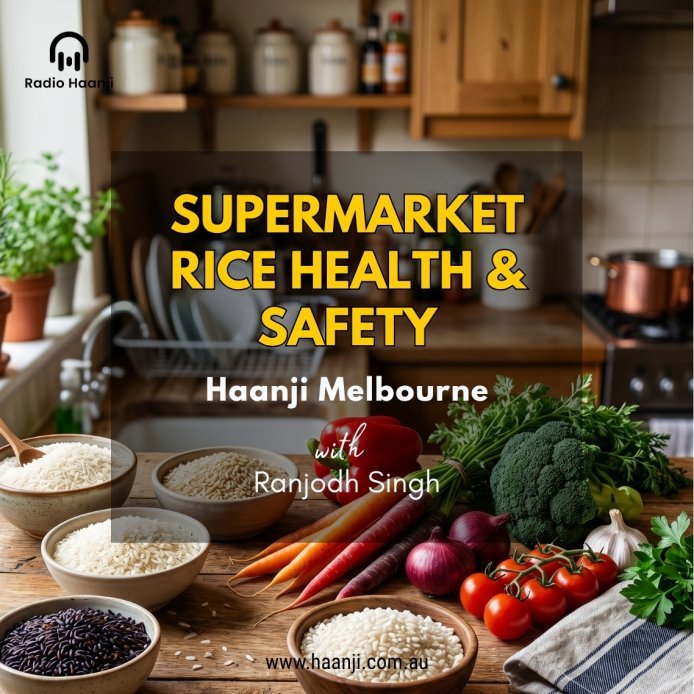

Is your family's rice safe? Discover microplastics, arsenic tips and the best rice varieties — explored on Haanji Melbourne with Ranjodh Singh.
ਸੁਪਰਮਾਰਕੀਟਾਂ ਵਿੱਚ ਮਿਲਣ ਵਾਲੇ ਚੌਲਾਂ ਦੀ ਗੁਣਵੱਤਾ ਅਤੇ ਸਿਹਤ ਉੱਤੇ ਉਹਨਾਂ ਦੇ ਪ੍ਰਭਾਵ ਬਾਰੇ ਇੱਕ ਨਵੀਂ ਖੋਜ ਸਾਹਮਣੇ ਆਈ ਹੈ। ਮਾਹਿਰਾਂ ਨੇ ਕੋਲਜ਼ (Coles), ਵੂਲਵਰਥ (Woolworths) ਅਤੇ ਐਲਡੀ (Aldi) ਦੇ 50 ਵੱਖ-ਵੱਖ ਪੈਕਟਾਂ ਦੀ ਜਾਂਚ ਕੀਤੀ ਹੈ।
ਲਗਭਗ 75% ਚੌਲਾਂ ਵਿੱਚ ਫਾਈਬਰ ਦੀ ਮਾਤਰਾ ਬਹੁਤ ਘੱਟ (3 ਗ੍ਰਾਮ ਪ੍ਰਤੀ 100 ਗ੍ਰਾਮ ਤੋਂ ਵੀ ਘੱਟ) ਪਾਈ ਗਈ ਹੈ। ਘੱਟ ਫਾਈਬਰ ਵਾਲੇ ਚੌਲ ਖੂਨ ਵਿੱਚ ਸ਼ੂਗਰ (blood sugar) ਦੇ ਪੱਧਰ ਨੂੰ ਤੇਜ਼ੀ ਨਾਲ ਵਧਾ ਸਕਦੇ ਹਨ। ਮਾਈਕ੍ਰੋਵੇਵ ਵਿੱਚ ਗਰਮ ਹੋਣ ਵਾਲੇ (Instant/Microwavable) ਚੌਲਾਂ ਦੇ ਪਾਊਚਾਂ ਵਿੱਚ ਸਾਧਾਰਨ ਚੌਲਾਂ ਦੇ ਮੁਕਾਬਲੇ *4 ਗੁਣਾ ਜ਼ਿਆਦਾ ਮਾਈਕ੍ਰੋਪਲਾਸਟਿਕ* ਪਾਇਆ ਗਿਆ ਹੈ। ਇਹ ਲਗਭਗ 13mg ਪਲਾਸਟਿਕ ਪ੍ਰਤੀ 100 ਗ੍ਰਾਮ ਬਣਦਾ ਹੈ। ਚੌਲਾਂ ਨੂੰ ਪਕਾਉਣ ਤੋਂ ਬਾਅਦ ਥੋੜ੍ਹਾ *ਠੰਡਾ ਕਰਕੇ ਖਾਣਾ* ਜ਼ਿਆਦਾ ਫਾਇਦੇਮੰਦ ਹੁੰਦਾ ਹੈ, ਕਿਉਂਕਿ ਇਸ ਨਾਲ 'ਰੈਸਿਸਟੈਂਟ ਸਟਾਰਚ' ਬਣਦਾ ਹੈ ਜੋ ਪਾਚਨ ਨੂੰ ਸੁਧਾਰਦਾ ਹੈ। ਚੌਲਾਂ ਨੂੰ ਪਕਾਉਣ ਤੋਂ ਪਹਿਲਾਂ ਚੰਗੀ ਤਰ੍ਹਾਂ ਧੋਣ ਨਾਲ ਉਹਨਾਂ ਵਿੱਚ ਮੌਜੂਦ ਆਰਸੈਨਿਕ (arsenic) ਅਤੇ ਮਾਈਕ੍ਰੋਪਲਾਸਟਿਕ ਦੀ ਮਾਤਰਾ ਘੱਟ ਹੋ ਸਕਦੀ ਹੈ।
Did you know that the rice sitting in your pantry right now could be quietly affecting your blood sugar, your gut health — and even exposing your family to microplastics? Most of us buy rice without a second thought. It is a staple on every Punjabi table. But a recent Australian study has uncovered some surprising truths that every household deserves to know.
In a recent episode of Podcast Haanji Melbourne on Radio Haanji 1674 AM, host Ranjodh Singh shared a detailed health breakdown on the rice sold in Australia's biggest supermarkets. From fiber gaps to microplastic risks, this episode covered everything you need to make smarter, safer choices for your family.
Whether you shop at Coles, Woolworths, or Aldi — this guide is for you.
What the Australian Rice Study Actually Found
Researchers tested over 50 different packets of rice sourced from major Australian retailers. The findings were eye-opening — and not in a good way.
The Fiber Gap
Approximately 75% of the rice tested was found to be low in dietary fiber — averaging just 3 grams per 100 grams. For context, that is well below what nutritionists consider adequate for healthy blood sugar management. Low-fiber rice causes a rapid spike in blood glucose levels after eating, which is particularly concerning for anyone managing or at risk of diabetes.
The Microplastic Problem
Here is the finding that alarmed most listeners: instant and microwaveable rice pouches were found to contain roughly four times more microplastics than traditional packaged rice. Specifically, researchers identified approximately 13mg of plastic per 100g of rice in these convenient pouches.
The heat from microwaving accelerates the leaching of plastic particles from the pouch material directly into the rice. While research into the long-term health effects of microplastic ingestion is ongoing, the precautionary guidance is clear — avoid heating food in plastic wherever possible.
Arsenic Concerns
Rice naturally absorbs arsenic from soil and water during its growth. While the levels in Australian supermarket rice are generally within regulatory limits, long-term accumulation matters — especially for young children who eat rice frequently. The good news is that proper preparation significantly reduces arsenic exposure.
A Guide to Rice Varieties: Which Is Best for Your Family?
Not all rice is created equal. Ranjodh Singh walked listeners through the different varieties available in Australian supermarkets and explained their nutritional differences.
Wild Rice — The Nutritional Powerhouse
Wild rice is technically a grass seed, not rice — but it earns its place at the top of the health rankings. It is high in fiber, magnesium, and Vitamin B6, making it excellent for muscle function and brain health. It has a nutty, chewy texture that pairs well with curries and salads.
Black Rice — The Ancient Superfood
Once reserved exclusively for Chinese royalty and known as "Forbidden Rice," black rice is now accessible to everyone. It is rich in antioxidants (particularly anthocyanins, the same compounds found in blueberries), high in fiber, and a good source of iron. Regular consumption is linked to reduced inflammation and lower risk of chronic disease.
Red Rice — The Heart-Healthy Choice
Red rice is high in fiber and antioxidants with a pleasant nutty flavour. It is an excellent option for heart health and adds variety to a diet that might otherwise rely on white or basmati rice.
Brown Rice — The Gut Health Champion
Brown rice is simply white rice that has not had its bran layer removed. That bran layer is where most of the fiber lives. Brown rice is excellent for long-term digestive wellness, helps maintain a healthier glycaemic response, and keeps you fuller for longer. Swap your regular white rice for brown at least a few times a week.
Basmati — The Fragrant Favourite
Basmati is the beloved staple of Punjabi cooking — and for good reason. Its aromatic fragrance and long grains make it perfect for biryani, pulao, and everyday daal-chawal meals. White basmati has a slightly lower glycaemic index than regular white rice, but brown basmati is the better choice for fiber and long-term health benefits.
Jasmine and White Rice — Quick Energy, Use Wisely
White and jasmine rice are the most commonly consumed varieties in Australia. They provide quick, accessible energy — which makes them genuinely useful for athletes and growing children after physical activity. However, for those managing blood sugar or diabetes, these varieties should be consumed in moderation and always paired with vegetables, legumes, or protein.
Pro-Tips for Healthier Rice at Home
Ranjodh Singh shared several practical, science-backed tips that any family can apply immediately — no special ingredients required.
The Cooling Secret: Resistant Starch
One of the most fascinating takeaways from the episode: eating cooled rice is significantly better for your gut and blood sugar than eating it hot. When cooked rice is allowed to cool, a portion of the digestible starch converts into resistant starch — a type of fiber that feeds beneficial gut bacteria and produces a lower blood glucose response when consumed.
This means:
- Cooking rice the night before and refrigerating it is a health-positive habit
- Rice salads, chilled rice bowls, and next-day leftovers are actually more beneficial than freshly cooked rice
- Reheating cooled rice briefly is fine and the resistant starch largely remains
Wash and Soak Before Cooking
Always rinse your rice thoroughly under cold water before cooking — ideally 2 to 3 times until the water runs clear. If time allows, soaking the rice for 30 minutes before cooking provides additional benefit.
This simple step:
- Removes surface starch (reducing rapid glucose spikes)
- Reduces microplastic contamination on the surface of grains
- Lowers arsenic levels — studies suggest washing can reduce arsenic by up to 28%
Ditch the Plastic Pouch
If you use microwaveable rice pouches for convenience, make this one change: transfer the rice into a glass or ceramic bowl before microwaving. Heating rice inside a plastic pouch dramatically increases microplastic leaching into your food. A glass bowl takes seconds more — and makes a significant difference.
Balance Your Plate
White rice on its own is a high-glycaemic food. The fix is simple: always pair it with fiber and protein. Add:
- A generous serving of sabzi (vegetables)
- Daal, rajma, or chhole for plant-based protein and fiber
- Lean chicken, fish, or paneer
- A small salad or raita on the side
This combination slows glucose absorption and creates a nutritionally balanced meal — exactly the kind of eating that the Punjabi food tradition already encourages at its best.
Fascinating Rice Facts — Did You Know?
Ranjodh Singh also shared some incredible historical and scientific facts that generated plenty of conversation among Haanji Melbourne listeners:
- The Great Wall Connection: Sticky rice was historically used as mortar to bind bricks in sections of the Great Wall of China. The compound amylopectin in glutinous rice provided remarkable structural strength that has lasted for centuries.
- Forbidden Black Rice: In ancient China, black rice was strictly reserved for royalty and forbidden for common people — a rule born from recognising its superior health properties.
- Shelf Life: Properly stored white rice can remain safe to eat for up to 30 years, while brown rice — because it retains its natural oils — spoils within 6 to 12 months.
- Water Footprint: Producing just 1 kilogram of rice typically requires between 3,000 and 5,000 litres of water — a striking reminder of the environmental cost of this global staple.
Explore more health and wellness episodes → https://haanji.com.au/podcast
Frequently Asked Questions
Is supermarket rice in Australia safe to eat?
Supermarket rice in Australia is generally safe to eat and falls within regulatory standards. However, a recent study of over 50 rice packets from Coles, Woolworths, and Aldi found that 75% were low in dietary fiber, and microwaveable pouches contained significantly higher levels of microplastics. Proper washing and preparation reduce most risks.
Which rice has the most fiber in Australia?
Wild rice, black rice, and brown rice are the highest-fiber options available in Australian supermarkets. Brown rice and brown basmati rice offer the most practical everyday choice for families, delivering around 3 to 3.5 grams of fiber per 100 grams compared to under 1 gram in white rice. These varieties also produce a lower blood sugar spike after eating.
How do I reduce microplastics in my rice?
To reduce microplastics in rice, avoid heating instant or microwaveable rice inside plastic pouches. Instead, transfer the rice to a glass or ceramic bowl before microwaving. For all rice varieties, washing thoroughly under cold water before cooking also removes surface contamination and reduces microplastic exposure.
Does cooling cooked rice really make it healthier?
Yes. When cooked rice is cooled and refrigerated, a portion of the digestible starch converts into resistant starch — a type of fiber that feeds good gut bacteria and causes a lower blood glucose response. Eating cooled or day-old rice is therefore measurably better for blood sugar management and digestive health than eating freshly cooked hot rice.
How do I reduce arsenic in rice before cooking?
To reduce arsenic in rice, rinse it thoroughly 2 to 3 times under cold running water, and soak it for at least 30 minutes before cooking. Cooking rice in a larger ratio of water (such as 6:1 water to rice) and draining the excess water afterwards has also been shown to reduce arsenic content by up to 50% in some studies.
Conclusion
Rice is not just food — for the Punjabi community, it is culture, comfort, and connection. The good news is that with a few informed choices, you can keep all of that warmth while making your family's meals significantly healthier.
Choose brown, black, or red rice where possible. Wash your rice every single time. Let it cool before serving when you can. And ditch the plastic pouch. These are small changes — but their impact on your long-term health is anything but small. Haanji? ਹਾਂਜੀ!
????️ Listen to the full discussion on Supermarket Rice Health & Safety with Ranjodh Singh on Podcast Haanji Melbourne — only on Radio Haanji 1674 AM.
Listen free:
What's Your Reaction?