

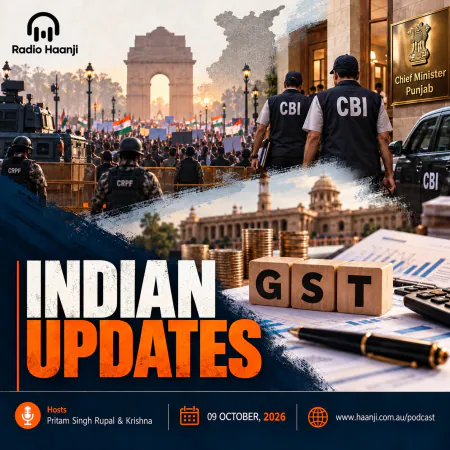










































































Pritam Singh Rupal explores the AAP vote of confidence and defection rumors in Punjab. Get trusted political analysis free today on Radio Haanji.
Indian Updates – 1 May 2026 | Punjab Politics Analysis – Radio Haanji
The Punjab Legislative Assembly has convened a special session this May Day, a move that carries far more weight than simple holiday recognition. In today's edition of Indian Updates on Radio Haanji 1674 AM, Ranjodh Singh is joined by senior journalist Pritam Singh Rupal to unpack a day defined by high-stakes political maneuvering. Together, they offer a deep Punjab politics analysis of the administration's proactive strategy to secure its footing amidst a flurry of defection rumors and external pressure.
The Strategy Behind the May Day Confidence Vote
Chief Minister Bhagwant Mann has opted for a decisive show of strength by bringing a vote of confidence to the floor during this special session. By issuing a formal whip to all Aam Aadmi Party MLAs, the leadership is effectively consolidating its ranks and silencing speculation regarding internal instability. This proactive approach is designed to project an image of a unified front, ensuring that party loyalty is verified on the record before any opposition maneuvers can gain traction.
The timing of this session on International Labor Day allows the government to align itself with pro-worker sentiment while addressing the mechanical needs of legislative survival. For an administration facing consistent pressure from central agencies and political rivals, this "head count" serves as a vital defensive measure. It provides a clear numerical answer to those questioning the government's mandate and ensures that the ruling party maintains control over the narrative of its own stability.
Defection Rumors and the Shifting Legislative Landscape
The political atmosphere has been further charged by claims following Raghav Chadha’s transition to the BJP. The assertion that dozens of sitting MLAs are in contact with the opposition has forced the ruling party to accelerate its security measures. While such claims are a common feature of the current Punjab politics analysis, the scale of the alleged contact has created a sense of urgency within the AAP camp to prove their majority beyond any doubt.
Pritam Singh Rupal notes that these shifts often reflect broader national trends where state-level stability is frequently challenged by larger political realignment. The administration’s response suggests they are taking these threats seriously, choosing to confront the rumors in the Assembly rather than allowing them to fester in the public eye. This session acts as a pressure valve, intended to stabilize the government's position as it navigates a complex period of defection politics.
Environmental Regulation as a Tool of Political Leverage
A noteworthy development in the ongoing friction between state and central interests is the recent scrutiny of industrial assets belonging to political defectors. The Punjab Pollution Control Board’s raid on the factory of Rajinder Gupta, a recently joined BJP MP, highlights a trend where local regulatory bodies are utilized to exert pressure on rivals. This "raid politics" mirrors the central government's use of national agencies, creating a cycle of tactical scrutiny that defines the current power struggle.
While these actions are often viewed through a political lens, they may inadvertently lead to stricter adherence to environmental standards. Industries that have historically operated with minimal oversight are now finding themselves at the center of a tug-of-war where every violation becomes a point of leverage. This shift forces a higher level of accountability for industrial waste management as political parties look for any opportunity to challenge the interests of their opponents.
Why Indian Updates Is Vital for the Diaspora
For the Indian community in Australia and Singapore, understanding these legislative shifts is essential for maintaining a clear perspective on the state's future. The nuances of Punjab politics analysis often get lost in quick news bites, making the deep-context reporting of Radio Haanji a necessary resource. These developments affect everything from investment stability to the social fabric that connects the diaspora to their home state.
Radio Haanji 1674 AM remains the primary source for NRIs who require more than just headlines. By providing a platform for journalists like Pritam Singh Rupal, we ensure our listeners receive the history and consequence behind every major event. This commitment to intelligent journalism keeps our community empowered and accurately informed about the shifting tides of Indian governance.
Frequently Asked Questions
What triggered the vote of confidence in the Punjab Assembly?
The vote was a proactive move by the Bhagwant Mann government to demonstrate unity and majority support amidst rumors of internal fracturing. Following high-profile defections to the BJP, the administration used the special session to formally verify the loyalty of its MLAs and stabilize its public image.
Who is Raghav Chadha in the current political context?
Raghav Chadha is a prominent political figure who recently moved from the Aam Aadmi Party to the BJP. His claims regarding contact with a large number of ruling party MLAs have become a focal point of discussion regarding the potential for further shifts in the state's legislative balance.
Why was Rajinder Gupta's factory under investigation?
The factory was raided by the Punjab Pollution Control Board following complaints of environmental violations. The timing of the raid, coming shortly after Gupta joined the BJP, has led to analysis regarding the use of state-level regulatory bodies to scrutinize the interests of political opponents.
What was the significance of the Ajnala violence charge sheet?
The filing of the charge sheet against Amritpal Singh and others marks a significant step in the legal proceedings following the violence at the Ajnala police station. It demonstrates the state's efforts to maintain the rule of law and address internal security challenges through formal judicial channels.
How does this political friction affect environmental laws?
The friction between political parties has led to a "raid politics" environment where industrial compliance is used as leverage. This has the side effect of forcing stricter adherence to environmental regulations, as industries are scrutinized more closely by state agencies looking for evidence of misconduct by political rivals.
Conclusion
The current legislative maneuvering in Punjab is a clear reminder of the complexity of modern governance. Join Ranjodh Singh and Pritam Singh Rupal on Indian Updates for daily analysis that goes beyond the surface.
Listen Now
Catch today's episode of Laughter Therapy free on all platforms:
Radio Haanji 1674 AM is Austalia's Punjabi community radio station.
Listen free at haanji.com.au | Spotify | Apple Podcasts | iOS App | Android App
Serving the Punjabi community in Australia, Canada, Singapore and world wide.
What's Your Reaction?