






























































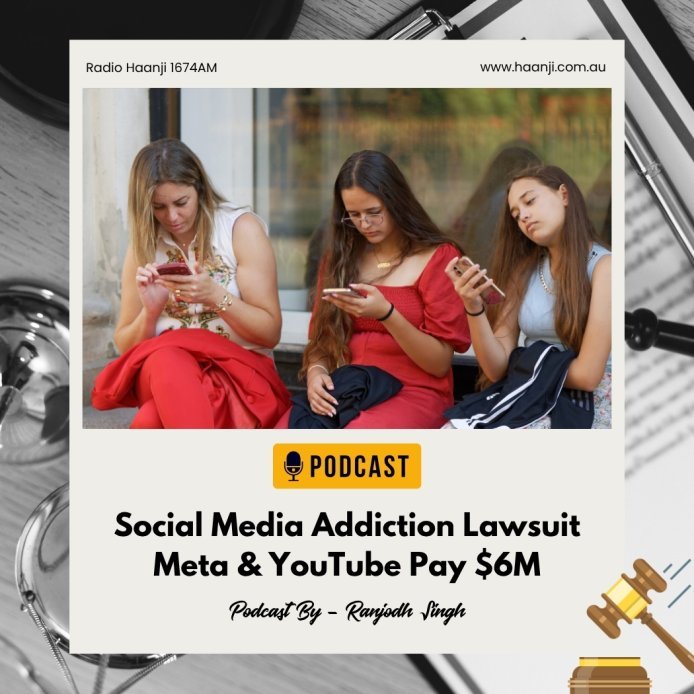

Protect your family from the hidden risks of social media addiction. Hear Ranjodh Singh break down the $6M verdict on Radio Haanji. Free on Spotify.
I genuinely don’t know how to feel about this one. On one hand, a 21-year-old woman just won a $6 million verdict against the biggest tech giants on the planet. On the other hand, the details of how she got there—starting YouTube at age six and Instagram at nine—are enough to make any parent lose sleep.
In a recent episode of The Insight Report on Radio Haanji, host Ranjodh Singh broke down the specifics of the KGM vs. Meta and YouTube case. This isn't just another legal headline; it’s a reckoning for the "attention economy" that has governed our digital lives for a decade. We are finally seeing a court acknowledge that "addictive design" isn't just a buzzword—it's a liability.
What is the Social Media Addiction Lawsuit?
The case centers on a young woman identified as KGM. Her legal team argued that Meta (which owns Instagram) and YouTube (owned by Google) didn't just host content; they engineered a trap. By the time KGM was ten years old, she was reportedly spending 16 hours a day on these apps. That’s not a hobby; that’s a full-time job plus overtime, all while her brain was still developing.
The jury in California agreed. On March 25, 2026, they ruled that the platforms were responsible for mental health injuries including depression, anxiety, and body dysmorphia. The $6 million (roughly ₹50 crore) compensation is a massive figure, but the message it sends to Silicon Valley is even bigger.
Key Highlights: Why Meta and YouTube Lost
The trial pulled back the curtain on features we take for granted every day. Here is what the episode covered regarding the "malicious" side of social media:
-
The 70/30 Split: The jury didn't blame both companies equally. Meta was handed 70% of the responsibility, while YouTube took 30%. This likely stems from the more intense social pressures inherent in Instagram's design.
-
Addictive Features: The court looked specifically at infinite scrolling, auto-play, and constant notifications. These aren't just "handy features"; they are psychological triggers designed to keep users from putting the phone down.
-
Bypassing Parents: One of the most harrowing points Ranjodh Singh mentioned was that KGM’s parents triedto use parental controls. The apps were simply designed better than the controls, allowing a child to bypass restrictions with ease.
-
The Defense Failed: Meta and YouTube tried to argue that KGM’s mental health issues were genetic or related to her home life. The jury rejected this, finding that the companies failed to warn users about the actual risks of addiction.
The Reality of Addictive Design
I keep coming back to the detail about the "infinite scroll." It’s such a simple mechanic, but it removes the natural "stop signs" our brains need. When you combine that with online predators—who unfortunately targeted KGM at a young age—you get a perfect storm of digital danger.
While TikTok and Snapchat settled their portions of this legal battle out of court, Meta and YouTube chose to fight. They lost. This verdict creates a massive legal precedent. For the first time, a court has said that if you build an interface to be intentionally addictive to children, you are responsible for the fallout. Sat Sri Akal to that—it's a step toward holding these giants accountable.
Frequently Asked Questions
What was the outcome of the social media addiction lawsuit in 2026?
The California court ruled in favor of the plaintiff, KGM, awarding her $6 million in damages. The jury found Meta and YouTube liable for mental health injuries caused by their "addictive design." Meta was assigned 70% of the liability, while YouTube was held responsible for the remaining 30%.
How much did Meta and YouTube pay in the KGM lawsuit?
The total compensation awarded was $6 million, which is approximately ₹50 crore. This amount was intended to cover mental health injuries, including depression and body dysmorphia, caused by the plaintiff's early and excessive exposure to the platforms' addictive algorithms and features starting at age six.
What is considered "addictive design" in social media?
Addictive design refers to interface features like infinite scrolling, auto-play, and push notifications that are engineered to trigger dopamine releases and maximize user time. In the KGM case, the court determined these features were malicious because they lacked adequate safety warnings for minors and their parents.
Can social media companies be sued for child mental health issues?
Yes, this 2026 verdict sets a major legal precedent. It demonstrates that social media platforms can be held legally accountable if their algorithms and interface designs are found to intentionally hook minors, leading to documented mental health declines like anxiety, depression, or exposure to online predators.
Did TikTok and Snapchat settle the addiction lawsuit?
Yes, while Meta and YouTube went to trial and lost, other platforms like TikTok and Snapchat reportedly settled out of court for undisclosed amounts. By settling, these companies avoided a public trial and a formal jury verdict regarding the addictive nature of their specific platform interfaces.
Conclusion
This case is a wake-up call for every household in Australia, Singapore, and beyond. It’s no longer enough to "monitor" screen time when the apps themselves are designed to break those boundaries. As Ranjodh Singh pointed out, this is a shift in how we view corporate responsibility in the digital age.
The $6 million verdict won't fix the years of mental health struggles KGM endured, but it might make the next tech giant think twice before prioritizing "engagement" over human well-being. It’s a complicated, unsettling victory—but a victory nonetheless.
Listen to the Verdict Analysis on The Insight Report with Ranjodh Singh — only on Radio Haanji.
Download the Radio Haanji app:
-
Apple App Store: https://apps.apple.com/in/app/radio-haanji/id1439919649
-
Google Play Store: https://play.google.com/store/apps/details?id=callstem.radio.haanji
Stream on Spotify: https://open.spotify.com/show/5fhykpM6TPzerC2Yr2J1eQ
Apple Podcasts:https://podcasts.apple.com/us/podcast/radio-haanji-podcast/id1687047958
Radio Haanji 1674 AM is Austalia's Punjabi community radio station.
Listen free at haanji.com.au | Spotify | Apple Podcasts | iOS App | Android App
Serving the Punjabi community in Australia, Canada, Singapore and world wide.
What's Your Reaction?