


















































































The Great Fire of Rome - Nero's Legacy - Punjabi Podcast - Gautam Kapil - Radio Haanji
Host:-
 Gautam Kapil
Gautam Kapil explores Nero, the Great Fire of Rome and the Parthian Empire in a special history podcast on Radio Haanji 1674 AM. Listen free on Spotify and Apple Podcasts.
The Great Fire of Rome and the Truth About Nero - 06 March 2026 - Special History Podcast on Radio Haanji
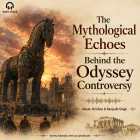
Sometimes the best conversations are the ones that take you somewhere completely unexpected. On Friday, 06 March 2026, Radio Haanji 1674 AM host Gautam Kapil set aside the daily news cycle for something altogether different — a special history podcast that took listeners deep into one of the ancient world's most captivating and misunderstood stories. The episode focused on the Roman Emperor Nero, the Great Fire of Rome, and the remarkable diplomatic relationship between the Roman and Parthian empires — a history that resonates in surprising ways with the world we live in today.
The Emperor Who Has Been Misread for Two Thousand Years
Few figures in ancient history have been as consistently misrepresented as Nero. The last ruler of the Julio-Claudian dynasty — the imperial line that began with Julius Caesar and Augustus — Nero came to power under extraordinary circumstances and governed Rome during one of its most turbulent and transformative periods. His lineage placed him at the heart of Roman imperial politics from birth. He was the son of Gnaeus Domitius Ahenobarbus and Agrippina the Younger, a woman of formidable political intelligence who shaped her son's path to power with calculation and ambition.
It was Agrippina who engineered Nero's succession. After she married the reigning Emperor Claudius, she worked persistently to have Nero named as heir to the throne — bypassing Britannicus, Claudius's own biological son. When Claudius died, Nero ascended to become Emperor of Rome at a remarkably young age, reportedly around sixteen, inheriting the most powerful empire in the known world while still barely past boyhood. It was a beginning that set the stage for a reign that would become one of history's most debated.
What Really Happened the Night Rome Burned
The Great Fire of Rome in 64 AD remains the most defining event of Nero's reign — and one of the most distorted stories in all of ancient history. The fire broke out in the merchant district near the Circus Maximus, and fuelled by summer winds and the tightly packed wooden structures that characterised much of the city, it burned for over a week. When the smoke finally cleared, ten of Rome's fourteen districts had been destroyed or severely damaged. The scale of the disaster was almost incomprehensible.
Into this catastrophe stepped the myth that has followed Nero ever since: the image of an emperor playing his lyre — popularly reimagined as a fiddle — while watching his city burn. It is a powerful image, and it has endured for two millennia. But the historical evidence tells a different story. Most serious scholars of the period believe this account was later propaganda, constructed by Nero's political enemies to discredit him. The historical record indicates that Nero was in Antium, outside of Rome, when the fire began, and that he returned to the city promptly to organise relief efforts for those who had lost their homes.
What followed, however, cast a long shadow of its own. Rumours began to circulate that Nero had deliberately set the fire to clear land for his planned palace complex, the Domus Aurea — his legendary Golden House. Whether or not those rumours had any foundation, Nero's response to them introduced a chapter of history that would echo far beyond ancient Rome. He redirected public blame towards the Christians, a small and at that point obscure religious community in the city. This became the first major state-sponsored persecution of Christians in Roman history — a consequence of one fire that would have repercussions stretching across centuries.
Rome, Parthia and the Ancient Roots of a Familiar Rivalry
One of the most compelling threads in Gautam Kapil's special episode is the relationship between Rome and the Parthian Empire — a civilisation centred in what is today Iran. These two empires were the great competing powers of the ancient world, and their rivalry played out most sharply over the fate of a single kingdom: Armenia.
Armenia sat between Rome and Parthia as a buffer state — strategically essential to both empires and fully loyal to neither. The conflict that erupted during Nero's reign was triggered when the Parthian King Vologases I placed his brother Tiridates on the Armenian throne without seeking Roman approval. For Rome, this was an unacceptable challenge to its authority and its sphere of influence.
Nero's response was to dispatch one of his most capable military minds — the general Gnaeus Domitius Corbulo — to restore Roman prestige in the region. What followed was years of military campaigning, territorial shifts and complex negotiation across a vast and difficult frontier. Eventually, a solution was reached that demonstrated something remarkable about the ancient world's capacity for pragmatic diplomacy. Under the terms of a peace agreement signed in 63 AD, it was settled that Armenia's king would be a Parthian prince — satisfying the Parthian demand for influence — but that he would be formally crowned by the Roman Emperor, preserving Rome's claim to ultimate authority.
The ceremonial culmination of this arrangement came in 66 AD, when Tiridates made an elaborate and enormously expensive journey to Rome to be crowned by Nero in a public spectacle designed to impress the world. The peace that followed lasted for decades beyond Nero's death — a reminder that even in an age defined by conquest, creative compromise could produce lasting stability.
Why a Two-Thousand-Year-Old Story Still Matters
History is never really about the past. It is about understanding patterns — how power is exercised, how narratives are constructed, how blame is assigned and how complex political realities are flattened into simple myths. Gautam Kapil's choice to dedicate a full episode of Radio Haanji to Nero and the world he inhabited is a reflection of exactly that belief. These are stories that carry genuine intellectual weight for any community that engages with them seriously.
For the Punjabi and Indian community in Melbourne and across Australia, Radio Haanji 1674 AM has always been more than a source of news and entertainment — it has been a space for ideas, culture and conversation that stretches across languages, centuries and continents. Special episodes like this one are a reminder of why a trusted community radio voice matters. As a free Punjabi podcast online, Radio Haanji makes this kind of thoughtful, accessible content available to everyone — no subscription, no barrier, just great broadcasting.
Whether you are a student of history, a curious listener, or someone who simply appreciates a well-told story, this episode of the best Punjabi podcast of 2026 is well worth your time.
Stream the Full Episode - Free on All Platforms
Catch the full special episode with Gautam Kapil on your preferred platform — all completely free:
Listen on Spotify
Subscribe on Apple Podcasts
Download the Radio Haanji iOS App
Get the Radio Haanji Android App
Radio Haanji 1674 AM | Punjabi Podcast | Broadcasting from Melbourne, Australia
Listen free at haanji.com.au | Available on Spotify & Apple Podcasts
Serving the Punjabi community across Melbourne · Sydney · Brisbane · Australia · Worldwide
What's Your Reaction?