



























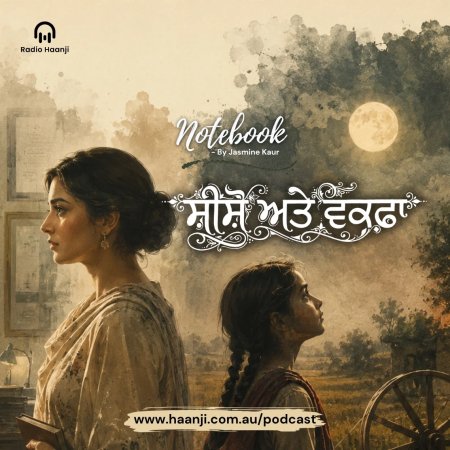






























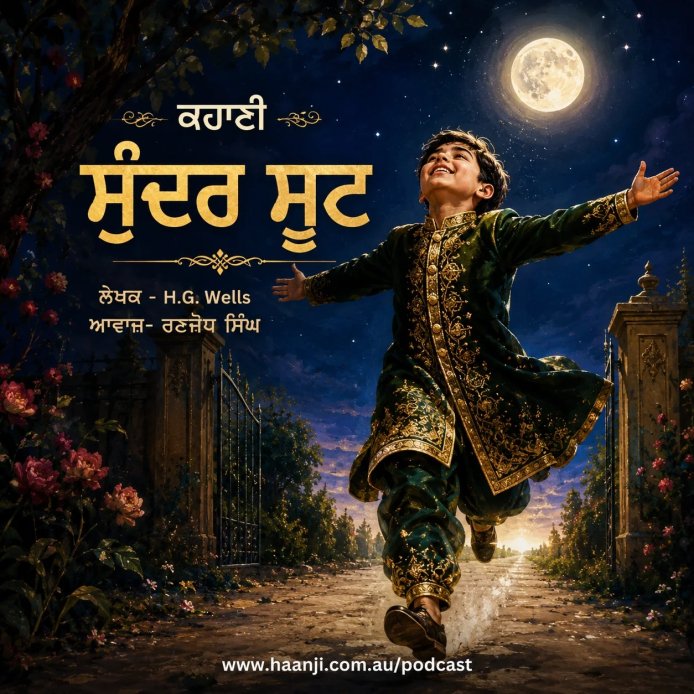

ਕੀ ਤੁਸੀਂ ਵੀ ਆਪਣਾ ਸੂਟ ਲੁਕਾ ਕੇ ਰੱਖਿਆ? H.G. Wells' beautiful story retold as a punjabi audio kahani by Ranjodh Singh. Free on Spotify & Radio Haanji.
ਕੀ ਤੁਸੀਂ ਕਦੇ ਕੋਈ ਚੀਜ਼ ਇੰਨੀ ਸੰਭਾਲ ਕੇ ਰੱਖੀ ਕਿ ਉਹ ਵਰਤੀ ਹੀ ਨਹੀਂ? A dress worn once a year. A talent hidden away. A dream deferred until the "right moment" — which never comes. H.G. Wells wrote a story about this over a hundred years ago, and it still cuts deep.
Radio Haanji's Kitaab Kahani brings you this timeless punjabi audio kahani — ਸੁੰਦਰ ਸੂਟ (The Beautiful Suit), originally written as A Moonlight Fable in 1909. Narrated by Ranjodh Singh, this short yet powerful story is not just a tale about a piece of clothing. It is a mirror held up to the way we live — or fail to live — our lives. ਇਹ ਕਹਾਣੀ ਤੁਹਾਡੇ ਮਨ ਦੇ ਅੰਦਰ ਤੱਕ ਉੱਤਰ ਜਾਵੇਗੀ।
In this episode of Kitaab Kahani, Ranjodh Singh explores the deeper philosophy behind Wells' story — the meaning of the suit, the symbolism of the mother's restrictions, and what it truly means to live freely before life passes you by. ਜੇ ਤੁਸੀਂ ਵੀ ਜ਼ਿੰਦਗੀ ਦੇ ਕਿਸੇ ਖ਼ਾਸ ਮੌਕੇ ਦੀ ਉਡੀਕ ਕਰ ਰਹੇ ਹੋ — ਇਹ ਕਹਾਣੀ ਤੁਹਾਡੇ ਲਈ ਹੀ ਹੈ।
H.G. Wells ਕੌਣ ਸੀ? — The Mind Behind the Story
Herbert George Wells, better known as H.G. Wells, was one of the greatest writers of the 20th century — the father of science fiction who gave the world The War of the Worlds, The Time Machine, and The Invisible Man. ਪਰ ਉਹ ਸਿਰਫ਼ ਸਾਇੰਸ ਫਿਕਸ਼ਨ ਤੱਕ ਸੀਮਤ ਨਹੀਂ ਸੀ।
1909 ਵਿੱਚ ਲਿਖੀ A Moonlight Fable (later renamed The Beautiful Suit) is one of his lesser-known short stories — but arguably one of the most emotionally resonant. It is not about science or aliens. It is about a human soul longing to be free. ਇਹ ਕਹਾਣੀ ਸਾਡੇ ਸਾਰਿਆਂ ਦੀ ਕਹਾਣੀ ਹੈ।
Wells wrote this during a period of deep social commentary in his career, when he was increasingly concerned with how society's rules and expectations suppress individual joy. That concern feels just as alive in 2026 as it did in 1909 — perhaps more so for Punjabi diaspora communities in Australia, Singapore, Canada, and beyond, where cultural expectations and social pressures often clash with personal dreams.
ਕਹਾਣੀ ਦਾ ਸਾਰ — What Happens in 'The Beautiful Suit'?
ਕਹਾਣੀ ਵਿੱਚ ਇੱਕ ਮਾਂ ਆਪਣੇ ਪੁੱਤ ਨੂੰ ਇੱਕ ਬੇਹੱਦ ਖੂਬਸੂਰਤ ਸੂਟ ਬਣਾ ਕੇ ਦਿੰਦੀ ਹੈ। The suit is deep green with golden embroidery, golden buttons — exactly the colours the boy had always wanted. It is the most beautiful thing he has ever owned, and he loves it with his whole heart.
ਪਰ ਮਾਂ ਇਸ ਸੂਟ ਨੂੰ ਪਾਉਣ ਦੀ ਇਜਾਜ਼ਤ ਨਹੀਂ ਦਿੰਦੀ — not every day, not freely. Only on rare occasions: a special function, a Sunday church visit, perhaps a future wedding. She wraps the golden buttons in tissue paper to protect them. She covers the sleeves and elbows in cloth so they won't wear. ਉਹ ਚਾਹੁੰਦੀ ਕਿ ਸੂਟ ਹਮੇਸ਼ਾ ਨਵਾਂ ਰਹੇ — always new, always saved, always perfect.
One moonlit night, the boy wakes from a dream. He sees the full moon glowing through his window, silver and glorious. ਉਹ ਫ਼ੈਸਲਾ ਕਰਦਾ ਹੈ — tonight, he will not wait. He rises quietly, takes the suit from the cupboard, strips away every layer of tissue paper and protective cloth, and steps outside into the moonlit garden. For the first time, he runs truly free — down the garden path, onto the open road, arms wide, heart full, feeling more beautiful than the moon and stars above him.
ਪਰ ਕਹਾਣੀ ਦਾ ਅੰਤ ਬੜਾ ਦੁਖਦਾਈ ਹੈ। By morning, he is found dead in a ditch — the suit likely torn, his body gone. And yet, when readers first encountered this ending, many asked: how can this be the right ending? ਪਰ ਸ਼ਾਇਦ ਰਾਈਟਰ ਸਾਨੂੰ ਕੁਝ ਹੋਰ ਦੱਸਣਾ ਚਾਹੁੰਦਾ ਸੀ।
ਸੂਟ ਦਾ ਅਸਲ ਮਤਲਬ — What Does the Beautiful Suit Really Represent?
This is where Ranjodh Singh's narration on Kitaab Kahani goes deepest — and where the punjabi audio kahani transcends a simple story into a life philosophy.
The suit is your talent. Your gift. Your potential.
ਕੁਦਰਤ ਨੇ ਹਰ ਇਨਸਾਨ ਨੂੰ ਕੋਈ ਨਾ ਕੋਈ ਹੁਨਰ ਦੇ ਕੇ ਭੇਜਿਆ ਹੈ। Someone can sing beautifully. Someone can paint. Someone runs like the wind, speaks with power, writes with feeling, builds with their hands. That gift — that is the suit. And like the mother in the story, the world wraps it in layers of protection: "ਇਹ ਤੇਰੇ ਲਈ ਨਹੀਂ", "ਸਮਾਂ ਨਹੀਂ ਆਇਆ", "ਲੋਕ ਕੀ ਕਹਿਣਗੇ", "ਇਹ ਅਮੀਰਾਂ ਦਾ ਕੰਮ ਐ।"
The mother represents the restrictions we all know. Social expectations. Community judgment. Financial pressure. Cultural roles. Family obligations. ਇਹ ਸਾਰੀਆਂ ਬੰਦਿਸ਼ਾਂ ਸਾਡੇ ਹੁਨਰ ਦੇ ਉੱਤੇ ਕਾਗਜ਼ ਦੀਆਂ ਪਰਤਾਂ ਵਾਂਗ ਚੜ੍ਹ ਜਾਂਦੀਆਂ ਨੇ।
Think of it like a new phone you buy and immediately cover in a thick case — so worried about scratches that you never actually feel the beautiful device in your hands. ਜ਼ਿੰਦਗੀ ਵੀ ਇਸੇ ਤਰ੍ਹਾਂ ਦੀ ਹੈ। We protect the gift so carefully that we never truly use it.
ਕੀ ਤੁਸੀਂ ਵੀ ਖ਼ਾਸ ਮੌਕੇ ਦੀ ਉਡੀਕ ਕਰ ਰਹੇ ਹੋ? — Are You Waiting for the Right Moment?
ਇਹ ਕਹਾਣੀ ਦਾ ਸਭ ਤੋਂ ਡੂੰਘਾ ਸਵਾਲ ਇਹੀ ਹੈ। We tell ourselves: when the children grow up, I'll pursue my passion. When I've saved enough money, I'll start that business. When I retire, I'll travel. When I find the perfect moment, I'll tell them how I feel.
ਪਰ ਉਹ ਮੌਕਾ ਕਦੇ ਨਹੀਂ ਆਉਂਦਾ। Or it comes too late. The boy in the story doesn't wait for his wedding day, and in his one wild, free, moonlit run — however brief, however dangerous — he lives more fully than he ever had before.
The philosopher in Ranjodh Singh's reading of this punjabi motivational audio kahani points to something the Punjabi diaspora in Melbourne, Sydney, and Singapore knows deeply: the pressure to "save the good things for later" is immense in our communities. The good crockery stays in the cupboard. The traditional dress waits for a wedding. The music, the poetry, the art — stays hidden. ਅਤੇ ਫਿਰ ਇੱਕ ਦਿਨ... ਉਹ ਦਿਨ ਆਉਂਦਾ ਹੀ ਨਹੀਂ।
ਰਾਈਟਰ ਦਾ ਸੁਨੇਹਾ ਸਾਫ਼ ਹੈ: Don't wait for the perfect occasion to live your life. Don't cover your beautiful suit with so many layers of caution that you never feel it against your skin. ਖੁਸ਼ਹਾਲੀ ਕਿਸੇ ਖ਼ਾਸ ਦਿਨ ਦੀ ਮੁਹਤਾਜ ਨਹੀਂ ਹੁੰਦੀ।
Key Takeaways — ਇਸ ਕਹਾਣੀ ਤੋਂ ਕੀ ਸਿੱਖਦੇ ਹਾਂ?
- The beautiful suit symbolises your natural talent — the gift given to you by nature that the world often asks you to cover up and save for later.
- The mother's restrictions represent social and cultural pressures — well-meaning, but ultimately limiting your ability to live fully.
- Waiting for a "special occasion" to be happy is a trap. Real joy must be found in ordinary, everyday moments — not reserved for milestones.
- H.G. Wells wrote this in 1909, but the story is alive in 2026 — especially for Punjabi diaspora communities navigating cultural expectations while living abroad.
- The moonlit run is a metaphor for choosing freedom — even if imperfect, even if brief, even if it costs something.
- Kitaab Kahani on Radio Haanji brings these timeless punjabi audio kahani stories to life — connecting diaspora audiences to literature that speaks to the soul.
Frequently Asked Questions — ਅਕਸਰ ਪੁੱਛੇ ਜਾਂਦੇ ਸਵਾਲ
What is the message of H.G. Wells' 'The Beautiful Suit'?
The Beautiful Suit teaches that we must not save our talents, joys, and passions for a "perfect moment" that may never come. The suit symbolises natural gifts and potential that society — represented by the mother — asks us to protect and restrict. Wells urges readers to live fully now, not later.
ਕਿੱਦਾਂ ਸੁਣੀਏ Kitaab Kahani ਦੀ ਇਹ ਕਹਾਣੀ? Where can I listen to this punjabi audio kahani?
You can listen to this punjabi audio kahani free on Spotify, Apple Podcasts, or the Radio Haanji app (iOS and Android). Search for "Kitaab Kahani" or visit haanji.com.au. New stories are released every weekday morning — no subscription needed, no cost.
What does the mother symbolise in 'The Beautiful Suit'?
In Wells' story, the mother represents the social, cultural, and familial restrictions that prevent us from fully expressing our talents. She is not cruel — she acts from love and caution. But her protective layers become barriers. The suit stays perfect but unworn, which is the tragedy Wells is pointing to.
ਕੀ Kitaab Kahani ਸਿਰਫ਼ ਪੰਜਾਬੀ ਵਿੱਚ ਹੈ? Is Kitaab Kahani only in Punjabi?
Kitaab Kahani is Radio Haanji's Punjabi audio storytelling series. Episodes are narrated in Punjabi by Ranjodh Singh and cover world literature, biographies, motivational stories, and Punjabi classics — all retold in beautiful, accessible Punjabi for the diaspora audience worldwide, including Australia, Singapore, Canada, and India.
Why does the boy die at the end of 'The Beautiful Suit'?
Wells' ending is intentionally ambiguous and symbolic. The boy's death in the ditch after his moonlit run is not presented as a punishment — it is the natural consequence of choosing freedom over caution. Many readers see it as a powerful statement: it is better to have truly lived — even briefly — than to die having never worn your beautiful suit at all.
ਸਿੱਟਾ — Conclusion
The Beautiful Suit is one of those rare stories that asks the right question at the right moment. ਜ਼ਿੰਦਗੀ ਦੀ ਭੱਜ-ਦੌੜ ਵਿੱਚ ਆਪਾਂ ਅਕਸਰ ਇਹ ਭੁੱਲ ਜਾਂਦੇ ਹਾਂ ਕਿ ਆਪਣੇ ਅੰਦਰ ਦੇ ਉਹ ਸੂਟ ਨੂੰ ਵੀ ਪਾਉਣਾ ਹੈ। Not on a wedding day. Not after retirement. Not when conditions are perfect. Today. Now. ਅੱਜ ਤੇ ਹੁਣ।
Ranjodh Singh's reading of this punjabi emotional kahani on Kitaab Kahani is not just a story — it is an invitation. ਆਪਣੇ ਹੁਨਰ ਦੀਆਂ ਪਰਤਾਂ ਲਾਹੋ। ਬੰਦਿਸ਼ਾਂ ਦੇ ਕਾਗਜ਼ ਸੁੱਟੋ। ਅਤੇ ਇੱਕ ਵਾਰ ਉਸ ਚਾਨਣੀ ਰਾਤ ਵਿੱਚ ਭੱਜੋ — ਆਪਣੀਆਂ ਸ਼ਰਤਾਂ 'ਤੇ।
[INTERNAL LINK: ਹੋਰ ਪੰਜਾਬੀ ਆਡੀਓ ਕਹਾਣੀਆਂ ਸੁਣੋ → https://haanji.com.au/podcast]
????️ ਇਹ ਕਹਾਣੀ ਸੁਣੋ — The Beautiful Suit by H.G. Wells, narrated by Ranjodh Singh on Kitaab Kahani — only on Radio Haanji.
Listen free:
Radio Haanji 1674 AM — Free to listen at haanji.com.au. Serving the Punjabi community across Australia, Singapore and worldwide.
What's Your Reaction?