





































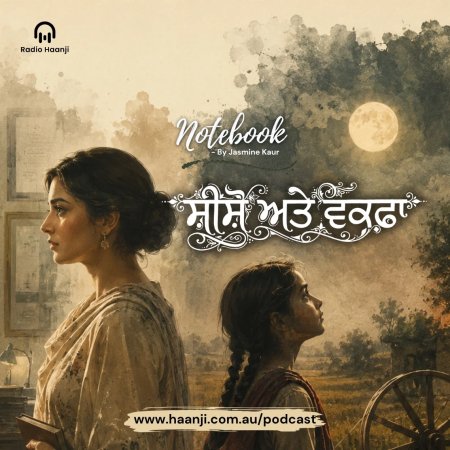








































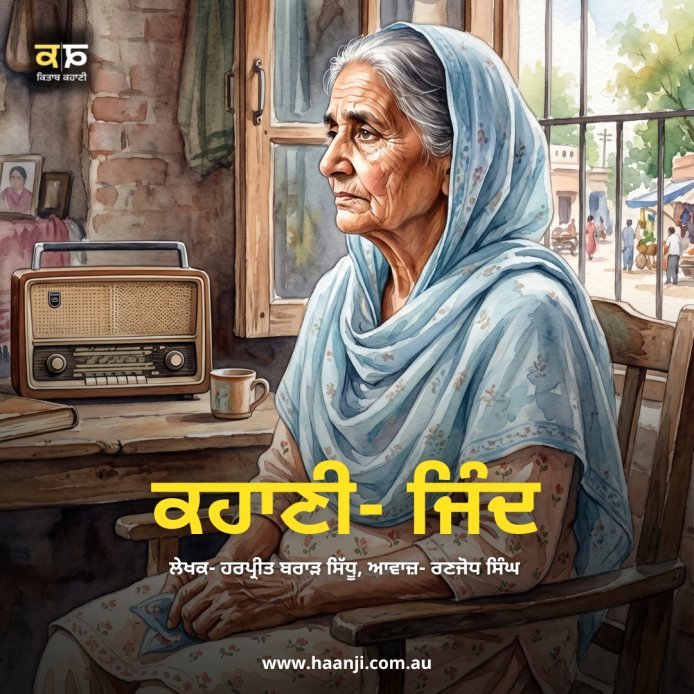

A widow. Sixty years of silence. One granddaughter who finally listened. ਜਿੰਦ is a free Punjabi audio story on Kitaab Kahani
She was married at seventeen. Widowed at nineteen. And for the next sixty years, no one thought to ask her how she was doing.
ਜਿੰਦ (Jind) — the name of the woman at the heart of this story. In Punjabi, the word ਜਿੰਦ also means the soul, the life force. The story, written by Harpreet Brar Sidhu and narrated by Ranjodh Singh on Radio Haanji's Kitaab Kahani, is one of the most quietly devastating pieces of Punjabi writing to grace these airwaves. It is not about trauma as a dramatic event. It is about trauma as a slow, daily accumulation — a lifetime of unkept grief that had nowhere to drain.
If you have ever sat near an elder who speaks to someone who isn't there, who laughs at nothing, who seems to have slipped sideways into a world only they can see — this story will stop you cold. Because it asks the question none of us are comfortable with: What did we never let them say?
The Story of ਜਿੰਦ — What It Is Really About
At its surface, ਜਿੰਦ is the story of a young widow in rural Punjab. Married at seventeen, barely past her first two years of marriage when her husband died, leaving her with a son not yet two months old. The sisters-in-law shifted immediately. The social world around her rearranged itself to tell her, without ever saying it directly, what was now expected: silence, restraint, invisibility.
Her mother and mother-in-law — both well-intentioned — delivered the same verdict:
"ਪੁੱਤ ਚੰਗੇ ਘਰਾਂ ਦੀਆਂ ਨੂੰਹਾਂ ਸਬਰ ਦੇ ਨਾਲ ਆਪਣੇ ਦਿਨ ਕੱਟ ਲੈਂਦੀਆਂ।" (Good daughters of good families endure their days with patience.)
And so she did. She endured. She wore the hand-me-down clothes of her sisters-in-law. She did not laugh loudly — because what would people think? She did not speak unless spoken to. She worked so efficiently at every gathering in the village — every death, every wedding, every crisis — that the entire village knew her name. But no one ever asked what was going on inside her.
Decades passed. Her son grew up. She saw him married. A grandchild was born. Then a great-grandchild. She went through the motions of each celebration, unable to remember, afterwards, whether she had even smiled.
What Happens When a Lifetime of Grief Has Nowhere to Go?
In her old age, Jind began to slip. She spoke to her dead husband. She called out his name in the night. She picked up her granddaughter-in-law's red dupatta and said — "Look how beautiful I am. He brought me this." She sang bolian to herself. She wept. She laughed at things no one else could see.
Her family considered admitting her to a hospital. The doctor who examined her gave a diagnosis that the story recounts with devastating precision:
"ਜੋ ਇਸ ਨੇ ਲੰਮੇ ਸਾਲਾਂ ਦੇ ਵਿੱਚ ਹੰਢਾਇਆ, ਉਹ ਸਭ ਕੁਝ ਇਹਨੇ ਆਪਣੇ ਅੰਦਰ ਡੱਕੀ ਰੱਖਿਆ। ਪਰ ਹੁਣ ਇਹਦਾ ਸਰੀਰ ਇਹਦਾ ਦਿਮਾਗ਼ ਸਾਥ ਛੱਡ ਗਿਆ।" (Everything she endured across those long years, she kept locked inside. But now her body and her mind have given up.)
The doctor's conclusion was not just clinical — it was a reckoning. Her brain, he said, no longer had the capacity to hold everything she had never been allowed to release. The suppression itself had become the illness.
This is not a metaphor. Research in trauma-informed psychology consistently shows that chronic emotional suppression has measurable neurological consequences. The body keeps the score — and eventually, the score overwhelms the body.
The Granddaughter-in-Law Who Chose Compassion
What makes this story extraordinary is not the suffering — it is what happens next. When the rest of the family fell silent with discomfort and uncertainty, one person stepped forward: the pote-nuh (ਪੋਤ-ਨੂੰਹ), the granddaughter-in-law.
She did not hospitalise Jind. She sat with her. Every day. She listened to stories that were not always coherent. She agreed when Jind said her husband was nearby. She brought water when Jind asked her to serve the husband who had died decades ago. She said yes when Jind called the grandchildren her infant son.
She did not correct. She did not dismiss. She witnessed.
When Jind said she wanted a new suit — this woman who had worn hand-me-downs her entire life — the granddaughter-in-law went and bought her four or five, without hesitation. "ਆਖਰ ਸਾਰਾ ਕੁਝ ਤਾਂ ਇਹਦਾ ਇਹਦੇ ਪੈਰਾਂ ਪਿੱਛੇ ਖਾਨੇ ਆਂ।"— In the end, everything we have goes with us or after us. So what is there to withhold?
Within months, Jind's condition began — quietly, partially — to improve. The silence broke. The decades of dammed grief began to move. She was not cured. But she had, for the first time, someone who would listen. And that changed things.
Listen to all Kitaab Kahani audio stories on Radio Haanji
What Does This Story Say About Mental Health in Our Community?
The story of Jind is not a medical case study. But it is a mirror. Harpreet Brar Sidhu uses it to ask something larger — how many people in our families, our communities, are carrying something exactly like this?
The story draws a striking image near its end: the person who suppresses everything is like a mud-brick house (ਕੱਚਾ ਕੋਠਾ) whose drainage is blocked. When the rains come, the water has nowhere to go. It sits. It seeps. The walls slowly give way. How long can such a house stand? How long before someone has to leave?
In Punjabi and South Asian communities particularly, emotional suppression is often framed as virtue — especially for women, especially for widows, especially for those whose grief might "disturb" others. Silence is equated with dignity. But as this story quietly, powerfully argues: that silence does not protect anyone. It accumulates. And when the body can no longer hold it, it spills — sometimes in ways the world calls madness, when what it actually is, is overflow.
The Deep Talk on Radio Haanji has explored similar terrain around mental wellness and human psychology — a companion listen for anyone moved by this story.
Why Being Heard Is Often the Only Medicine We Need
The writer's conclusion is not sentimental — it is precise:
"ਕਈ ਵਾਰੀ ਸਿਰਫ਼ ਇਨਸਾਨ ਬੋਲ ਕੇ ਹੀ ਆਪਣਾ ਇਲਾਜ ਕਰ ਲੈਂਦਾ।" (Sometimes, a person heals simply by being allowed to speak.)
Not medication. Not professional intervention — though these have their place. But first, before anything else: someone who will listen. Someone whose response is not to correct or dismiss, but to say — I hear you. I believe you. Tell me more.
The granddaughter-in-law in this story becomes, effectively, Jind's therapist — not through training, but through empathy. She understood something that professional care too often misses: the person doesn't always need to be made well. Sometimes they need to be made heard.
This has profound implications for how we show up for elders in our families. Not with solutions. Not with diagnoses. With presence. With patience. With the willingness to sit inside someone else's reality, even if it doesn't make sense to us.
Key Takeaways
- ਜਿੰਦ is a Punjabi short story by Harpreet Brar Sidhu, narrated by Ranjodh Singh on Radio Haanji's Kitaab Kahani— available free on Spotify, Apple Podcasts, and the Radio Haanji app.
- The story follows a widow who endures six decades of emotional suppression, eventually experiencing cognitive and emotional breakdown in old age — a consequence of a lifetime of unheard grief.
- The granddaughter-in-law's compassionate caregiving — listening without correcting, validating without judgment — becomes the catalyst for a partial emotional recovery.
- The story directly challenges the Punjabi and South Asian cultural equation of silence with virtue, asking what cost that silence exacts over a lifetime.
- The narrative argues that human connection — being truly heard — is often more healing than formal medical or psychiatric intervention.
- ਜਿੰਦ is a call to look at the elders around us differently: not as people who are "fine" because they never complain, but as people who may be carrying more than any of us ever asked them about.
Frequently Asked Questions
What is Kitaab Kahani on Radio Haanji?
Kitaab Kahani is an audio stories podcast on Radio Haanji 1674 AM that brings Punjabi literature, short stories, and written works to life through narration. The show makes quality Punjabi writing accessible to the diaspora in Australia, Singapore, and worldwide. Episodes are free to listen on Spotify, Apple Podcasts, and the Radio Haanji app at haanji.com.au.
Who wrote and narrated the story ਜਿੰਦ?
The story ਜਿੰਦ was written by Harpreet Brar Sidhu and narrated by Ranjodh Singh on Radio Haanji's Kitaab Kahani. The story explores the life of a Punjabi widow whose decades of emotional suppression eventually lead to cognitive and emotional breakdown in old age, and who finds healing through the compassion of her granddaughter-in-law.
What is the main message of the story ਜਿੰਦ?
The central message of ਜਿੰਦ is that unheard grief does not disappear — it accumulates, and eventually the human mind and body cannot contain it. The story argues that being truly heard is one of the most powerful forms of healing available to us. It challenges the cultural norm of silence-as-virtue, particularly as it is imposed on widows and women in South Asian communities.
Is ਜਿੰਦ about dementia or mental illness?
The story uses memory loss and emotional breakdown as the consequence of Jind's lifelong suppression rather than as a clinical diagnosis. The doctor in the story explains that her brain no longer has the capacity to contain everything she was never allowed to release. The story does not pathologise her condition — it contextualises it as the human cost of a lifetime without emotional expression or compassionate listening.
Where can I listen to Punjabi audio stories like ਜਿੰਦ?
Punjabi audio stories and literature are available through Radio Haanji's Kitaab Kahani show at haanji.com.au/podcast/kitaab-kahani. The show is also free to stream on Spotify and Apple Podcasts. Search "Radio Haanji Kitaab Kahani" on any podcast platform to find all available episodes.
How does Radio Haanji support Punjabi literature and storytelling?
Radio Haanji 1674 AM supports Punjabi literature through shows like Kitaab Kahani (audio stories and written works) and broader cultural programming. The station broadcasts from Melbourne and serves the Punjabi and Indian community across Australia, Singapore, and globally. All content is free to access on Spotify, Apple Podcasts, and the Radio Haanji app.
What other shows on Radio Haanji explore similar themes of wellbeing and community?
Listeners moved by ਜਿੰਦ may also enjoy The Deep Talk on Radio Haanji, which explores science, psychology, and human experience in depth. For more Punjabi literature and audio stories, all Kitaab Kahani episodes are archived at haanji.com.au/podcast/kitaab-kahani. Both shows are free and available on Spotify and Apple Podcasts.
There is a woman in your family who has never been asked what she carries. Maybe she is very old now. Maybe she seems fine — because she has always seemed fine. Maybe she speaks in ways that don't quite make sense anymore. ਜਿੰਦis a story written for her, about her, and for every one of us who has sat beside someone like her and not known what to say.
What do you say? You say: tell me. And then you listen.
If this story moved you, share it with someone in your family who might need to hear it. And explore more Punjabi literature and audio stories through Kitaab Kahani on Radio Haanji — new episodes every week, free and available everywhere you listen to podcasts.
Listen to ਜਿੰਦ narrated by Ranjodh Singh — on Kitaab Kahani, only on Radio Haanji.
Listen free:
What's Your Reaction?