









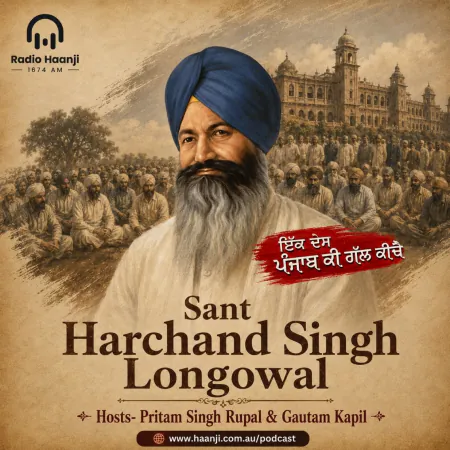






























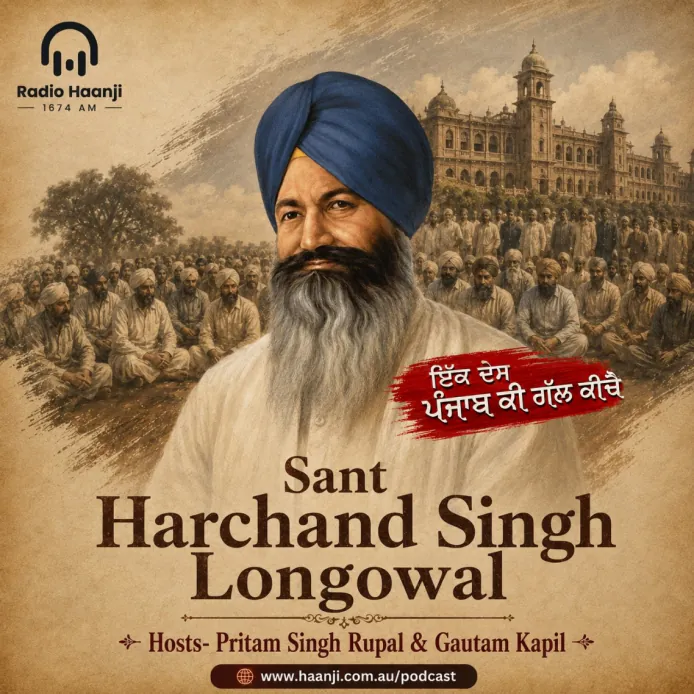
Sant Harchand Singh Longowal: Life, Punjab Accord & Political Legacy - Gautam Kapil
Host:-
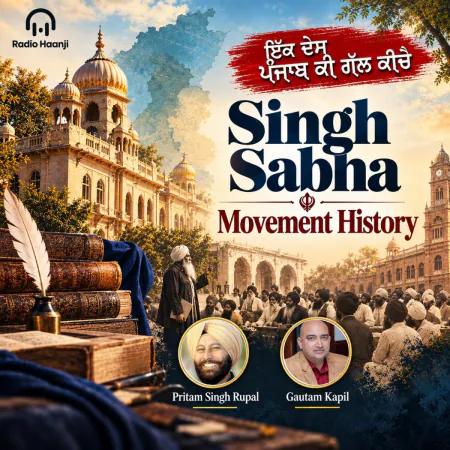
 Gautam Kapil
 Pritam Singh Rupal
Explore the life, leadership, and assassination of Sant Harchand Singh Longowal, the historic 1985 Rajiv-Longowal Accord, and its lasting impact on Punjab politics.
The political history of Punjab remains incomplete without understanding the life, leadership, and tragic demise of Sant Harchand Singh Longowal. A figure who stood at the center of one of Punjab's most turbulent eras, Longowal represented a moderate political voice during a time of intense polarization. His leadership of the Dharam Yudh Morcha, the signing of the historic Punjab Accord, and his untimely assassination on August 20, 1985, continue to evoke profound reflections on leadership, sacrifice, and political accountability.
Early Life and Spiritual Roots
Born on January 2, 1932, in the village of Ghabdan in Sangrur district, Harchand Singh Longowal came from a modest agricultural background. Drawn to religious devotion and Sikh traditions from an early age, he dedicated his formative years to spiritual service. He served extensively at Gurdwara Bhai Mani Singh in Longowal, which earned him the reverent title of "Sant."
His commitment to community service led to his appointment as the Jathedar of Takht Sri Damdama Sahib and later as the Vice President of the Shiromani Gurdwara Parbandhak Committee (SGPC). His transition into electoral politics was marked by a historic victory when he defeated former PEPSU Chief Minister Brish Bhan from the Lehra Gaga constituency, cementing his influence in regional politics.
Leading the Dharam Yudh Morcha
As President of the Shiromani Akali Dal, Sant Longowal was appointed the "Dictator" (supreme leader) of the Dharam Yudh Morcha launched in the early 1980s. During the height of the movement between 1982 and early 1984, Longowal shared the stage at Sri Manji Sahib inside the Sri Darbar Sahib complex with Sant Jarnail Singh Bhindranwale, addressing thousands of volunteers courting arrest for Punjab's rights.
Despite operating in a charged atmosphere, Longowal maintained a distinct, moderate approach to political negotiation. Following the tragic events of Operation Blue Star in June 1984, Longowal was detained and spent months in Jodhpur jail alongside other senior political figures.
The Rajiv-Longowal Accord (Punjab Accord)
Upon his release in 1985, Longowal took a decisive and controversial step aimed at restoring peace in a fractured state. Facilitated by then-Governor of Punjab Arjun Singh, Longowal engaged in direct negotiations with Prime Minister Rajiv Gandhi. On July 24, 1985, they signed the historic Rajiv-Longowal Accord (The Punjab Accord).
The accord addressed several core demands, including the transfer of Chandigarh to Punjab, rehabilitation of army deserters, river water sharing disputes, and judicial inquiries into violence against Sikhs. While seen by supporters as a courageous step toward reconciliation and ending bloodshed, the accord was deeply criticized by hardline and radical factions, who viewed it as a premature compromise.
Assassination and Electoral Aftermath
Sant Longowal’s pursuit of peace came at the ultimate cost. On August 20, 1985—less than a month after signing the accord—he was assassinated while addressing a gathering at a gurdwara in Sherpur, Sangrur.
The tragedy generated a profound sympathy wave across the state. In the subsequent assembly elections, the Shiromani Akali Dal, led by Surjit Singh Barnala, won a decisive victory by securing 73 out of 100 contested seats. The high voter turnout reflected the public's overwhelming desire for peace and democratic representation. However, the subsequent failure of the central government to fully implement key clauses of the accord—such as the scheduled transfer of Chandigarh in January 1986—ultimately undermined the state government and led to continued unrest.
Re-evaluating Longowal's Legacy
Sant Harchand Singh Longowal's life highlights the immense challenges faced by moderate leaders during periods of severe crisis. Rather than viewing historical assassinations through simplified lenses, historians emphasize analyzing the complex socio-political conditions that shaped such events. Longowal remains a symbol of a leader who risked his standing and his life in an earnest attempt to bring stability and healing to Punjab.
Frequently Asked Questions
Who was Sant Harchand Singh Longowal?
What was the Rajiv-Longowal Accord?
When and how did Sant Harchand Singh Longowal die?
What was the political impact of Longowal's assassination?
Why was the Punjab Accord controversial?
What's Your Reaction?