






























































































Growth Mindset: How to Overcome Failure - Dr. Harpreet Shergill and Vishal Vijay Singh
Host:-
 Dr Harpreet Shergil
 Vishal Vijay Singh
Turn setbacks into lessons. Dr. Harpreet Shergill & Vishal explore the psychology of growth. Listen free on Spotify now via Radio Haanji.
Sat Sri Akal, Radio Haanji family! We have all been there—that sinking feeling in the pit of your stomach when a plan falls apart or a dream seems to slip through your fingers. But what if that very moment of frustration was actually the secret ingredient to your next big win?
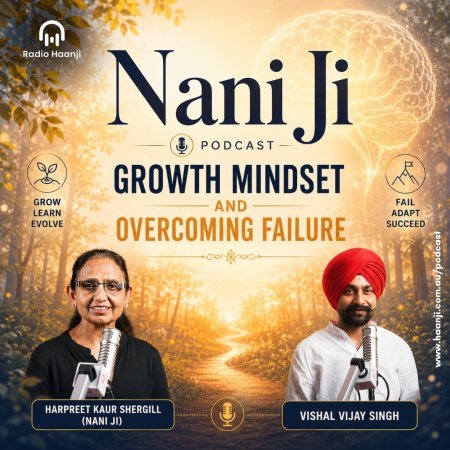
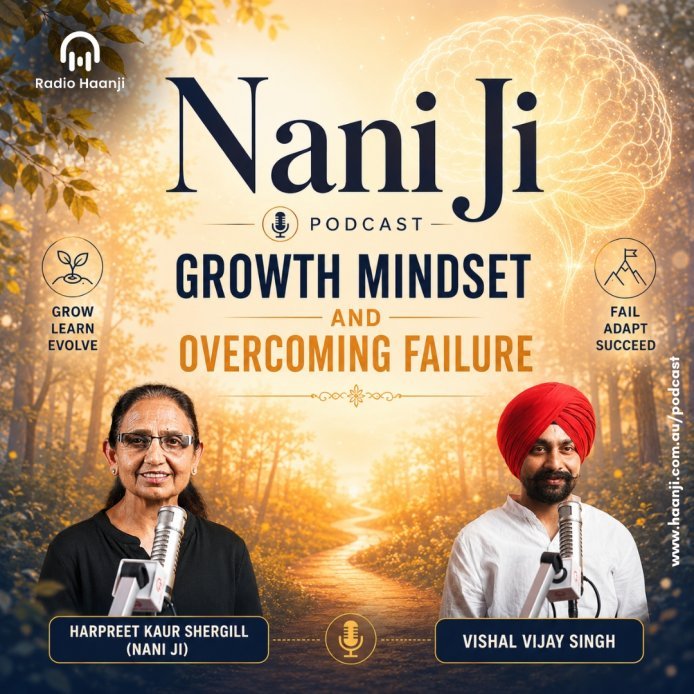
In our latest episode of Nani Ji, hosts Vishal Vijay Singh and Dr. Harpreet Shergill (our beloved Nani Ji) took a deep dive into the psychology of failure. We are moving beyond just "trying harder" and looking at how to actually rewire our brains for a growth mindset. Whether you are navigating the education system in Australia or trying to find your true calling, this discussion is the grounding wisdom we all need to move forward with confidence.
What Is a Growth Mindset and Why Does It Matter?
The concept of a growth mindset isn't just a buzzword; it is a fundamental shift in how we view our own abilities. A "fixed mindset" tells us that our talents are set in stone—you are either good at something or you aren't. When a person with this mindset fails, they often feel like they are a failure, leading to a cycle of blame and hopelessness.
Real progress in overcoming failure happens when we view setbacks as essential life lessons. Successful people do not necessarily fail less; they just have a better "bounce back" rate. By seeing failure as data rather than a dead end, you allow yourself the room to evolve, adapt, and eventually succeed in ways you didn't think possible.
Key Highlights: How to Move Past a Setback
Vishal and Dr. Shergill outlined a mechanical, step-by-step approach to overcoming failure that anyone can apply to their daily life:
-
The "Post-Mortem" Analysis: Do not just walk away from a mistake. Look at it objectively. Was it a lack of planning, bad timing, or a resource issue?
-
Personal Responsibility: It is easy to blame the economy or the boss. But taking ownership is where your power lies. If you own the failure, you own the solution.
-
The Power of Feedback: Sometimes we are too close to our own problems. Seeking an outside perspective can highlight gaps in our strategy that we simply cannot see ourselves.
-
Emotional Regulation: Managing the fear of failing again is often the hardest part. It requires staying calm and keeping a clear head so you can try a second or third time with a fresh perspective.
Takeaways: Education and Finding Your Passion
A fascinating part of the conversation centered on the differences between the Indian and Australian education systems. Vishal shared a personal story about his struggles with math, noting that his "failure" was not about ability, but about foundational gaps and a lack of interest.
Dr. Shergill pointed out that the Australian system prioritizes making children feel "safe and loved" before the learning even starts. This is a huge takeaway for parents in the Punjabi diaspora. We often pressure our children to be doctors or engineers, like the story shared of the child who became a doctor to please their parents, only to realize later their heart was in the kitchen as a chef.
Shukriya for listening to these vital stories. Let’s support our children’s interests rather than just paying for more tutors.
Frequently Asked Questions
What is the best way to start building a growth mindset?
Building a growth mindset starts with changing your internal dialogue. Instead of saying "I can't do this," try saying "I can't do this yet." Focus on the process of learning rather than the immediate result. This shift allows you to value effort and persistence, which are the true foundations of success.
How can parents support a child who is struggling in school?
Parents should first identify if there are foundational gaps in the subject. Often, a child isn't "bad" at a subject; they simply missed an earlier step. Provide emotional support and focus on their interests. In the Australian system, ensuring a child feels safe and emotionally regulated is the first step toward improvement.
Why do some people struggle with overcoming failure more than others?
Many people fall into the "failure trap" because they have a fixed mindset. They view a single setback as a reflection of their permanent worth. Overcoming failure requires resilience and the ability to analyze a situation objectively. Those who take personal responsibility and seek feedback generally find it easier to bounce back quickly.
What is the difference between an interest and a strength?
An interest is something a person enjoys doing, while a strength is an area where they naturally excel or have developed high competence. The goal for career success is to find the intersection where a person's passion meets their capabilities, providing support for growth rather than forcing a path that lacks interest.
How does emotional regulation help in achieving success?
Emotional regulation allows you to manage the fear and frustration that come with setbacks. By keeping your emotions in check, you can perform an objective "post-mortem" on your failures. This clarity is essential for making better decisions in your next attempt and avoiding the cycle of repetitive mistakes in the future.
Conclusion
Rewiring your brain for success does not happen overnight, but it begins the moment you decide that failure is your teacher, not your enemy. Whether you are a student, a professional, or a parent, remember that every setback is just a setup for a stronger comeback.
Haanji, it is time to embrace the journey. For more wisdom on life and relationships, make sure to tune in to our weekly episodes.
Listen to Growth Mindset and Overcoming Failure on Nani Ji with Vishal Vijay Singh and Dr. Harpreet Shergill— only on Radio Haanji.
Listen Free — Today Updates on Radio Haanji
Catch every episode of Today Updates for free on your favorite platform:
Radio Haanji 1674 AM is Austalia's Punjabi community radio station.
Listen free at haanji.com.au | Spotify | Apple Podcasts | iOS App | Android App
Serving the Punjabi community in Australia, Canada, Singapore and world wide.
What's Your Reaction?