















































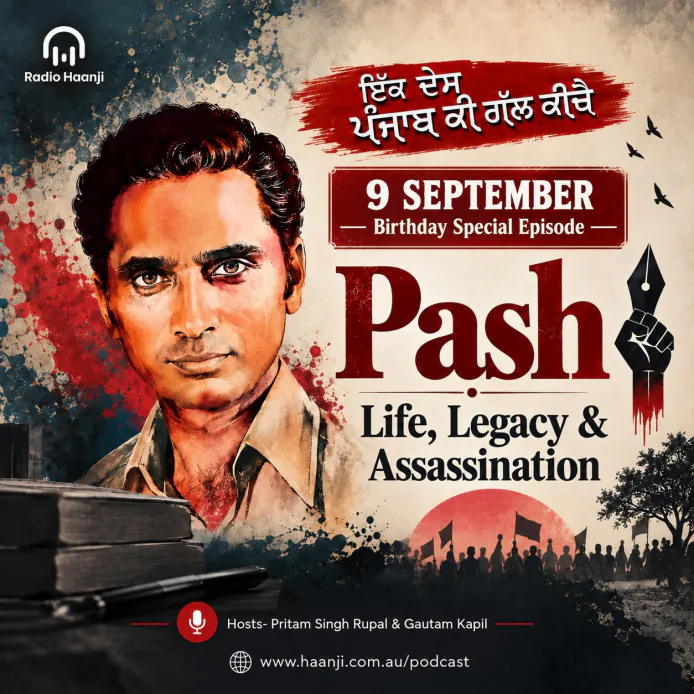
Punjabi Revolutionary Poet Pash: Life, Legacy & Assassination - Preetam Singh Rupal & Gautam Kapil
Host:-
 Gautam Kapil
 Pritam Singh Rupal
Discover the life, ideology, and enduring legacy of Punjabi revolutionary poet Pash. Learn why Avtar Singh Sandhu remains a powerful voice in literature.
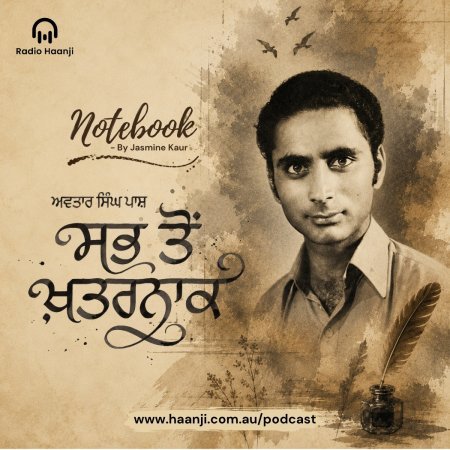
Avtar Singh Sandhu, known universally by his pen name Pash, remains one of the most polarizing and powerful figures in modern South Asian literature. Born on September 9, 1950, in Talwandi Salem, Jalandhar, he emerged as a fearless voice against state oppression and right-wing extremism. While many poets of his era relied on traditional romanticism, Pash wielded his words like a weapon, challenging the establishment with an intellectual ferocity that forever altered the landscape of Punjabi poetry.
The cultural weight of his work has only grown since his tragic death. Today, Pash is not just a subject of academic study; he is a symbol of uncompromising resistance. From university syllabuses to the lyrics of contemporary music, his verses continue to resonate with those who challenge systemic injustice. Understanding Pash requires looking beyond the ink on the page and examining the turbulent socio-political climate of Punjab that forged his radical worldview.
Who was Punjabi revolutionary poet Pash?
Avtar Singh Sandhu, known as Pash, was a prominent Punjabi revolutionary poet born in 1950. Emerging during the Naxalite movement, he became renowned as a "Baagi Kavi" (rebel poet) who used his literature to fiercely critique state oppression, political hypocrisy, and right-wing extremism until his assassination in 1988.
Pash aligned his early worldview with the CPI-ML (Communist Party of India - Marxist-Leninist) ideas prevalent during the Naxalite movement, yet his art transcended routine ideological rhetoric. He utilized sharp intellectual depth and emotional tenderness, combining romantic metaphors with stark, anti-establishment grit. His poetry actively challenged media complicity and state hypocrisy, most notably in works like Frontier Na Sahi Tribune Padho and Saade Samiaan Vich, the latter serving as a reflection on the Emergency era and systemic failures.
His fearless criticism of power quickly made him a target. Throughout his life, Pash faced repeated arrests, harassment by police, and prolonged periods of jail time without just cause. Despite this persecution, he refused to dilute his message, maintaining a firm stance against both state violence and religious extremism.
The Ideological Roots and Journalistic Work of the Baagi Kavi
While Pash is primarily celebrated for his verse, his commitment to grassroots activism extended deeply into literary journalism. He believed that literature could not exist in a vacuum; it had to actively engage with and awaken the working class. To this end, he founded and edited radical magazines, most notably Siyaad—a title symbolizing the turning of soil for tilling—and Rolebaan.
Through these publications, Pash provided a platform for subversive thought and political critique. He critiqued global imperialism and exploitation in poems like Washington, showcasing an understanding of state-sponsored violence that extended far beyond the borders of Punjab. His journalism and poetry functioned symbiotically, seeking to disrupt comfortable narratives and force society to confront uncomfortable truths about inequality and authoritarianism.
Why was Avtar Singh Sandhu assassinated?
Pash was assassinated in 1988 by militants at his village tubewell alongside his friend Hans Raj. His relentless critique of power, establishment narratives, and religious extremism made him a prime target for those who sought to silence his fearless, anti-establishment ideology and highly influential literary voice.
The socio-political climate of Punjab in the 1980s was highly volatile, marked by intense militancy and state crackdowns. Pash’s refusal to align with religious extremism or soften his criticism of armed fundamentalism placed him in direct danger. He viewed the growing militancy not as a path to liberation, but as another form of authoritarian oppression that threatened the working class and intellectual freedom.
On the day of his death, he was ambushed while carrying out routine agricultural work in his home village. His assassination was a calculated move to eliminate one of Punjab's most articulate and uncompromising critics. However, the attempt to silence him ultimately failed; his martyrdom cemented his status as a permanent icon of literary resistance.
What is the legacy of Pash in modern Punjabi culture?
Pash’s legacy endures globally through his intellectually sharp, emotionally tender poetry, which is translated into multiple languages and taught in university curriculums. His rebellious spirit continues to influence modern Punjabi pop culture, frequently referenced by contemporary artists and musicians as a symbol of uncompromising ideological resistance.
The breadth of Pash's influence is vast. His iconic poem Sabhton Khatarnak (The Most Dangerous Thing) remains a foundational text in human rights discourse, and his works have been integrated into India's NCERT curriculum. Furthermore, his literature has crossed borders, finding publication in the Shahmukhi script in Pakistan, bridging the cultural divide through shared revolutionary sentiment.
In contemporary times, his ideology heavily permeates Punjabi music and pop culture. Modern artists, including the late Sidhu Moose Wala, have referenced "Pash de vichar" (Pash's ideology) in their tracks, positioning him as the ultimate standard of grit and defiance. Culturally, he is often contrasted with the romantic melancholy of Shiv Kumar Batalvi, highlighted in lyrics that juxtapose Batalvi's romanticism with the fierce, grounded realism of Pash's words.
Key Takeaways
-
Avtar Singh Sandhu, widely known by his pen name Pash, was born on September 9, 1950, in Talwandi Salem, Jalandhar.
-
He emerged as a fearless "Baagi Kavi" (rebel poet) who fiercely criticized state oppression, media complicity, and right-wing extremism.
-
Beyond poetry, Pash engaged in grassroots literary journalism by founding and editing subversive magazines like Siyaad and Rolebaan.
-
Because of his anti-establishment writings, he faced severe police harassment and was ultimately assassinated by militants in 1988 alongside his friend Hans Raj.
-
His literary work features profound intellectual depth and is now taught in university curriculums, published in Shahmukhi in Pakistan, and included in the NCERT syllabus.
-
Pash's rebellious legacy heavily influences modern Punjabi music, with contemporary artists frequently referencing his ideology to symbolize resistance.
Avtar Singh Sandhu did not just write about the world; he sought to change it, utilizing his literature as an undeniable force against apathy and oppression. While his life was violently cut short, the ideological flames he stoked through his poetry continue to burn brightly across South Asia and the global diaspora. If you found this exploration of Pash’s life impactful, consider sharing this article with fellow literature enthusiasts or subscribing to our newsletter for more deep dives into the lives of history's most defiant voices.
Frequently Asked Questions
What is Pash's real name?
When and where was Pash born?
What is the meaning of Baagi Kavi?
What is Pash's most famous poem?
Why is Pash referenced in modern Punjabi music?
What's Your Reaction?







Related Posts