






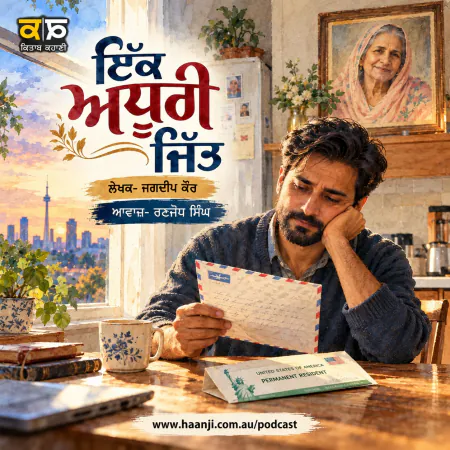








































































ਹੌਂਸਲੇ ਦੀ ਕਹਾਣੀ — ਮਨਦੀਪ ਦੀ ਕੈਨੇਡਾ ਵਾਲੀ ਰਾਤ। A powerful punjabi audio kahani about betrayal and starting over. Listen free on Radio Haanji's Kitaab Kahani podcast.
This is one of those stories that starts with a wedding and ends with a woman learning to stand on her own. It does not end happily in the way Punjabi films do. It ends better than that.
ਮਨਦੀਪ ਆਪਣੇ ਮਾਂ-ਬਾਪ ਦੀ ਲਾਡਲੀ ਧੀ ਸੀ। Her father, Niranjan Singh, loved her the way Punjabi fathers love — quietly and completely. When her studies finished, the family started looking for a match. A boy from Malwa, settled in Canada, good family, solid land. Her bhhua brought the lead. Everyone approved. Photos were exchanged. Enquiries were made. The wedding was fixed.
The ceremony itself was everything it was supposed to be. Niranjan Singh held nothing back. And when it was over, he felt that relief Punjabi fathers know — the weight of a daughter's future briefly lifted, the quiet pride of having done right by her.
But sometimes the doing right part is not as simple as the wedding day makes it look.
ਕੈਨੇਡਾ ਵਾਲਾ ਮੁੰਡਾ — ਤੇ ਚੁੱਪ ਦਾ ਉਹ ਡੇਢ ਮਹੀਨਾ
Six weeks after the wedding, when Mandeep came back to visit her parents, she was not her usual self. Her husband had returned to Canada immediately after the ceremony. Since then — ਚੱਜ ਦੇ ਨਾਲ ਇੱਕ ਫੋਨ ਵੀ ਨਹੀਂ ਕੀਤਾ। Not a single proper call.
Her father said what fathers say: he is busy, Canada is like that, the work pressure is different there. Your visa will come soon. Once you are both together, everything will settle.
ਸ਼ਾਇਦ ਮਨਦੀਪ ਨੂੰ ਵੀ ਇਹੋ ਹੀ ਆਸ ਸੀ।
And then the visa came. And with it — on the same day almost — a phone call from a Canadian number.
She ran to answer it. She was hoping for his voice. What she got instead was a woman's voice, calm and deliberate: ਉਹ ਮੇਰਾ ਐ, ਉਹ ਸਿਰਫ਼ ਮੇਰਾ। He married you, I don't know under what pressure, but if you're planning to come here, come knowing that. ਦਿਲੋਂ ਤਾਂ ਉਹ ਮੈਨੂੰ ਚਾਹੁੰਦਾ।
ਇਹ ਗੱਲ ਸੁਣ ਕੇ ਉਹ ਅੰਦਰੋਂ-ਅੰਦਰੀਂ ਕੰਬ ਗਈ।
She told no one. She thought: if I reach Canada, I can fix this myself.
ਏਅਰਪੋਰਟ 'ਤੇ ਉਮੀਦ, ਘਰ ਵਿੱਚ ਹਨੇਰਾ
She landed in Canada. Her in-laws had come to receive her. Her husband was not there.
He was "not feeling well," they said.
ਇੰਨੀ ਵੀ ਕਿੰਨੀ ਤਬੀਅਤ ਖਰਾਬ ਕਿ ਪਹਿਲੀ ਵਾਰ ਓਪਰੇ ਮੁਲਕ ਆਈ ਵਹੁਟੀ ਨੂੰ ਲੈਣ ਨਾ ਆ ਸਕੇ? She said nothing. But the questions sat heavily the whole way home. And with them — that first phone call, still unanswered, still circling.
He was not at the house either.
She went into the room they had prepared for her. She closed the door. ਖੂਬ ਰੋਈ। She blamed herself. She blamed the match. She blamed the bhhua who had arranged it all with such confidence.
ਦੂਜਾ ਫੋਨ — ਤੇ ਉਹ ਪਲ ਜਦੋਂ ਜ਼ਮੀਨ ਖਿਸਕ ਗਈ
The other woman called again. This time she said: his parents brought you from Punjab because they wanted it done. He cannot live without me and he has made me that promise. He is too decent to say this to your face, so I am saying it for him.
And somewhere in the background of that call — his voice.
ਕੰਬਦੇ ਹੱਥਾਂ ਵਿੱਚੋਂ ਫੋਨ ਹੇਠਾਂ ਜਾ ਡਿੱਗਿਆ।
She stayed in that room for two or three days. Her in-laws came and went with careful, soft words. The kind of words people use when they already know the truth and are performing concern.
ਉਹਨਾਂ ਨੂੰ ਤਾਂ ਮਨਦੀਪ ਤੋਂ ਪਹਿਲਾਂ ਹੀ ਪਤਾ ਸੀ।
They had known all along. Every gentle word they offered was for their own image, not for her.
ਉਹ ਪਲ ਜਦੋਂ ਕਮਰੇ ਦਾ ਦਰਵਾਜ਼ਾ ਖੁੱਲ੍ਹਿਆ
Eventually Mandeep came out.
And when she spoke to her in-laws, she said what needed to be said, plainly.
"ਪਾਪਾ, ਤੁਸੀਂ ਮੈਨੂੰ ਬੜੀ ਇੱਜ਼ਤ ਦੇ ਨਾਲ ਵਿਆਹ ਕੇ ਲਿਆਏ ਸੀ, ਪਰ ਮੇਰੀ ਜ਼ਿੰਦਗੀ ਨਾਲ ਇੱਦਾਂ ਨਹੀਂ ਸੀ ਖੇਡਣਾ ਚਾਹੀਦਾ। ਤੁਸੀਂ ਮੈਨੂੰ ਸਮੁੰਦਰ ਦੇ ਅੱਧ-ਵਿਚਾਲੇ ਲਿਆ ਕੇ ਖੜ੍ਹੀ ਕਰ ਦਿੱਤੀ — ਮੈਨੂੰ ਚੱਪੂ ਵੀ ਨਹੀਂ ਚਲਾਉਣਾ ਆਉਂਦਾ। ਬੱਸ ਇੰਨਾ ਕਹਿਣਾ ਚਾਹੁੰਦੀ ਆਂ — ਮੈਂ ਆਪਣਾ ਗੁਜ਼ਾਰਾ ਆਪ ਕਰ ਲੂੰਗੀ। ਮੈਨੂੰ ਰੋਕਣ ਦੀ ਕੋਸ਼ਿਸ਼ ਨਾ ਕਰਿਓ।"
She packed one bag. Her father called. Her in-laws tried. No one could stop her.
ਰਾਤ ਬੇਸ਼ੱਕ ਠੰਡੀ ਸੀ। But what was burning inside her that cold Canadian night — ਸ਼ਾਇਦ ਉਹ ਨਹੀਂ ਸੀ ਕੋਈ ਜਾਣ ਸਕਦਾ।
ਸਹੇਲੀ, ਨੌਕਰੀ ਤੇ ਇੱਕ ਨਵੀਂ ਸ਼ੁਰੂਆਤ
Good fortune: a college friend lived in the same city. Mandeep turned up at her door. She cried for days — ਆਪਣੇ-ਆਪ ਨੂੰ ਕੋਸਿਆ, ਰਿਸ਼ਤੇ ਨੂੰ ਕੋਸਿਆ, ਭੂਆ ਨੂੰ ਕੋਸਿਆ, ਮਾਂ-ਬਾਪ ਨੂੰ ਕੋਸਿਆ।
And then, one day, she stopped. Not because the pain had left. But because she looked at it honestly: ਇਹਦੇ ਨਾਲ ਕੀ ਹੋਣਾ, ਕੋਈ ਫਾਇਦਾ ਤਾਂ ਨਹੀਂ।
She found a job. She threw herself into it. Slowly — ਉਹ ਆਪਣੇ ਹੰਝੂ ਪੂੰਝਣੇ ਸਿੱਖ ਗਈ। She did not stop hurting. She stopped letting the hurt make every decision.
ਸਾਰੀ ਜ਼ਿੰਦਗੀ ਇਹੋ ਜਿਹੇ ਇਨਸਾਨ ਦੇ ਨਾਲ ਖਰਾਬ ਕਰਨ ਦੇ ਨਾਲੋਂ ਚੰਗਾ — ਮੇਰਾ ਛੇਤੀ ਲੜ ਛੁੱਟਿਆ।
ਪਾਪਾ, ਮੈਂ ਹੁਣ ਬਿਲਕੁਲ ਠੀਕ ਆਂ
The day she felt something solid under her feet again, she called her father.
"ਪਾਪਾ, ਮੈਂ ਹੁਣ ਬਿਲਕੁਲ ਠੀਕ ਆਂ। ਮੈਂ ਹੁਣ ਤੁਹਾਡੀ ਉਹ ਲਾਡਲੀ ਨਹੀਂ ਰਹੀ ਜਿਹੜੀ ਤੁਹਾਡੀ ਉਂਗਲ ਫੜ ਕੇ ਚੱਲੇ। ਰੱਬ ਨੇ ਹਿੰਮਤ ਦੇ ਦਿੱਤੀ। ਮੇਰੀ ਚਿੰਤਾ ਨਾ ਕਰਿਓ — ਮੈਨੂੰ ਰੱਬ ਨੇ ਮੇਰੇ ਜੋਗਾ ਕਰ ਦਿੱਤਾ।"
Niranjan Singh could not speak.
He had been quietly preparing to go to Canada — to find her, to ask if she was all right, to bring her home if needed. Her voice stopped all of that. There was something in it he had not expected. ਜਜ਼ਬਾ। Energy. A certainty that had not been there before.
After the call, he sat with the thought: ਧੀ ਨਹੀਂ, ਇਹ ਤਾਂ ਪੁੱਤਾਂ ਵਾਲਾ ਹੌਂਸਲਾ ਲੈ ਕੇ ਜੰਮੀ ਐ।
He had always thought she was the one who needed protecting.
ਕਹਾਣੀ ਦਾ ਸਬਕ — ਜੋ ਸਿਰਫ਼ ਮਨਦੀਪ ਦਾ ਨਹੀਂ
This Punjabi audio kahani was written by Avtaar Singh Dhaliwal and shared with Radio Haanji by Sukhvinder Kaur.
But the situation it describes — a woman placed in the middle of someone else's unfinished life, with no map and no warning — is not rare. People in the Punjabi diaspora across Melbourne, Sydney, Canada and Singapore know this story, or know someone who does.
The particulars differ. The shape of the hardship changes. What stays the same is the choice that eventually arrives: keep blaming, or start moving.
ਹੰਭ-ਹਾਰ ਕੇ ਬੈਠ ਜਾਣਾ — ਇਹ ਤਾਂ ਬੁਜ਼ਦਿਲਾਂ ਦਾ ਕੰਮ ਹੁੰਦਾ।
Mandeep does not become invincible at the end of this story. She does not find a better man or a dramatic revenge. She learns to wipe her own tears — which is quieter, harder and far more useful than any of that.
ਬੰਦਾ ਅੱਗੇ ਕਦਮ ਪੁੱਟੇ, ਚਾਨਣ ਦਾ ਇੰਤਜ਼ਾਰ ਕਰੇ। ਸ਼ਰਤ ਇੱਕੋ — ਕਦਮ ਨਹੀਂ ਰੁਕਣੇ ਚਾਹੀਦੇ।
ਅਕਸਰ ਪੁੱਛੇ ਜਾਂਦੇ ਸਵਾਲ / Frequently Asked Questions
Kitaab Kahani 'ਤੇ ਮਨਦੀਪ ਦੀ ਪੰਜਾਬੀ ਆਡੀਓ ਕਹਾਣੀ ਕਿੱਥੇ ਸੁਣੀਏ?
ਮਨਦੀਪ ਦੀ ਕਹਾਣੀ Radio Haanji ਦੇ Kitaab Kahani show ਦਾ ਹਿੱਸਾ ਹੈ। ਤੁਸੀਂ ਇਹ ਪੰਜਾਬੀ ਆਡੀਓ ਕਹਾਣੀ haanji.com.au 'ਤੇ, Radio Haanji App (iOS ਤੇ Android) 'ਤੇ, ਅਤੇ Spotify ਸਮੇਤ ਸਾਰੇ ਵੱਡੇ podcast platforms 'ਤੇ ਬਿਲਕੁਲ ਮੁਫ਼ਤ ਸੁਣ ਸਕਦੇ ਹੋ। ਨਵੀਆਂ ਕਹਾਣੀਆਂ ਹਰ weekday ਸਵੇਰੇ ਆਉਂਦੀਆਂ ਨੇ।
What is Kitaab Kahani on Radio Haanji?
Kitaab Kahani is Radio Haanji 1674 AM's daily Punjabi audio story series, broadcast from Melbourne, Australia. Each episode features a short story — emotional, motivational or slice-of-life — read in Punjabi for the diaspora community across Australia, Canada, Singapore and beyond. Episodes are free to listen at haanji.com.au and on all major podcast platforms every weekday morning.
ਕੀ ਇਹ ਪੰਜਾਬੀ ਕਹਾਣੀਆਂ ਮੁਫ਼ਤ ਸੁਣੀਆਂ ਜਾ ਸਕਦੀਆਂ ਨੇ?
ਹਾਂ। Kitaab Kahani ਦੀਆਂ ਸਾਰੀਆਂ ਪੰਜਾਬੀ ਆਡੀਓ ਕਹਾਣੀਆਂ ਮੁਫ਼ਤ ਨੇ। haanji.com.au 'ਤੇ ਜਾਓ, Radio Haanji App ਡਾਊਨਲੋਡ ਕਰੋ, ਜਾਂ Spotify ਅਤੇ Apple Podcasts 'ਤੇ "Kitaab Kahani Radio Haanji" ਖੋਜੋ। ਕੋਈ subscription ਜਾਂ payment ਦੀ ਲੋੜ ਨਹੀਂ — ਸੱਚਮੁੱਚ ਮੁਫ਼ਤ।
Who wrote the story "Mandeep" featured on Kitaab Kahani?
The story "Mandeep" was written by Avtaar Singh Dhaliwal. It was shared with Radio Haanji by Sukhvinder Kaur and broadcast as part of the Kitaab Kahani Punjabi audio story series. The story explores marriage, betrayal, and the quiet courage it takes to rebuild a life — themes drawn from real experiences in the Punjabi diaspora community.
Radio Haanji ਦੇ ਹੋਰ Shows ਸੁਣੋ
If this Punjabi audio kahani stayed with you, Radio Haanji has more to offer. Listen to the full Kitaab Kahani archive for stories like this one — emotional, real, and made for the diaspora. You can also explore The Deep Talk, Radio Haanji's show on science, space, species and exploration, and Laughter Therapy for the comedy and riddles that the Punjabi community has been sharing on air every week.
All shows are free at haanji.com.au.
What's Your Reaction?