































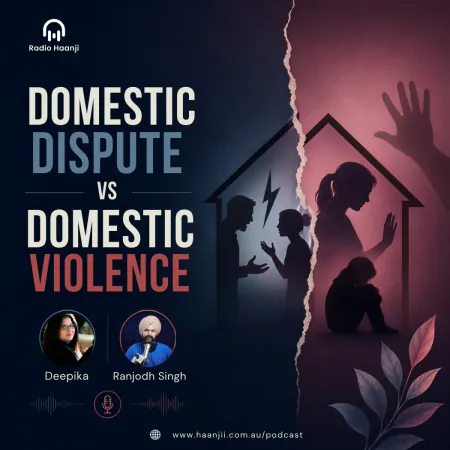


































































What Is Domestic Violence? Identifying the Warning Signs and Coercive Control - Deepika & Ranjodh Singh
Host:-
 Ranjodh Singh
Explore the hidden forms of domestic violence with counselor Deepika Gupta Singla on Radio Haanji 1674AM. Learn to spot non-physical abuse red flags.
Domestic silence often speaks louder than words. When most people hear the phrase domestic abuse, their minds instantly picture physical altercations or visible injuries. However, the spectrum of harmful behavior inside a home extends far deeper into psychological intimidation, verbal degradation, and systemic financial manipulation. On a landmark episode broadcast on Radio Haanji 1674AM, host Ranjodh Singh sat down with relationship counselor Deepika Gupta Singla to explore the lesser-known forms of domestic violence that silently damage families.
Recognizing the various forms of domestic violence is essential for stopping toxic behavior before it permanently fractures a household. Non-physical abuse is frequently dismissed as routine relationship stress or temporary friction. By examining emotional cruelty, coercive financial restrictions, and verbal power dynamics, this discussion provides a grounded framework for understanding relationship health, recognizing red flags, and supporting vulnerable family members.
What are the main forms of domestic violence beyond physical abuse?
The main forms of domestic violence beyond physical assault include verbal abuse, emotional or psychological manipulation, financial coercive control, and social isolation. These non-physical tactics are designed to humiliate, intimidate, or exercise continuous dominance over a partner, child, or elder within a household, systematically eroding their personal autonomy and emotional well-being.
While physical abuse leaves external marks, psychological and verbal cruelty breaks down a victim's internal sense of self-worth. In domestic settings, control often manifests through persistent shouting, name-calling, threats, or public belittlement. Over time, these behaviors create an environment of fear where one partner feels forced to constantly walk on eggshells.
Counselors emphasize that domestic abuse covers any dynamic within the four walls of a home aimed at maintaining unfair power. Whether targeted at a spouse, an aging parent, or a child, non-physical harm instills a sense of helplessness that can be just as damaging as physical violence.
Behind Closed Doors: Unpacking Verbal and Emotional Abuse
Verbal and emotional abuse represent two of the most pervasive yet frequently overlooked threats in modern relationships. On the Radio Haanji broadcast, Deepika Gupta Singla noted that verbal cruelty often begins subtly—a sharp tone, condescending remarks, or aggressive shouting during minor disagreements. Over time, this escalates into continuous insults and intentional degradation.
Emotional manipulation frequently relies on public or private humiliation. A partner might mock their spouse's abilities, appearance, or background in front of extended family or friends under the guise of casual humor. Another common form of emotional harm involves damaging comparisons, such as holding up someone else's achievements to make a partner feel inadequate.
"Violence means control, humiliation, intimidation, and isolation. It is about using any means necessary to dictate how another person lives within their own home." — Deepika Gupta Singla, Relationship Counselor
Because emotional abuse leaves no physical scars, victims often struggle to validate their own pain. They may rationalize the behavior by assuming they provoked their partner's anger or that such arguments are normal in long-term marriages. Recognizing these patterns as genuine forms of harm is the first step toward seeking guidance.
What is financial abuse in a relationship?
Financial abuse occurs when one partner strictly controls financial resources, restricts access to shared money, or monitors personal spending to create economic dependency. This form of control prevents a victim from acquiring personal savings, making independent decisions, or leaving an abusive household due to a lack of financial security.
In practice, financial coercive control takes many forms. An abusive partner may demand that all earnings be deposited into a single account they control, enforce rigid spending allowances, or demand exact receipts for minor household purchases. In other instances, one partner might forbid the other from supporting their own parents or family members financially, using money as leverage to punish or reward behavior.
As discussed during the podcast, changing economic roles in modern marriages can sometimes heighten these tensions. When both partners earn an income, disagreements over account structures or spending priorities can quickly turn into attempts at domination. Healthy relationships maintain financial transparency and mutual respect, whereas financial abuse relies on secrecy, restriction, and forced reliance.
Demographics and Misconceptions: Abuse in Modern and Educated Households
A widespread misconception suggests that domestic abuse primarily occurs in lower-income households or uneducated environments. On Radio Haanji, host Ranjodh Singh and Deepika Gupta Singla dismantled this myth, stressing that domestic violence spans every socioeconomic class, cultural background, and education level.
In highly educated or wealthy households, abuse simply adopts more covert and sophisticated forms. Rather than physical fights, domestic control in these settings often relies heavily on emotional leverage, social isolation, and reputational threats. Victims in professional families may feel added pressure to maintain an image of domestic perfection, making them hesitant to report abuse or speak out.
Statistical data underscores the global reach of these issues. For example, community research indicates that approximately 1 in 4 women and 1 in 8 men experience domestic control or violence in Australia. Because male victims remain significantly underreported due to social stigma, the true extent of domestic control across all demographics is likely far higher than official numbers suggest.
How do you distinguish between normal marital conflict and domestic abuse?
Normal marital conflict involves periodic disagreements where both partners express opinions freely without fear of retaliation or intimidation. Domestic abuse, by contrast, involves a repetitive pattern of behavior designed to maintain systemic power, fear, and control over another person, undermining their safety, independence, and psychological health.
Distinguishing between healthy venting and genuine abuse comes down to the impact on the victim. If an individual feels consistently terrified of their partner's reaction, alters their daily behavior to avoid explosive outbursts, or experiences ongoing humiliation, the relationship has crossed from conflict into abuse.
The Hidden Impact on Children and Family Dynamics
Children living in homes marked by domestic hostility absorb emotional trauma, even when they are not the direct targets of violence. Exposure to constant shouting, parental humiliation, or cold isolation instills deep psychological distress in young minds.
During the radio interview, Deepika Gupta Singla shared how children often reflect household stress in subtle ways. Some children become anxious and withdrawn, while others exhibit behavioral issues at school or develop fears surrounding authority figures. Furthermore, when parents use threats of calling the police or legal intervention lightly during arguments, children can internalize exaggerated fears about family separation and safety.
Effective parenting requires creating a home environment where emotional intelligence and constructive conflict resolution are modeled consistently. Teaching children that disagreement can exist without destruction helps break intergenerational cycles of domestic control.
Support Systems, Misuse of Resources, and Protecting Genuine Victims
Providing meaningful help for domestic abuse requires clear distinctions between genuine crisis situations and dramatic relationship disputes. One critical point raised during the Radio Haanji discussion was the challenge posed by false or exaggerated claims of domestic violence. When individuals weaponize legal or social services to gain leverage during divorces or custody battles, it creates severe bottlenecks in support systems.
Because crisis shelters, legal aid funds, and law enforcement resources are finite, misusing these services hurts those who need them most. Genuine victims of severe domestic control are often quiet, isolated, and hesitant to seek public help due to fear or shame.
Communities, counselors, and support networks must work together to ensure that help reaches those suffering in silence. Early intervention through relationship counseling, open dialogue, and community awareness can resolve non-violent domestic issues before they escalate into dangerous environments.
Key Takeaways
-
Domestic violence encompasses non-physical tactics such as verbal degradation, emotional cruelty, social isolation, and financial control.
-
Financial abuse involves monopolizing household income, enforcing strict allowances, and restricting a partner's economic independence.
-
Domestic abuse occurs across all demographic tiers, affecting educated, high-income, and modern households equally.
-
The distinction between marital conflict and abuse centers on power, persistent fear, and the systematic destruction of personal autonomy.
-
Children exposed to verbal and emotional home toxicity suffer long-term psychological impacts and struggle with emotional regulation.
References and Further Reading
-
Radio Haanji 1674AM: Domestic Violence Series (Part 1) — On-air broadcast discussion featuring host Ranjodh Singh and relationship counselor Deepika Gupta Singla exploring non-physical domestic abuse.
-
Australian Institute of Health and Welfare (AIHW): Family, Domestic and Sexual Violence Data Insights — Statistical research documenting the prevalence of non-physical coercive control across modern communities.
-
National Domestic Violence Hotline: Resources and guidance for individuals seeking assistance with relationship control, emotional abuse, and safety planning.
Contextually, if you are evaluating communication dynamics within your household, exploring resources on building emotional intelligence in marriage can offer practical strategies for constructive dialogue.
Building a safe, supportive home requires ongoing commitment, open communication, and an uncompromising respect for individual dignity. If you or someone you know is navigating unhealthy domestic control, reaching out to qualified relationship counselors or local support services can help rebuild personal safety and clarity. Share this guide to help spread awareness about non-physical forms of domestic violence within your community.
Frequently Asked Questions
Can emotional abuse occur without shouting or elevated voices?
What are early red flags of coercive control in a relationship?
Does domestic violence impact men as well as women?
How does financial control harm long-term domestic safety?
When should a couple seek professional relationship counseling?
What's Your Reaction?