













































































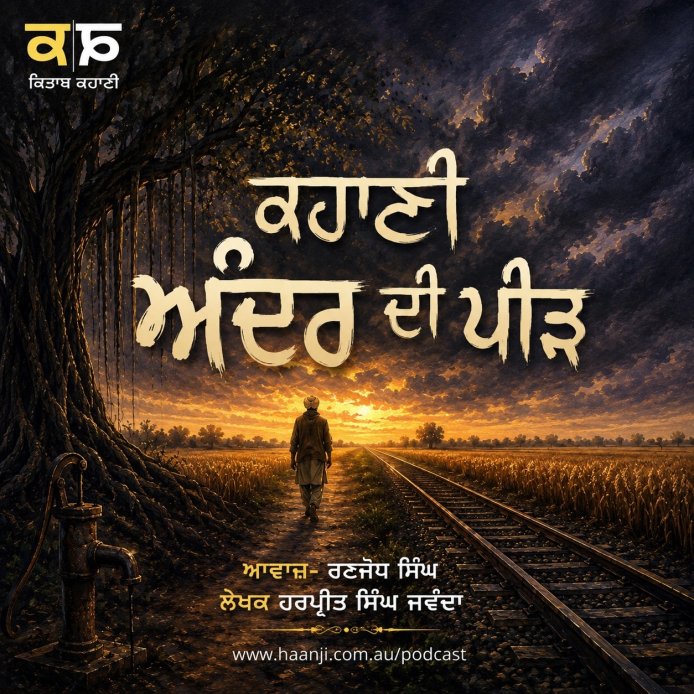

ਅੰਦਰ ਦੀ ਪੀੜ — a Punjabi audio kahani about inner pain, a newly-wed's tragedy on the railway tracks, and finding light in darkness. Kitaab Kahani, Radio Haanji 1674 AM.
ਕਿਤਾਬ ਕਹਾਣੀ | Kitaab Kahani — Radio Haanji 1674 AM Written by ਹਰਪ੍ਰੀਤ ਸਿੰਘ ਜਵੰਦਾ (Harpreet Singh Jawanda)
Some stories do not entertain. They excavate. They reach into a part of you that has been quiet for years and ask a question you forgot you were carrying. ਅੰਦਰ ਦੀ ਪੀੜ — The Pain Within — is one of those stories. It is a punjabi emotional kahani that begins with a child overhearing his father speak in the dark, and ends with one of the most quietly powerful invitations in Punjabi storytelling: keep walking. One step. Toward the light.
This episode is part of Kitaab Kahani, Radio Haanji 1674 AM's daily punjabi audio story series — new stories every weekday morning, free on all platforms. Stories chosen not for polish but for truth.
ਕਹਾਣੀ ਦਾ ਪਿਛੋਕੜ — A Childhood Near the Tracks
The narrator's father spent his working life on the Indian railway. With that came exposure to something no job description ever lists: the aftermath of people who chose the tracks as their final act. As a child, the narrator would lie awake at night piecing together fragments — overheard conversations between parents, names, villages, guesses. Not understanding fully. But listening.
ਨਿਆਣੇ ਮਨ ਦੇ ਵਿੱਚ ਕਈ ਤਰ੍ਹਾਂ ਦੇ ਸਵਾਲ ਆਉਣੇ... ਆਖ਼ਰਕਾਰ ਇੱਦਾਂ ਕਿਉਂ ਕਰ ਲੈਂਦੇ ਨੇ? ਇਹ ਕਿੱਦਾਂ ਦੇ ਲੋਕ ਹੋਣਗੇ? ਇੱਦਾਂ ਕਰਨ ਦੇ ਲਈ ਕੀ ਮਜਬੂਰੀ ਹੋਊਗੀ?
A child's mind fills with questions: Why do people do this? What kind of people are they? What compulsion brings someone to this point?
These were not morbid questions. They were the natural confusion of a young mind trying to make sense of a world that had not yet shown him enough of itself to explain it.
ਉਹ ਕੁੜੀ — The Girl at the Water Pump
Then one afternoon, it stopped being a heard story and became a witnessed one.
The narrator and other children were playing ਬਾਰਾਂ ਟਾਹਣੀ beneath a large banyan tree at the edge of the cremation ground — ਸਿਵਿਆਂ ਦੇ ਵਿੱਚ ਵੱਡੇ ਬੋਹੜ ਦੀ ਛਾਵੇਂ — when a passenger train on the Chhina-Gurdaspur line stopped suddenly in front of them. Chaos. A woman had fallen under it.
ਕੁੜੀ ਸੀ ਇੱਕ ਹੌਲੀ ਜਿਹੀ ਉਮਰ ਦੀ। ਨਵੀਂ ਵਿਆਹੀ ਲੱਗਦੀ ਸੀ, ਹੱਥਾਂ ਦੇ ਵਿੱਚ ਹਾਲੇ ਚੂੜਾ ਵੀ ਫਿੱਕਾ ਨਾ ਪਿਆ।
She was young. Newly married, it seemed — the red wedding bangles on her wrists had not yet faded.
The narrator realised she had been standing at a water pump nearby, just minutes before. Washing her hands. Washing her face. Again and again.
ਸ਼ਾਇਦ ਅੱਥਰੂ ਧੋਈ ਜਾਂਦੀ ਹੋਵੇ, ਸ਼ਾਇਦ ਕੁਝ ਲੁਕਾਉਣ ਦੀ ਕੋਸ਼ਿਸ਼ ਕਰ ਰਹੀ ਹੋਵੇ।
Perhaps she was washing away her tears. Perhaps she was trying to hide something.
Her eyes had rested on the children as if she wanted to say something. But they were too young to know how to ask: ਕੀ ਹੋਇਆ? ਤੈਨੂੰ ਕੋਈ ਮਦਦ ਤਾਂ ਨਹੀਂ ਚਾਹੀਦੀ? ਤੂੰ ਠੀਕ ਹੈਂ ਨਾ? — What happened? Do you need help? Are you okay?
They did not know how. And she was gone.
The next morning, the narrator's father told his mother: she was from the village across the fields. There had been fighting at home. Reports of beatings. A new bride with nowhere to go and no one who asked the right question at the right moment.
ਚਾਰਲੀ ਚੈਪਲਿਨ ਦੀ ਗੱਲ — Charlie Chaplin's Insight
Years pass. The narrator grows up. And one day, reading Charlie Chaplin's writing, the question that had lived in him since childhood finally finds its answer:
ਆਤਮਹੱਤਿਆ ਦੇ ਬਹੁਤੇ ਕੇਸਾਂ ਦੇ ਵਿੱਚ ਇਨਸਾਨ ਖ਼ੁਦ ਮਰਨਾ ਨਹੀਂ ਚਾਹੁੰਦਾ, ਬੱਸ ਇੰਨਾ ਚਾਹੁੰਦਾ ਕਿ ਮੇਰੇ ਅੰਦਰ ਦੀ ਪੀੜ ਕਿਸੇ ਤਰ੍ਹਾਂ ਮਰ ਜਾਵੇ।
In most cases of suicide, the person does not want to die. They only want the pain inside them to die somehow.
This is the line that unlocks everything. The woman at the pump was not trying to end her life in the way we usually think about it. She was trying to end the weight of something that had settled too deep — the kind of pain the narrator describes as landing not on the body but directly on the ਰੂਹ, the soul.
ਕੁਝ ਕੁੱਟਾਂ ਸਿੱਧੀਆਂ ਰੂਹ ਦੇ ਉੱਤੇ ਜਾ ਕੇ ਲੱਗਦੀਆਂ ਨੇ। ਇਹ ਗੱਲ ਕਾਫ਼ੀ ਦੇਰ ਦੇ ਨਾਲ ਸਮਝ ਆਉਂਦੀ ਐ।
Some blows land directly on the soul. This is something that only comes to be understood much later in life.
ਹਨੇਰੇ 'ਚੋਂ ਚਾਨਣ ਵੱਲ — From Darkness Toward Light
What separates this punjabi motivational audio kahani from simple tragedy is where it goes from that understanding. The narrator does not stop at the darkness. He turns toward something that feels almost physical — the idea that somewhere in every darkness, a ਰੌਸ਼ਨੀ ਦੀ ਕਿਰਨ is always present. A ray of light. Always.
ਚਾਹੇ ਕਿੰਨਾ ਵੀ ਹਨੇਰਾ ਹੋਵੇ, ਕਿੰਨਾ ਵੀ ਤੁਹਾਨੂੰ ਚਾਰ-ਚੁਫ਼ੇਰੇ ਕੁਝ ਨਾ ਨਜ਼ਰ ਆਵੇ, ਪਰ ਜਦੋਂ ਤੁਸੀਂ ਆਪਣੇ ਹੀ ਚਾਰ-ਚੁਫ਼ੇਰੇ ਘੁੰਮ ਕੇ ਵੇਖਦੇ ਹੋ, ਤੇ ਉਸ ਚਾਰ-ਚੁਫ਼ੇਰੇ ਦੇ ਵਿੱਚੋਂ ਤੁਹਾਨੂੰ ਕਿਤੇ ਨਾ ਕਿਤੇ, ਕਿਸੇ ਨਾ ਕਿਸੇ ਰੂਪ ਦੇ ਵਿੱਚ ਇੱਕ ਛੋਟੀ ਜਿਹੀ ਰੌਸ਼ਨੀ ਦੀ ਕਿਰਨ ਜ਼ਰੂਰ ਦਿਖਾਈ ਦੇ ਰਹੀ ਹੁੰਦੀ ਐ।
No matter how deep the darkness, no matter how you look around and see nothing — if you turn all the way around within yourself, somewhere, in some form, a small ray of light is always visible. That is where the path lies.
The people who follow that ray — even reluctantly, even slowly — are the ones who come out on the other side. And when they do, something has changed in them permanently. They are no longer ਆਮ ਲੋਕ, ordinary people. They become ਖ਼ਾਸ ਲੋਕ — people made special by the weight they have carried and survived.
ਉਹ ਫਿਰ ਸਿਰਫ਼ ਆਪਣੇ ਆਪ ਦੇ ਲਈ ਨਹੀਂ ਲੜਦੇ, ਉਹ ਫਿਰ ਦੂਸਰਿਆਂ ਨੂੰ ਵੀ ਦੱਸਣ ਜੋਗੇ ਹੋ ਜਾਂਦੇ ਨੇ — 'ਇੱਦਾਂ ਨਿਕਲੀਦਾ ਹਨੇਰੇ 'ਚੋਂ, ਇੱਦਾਂ ਕਰੀਦਾ ਸਾਹਮਣਾ ਦੁੱਖਾਂ ਦਾ।'
They no longer fight only for themselves. They become capable of showing others: this is how you come out of darkness. This is how you face the sorrow.
ਇੱਕ-ਇੱਕ ਕਦਮ — One Step Is Enough
The story does not ask you to be fearless. It does not demand a leap of faith. It asks only for one step. Then another.
ਇੱਕ-ਇੱਕ ਕਦਮ ਵੀ ਆਪਾਂ ਚੱਲਦੇ ਰਹੀਏ, ਇਹਦਾ ਮਤਲਬ ਕਿ ਇੱਕ-ਇੱਕ ਕਦਮ ਮੰਜ਼ਿਲ ਸਾਡੇ ਲਾਗੇ ਹੋਈ ਜਾਂਦੀ ਐ।
Every single step we keep taking means the destination is moving one step closer to us.
The narrator frames life as an ਇਮਤਿਹਾਨ — an examination — and suggests that perhaps the hardest examinations are preparation for the most significant responsibilities. Pass this test, and something larger waits. A purpose. A capacity to light the way for others that you could never have found without having walked the darkness first.
And along that journey, the narrator promises: you will not walk alone. Other travellers emerge from the same darkness. They reach out. ਉਹ ਬਾਈ ਚੱਲ, ਮੈਂ ਵੀ ਤੇਰੇ ਨਾਲ ਹਾਂ। — Come on, brother. I am with you too.
ਕਹਾਣੀ ਬਾਰੇ — About This Episode
This punjabi audio kahani was written by ਹਰਪ੍ਰੀਤ ਸਿੰਘ ਜਵੰਦਾ (Harpreet Singh Jawanda) and brought to Kitaab Kahani by Siddhu Sahab. It is part of Kitaab Kahani — Radio Haanji 1674 AM's daily Punjabi audio story series, where new stories are presented every weekday morning, free on all platforms.
Kitaab Kahani stories are chosen for the way they reflect textures of Punjabi life that the diaspora in Australia, Canada, Singapore, and around the world recognises — not polished fables, but lived realities. A railway track. A child listening through a wall at night. The red bangles of a bride who was never asked if she was okay.
Listen free at haanji.com.au/podcast/kitaab-kahani
Available on the Radio Haanji App — iOS and Android
ਅਕਸਰ ਪੁੱਛੇ ਜਾਂਦੇ ਸਵਾਲ — Frequently Asked Questions
ਅੰਦਰ ਦੀ ਪੀੜ ਕਿਸਨੇ ਲਿਖੀ — Who wrote Andar Di Peed?
The story ਅੰਦਰ ਦੀ ਪੀੜ (The Pain Within) was written by ਹਰਪ੍ਰੀਤ ਸਿੰਘ ਜਵੰਦਾ (Harpreet Singh Jawanda) and brought to Radio Haanji's Kitaab Kahani series by Siddhu Sahab. It is a Punjabi audio kahani exploring themes of inner pain, a newly-wed's tragedy, and the philosophical question of why people cry before they die — anchored in a narrator's childhood railway memories.
What is Kitaab Kahani on Radio Haanji 1674 AM?
Kitaab Kahani is Radio Haanji 1674 AM's daily Punjabi audio story series. New stories are released every weekday morning and are free across all platforms including Spotify, Apple Podcasts, and the Radio Haanji app. The series serves the Punjabi diaspora in Australia, Canada, Singapore, and worldwide with emotionally authentic Punjabi narratives — stories about real life, not just folklore.
What did Charlie Chaplin say about suicide that is quoted in this story?
In this Kitaab Kahani episode, the narrator draws on Charlie Chaplin's writings to reflect that in most suicide cases, a person does not want to die — they want their inner pain to die. This insight anchors the story's turn from tragedy toward hope, framing the message that the pain inside a person is what needs addressing, not the person's existence.
Where can I listen to Punjabi audio stories online for free?
Free Punjabi audio stories including this episode are available on Kitaab Kahani at haanji.com.au/podcast/kitaab-kahani, on Spotify via the Kitaab Kahani series page, and through the Radio Haanji app on iOS and Android. New episodes release every weekday morning covering emotional, motivational, and culturally rooted Punjabi stories for the global Punjabi diaspora audience.
Listen Free — Today Updates on Radio Haanji
Catch the full episode of Today Updates for more details on these stories and other global affairs. Our daily news roundup is designed for the busy professional and community member who wants the facts without the fluff.
Radio Haanji 1674 AM is Austalia's Punjabi community radio station.
Listen free at haanji.com.au | Spotify | Apple Podcasts | iOS App | Android App
Serving the Punjabi community in Australia, Canada, Singapore and world wide.
What's Your Reaction?