






















































































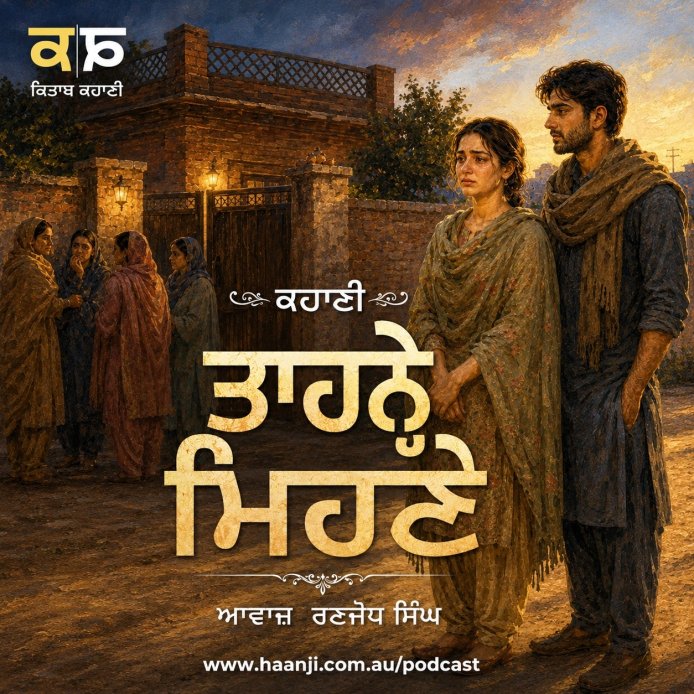

Emotional Punjabi audio kahani about a daughter-in-law's sacrifice and society's judgment. ਸੁਣੋ on Kitaab Kahani — Radio Haanji. Free at haanji.com.au
ਕੁਝ ਕਹਾਣੀਆਂ ਸਾਡੇ ਦਿਲ ਦੇ ਬੰਦ ਦਰਵਾਜ਼ੇ ਖੋਲ੍ਹ ਦਿੰਦੀਆਂ ਨੇ। Some stories make us stop mid-scroll, put the phone down, and ask ourselves — ਕੀ ਅਸੀਂ ਸੱਚਮੁੱਚ ਦੋਵੇਂ ਪਾਸੇ ਸੁਣਦੇ ਆਂ? Today's Kitaab Kahani episode on Radio Haanji is exactly one of those. It is a deeply emotional Punjabi audio kahani about family, sacrifice, quiet suffering, and the particular cruelty of social judgment that arrives without ever once asking for the full truth.
ਇਹ ਕਹਾਣੀ ਕਿਸੇ ਇੱਕ ਘਰ ਦੀ ਨਹੀਂ। ਇਹ ਉਹਨਾਂ ਹਜ਼ਾਰਾਂ ਘਰਾਂ ਦੀ ਕਹਾਣੀ ਆ ਜਿੱਥੇ ਇੱਕ ਨੂੰਹ ਆਪਣੀ ਜ਼ਿੰਦਗੀ ਦੇ ਸਭ ਤੋਂ ਵਧੀਆ ਸਾਲ ਉਸ ਪਰਿਵਾਰ ਨੂੰ ਦਿੰਦੀ ਆ ਜਿਹੜਾ ਉਹਨੂੰ ਕਦੇ ਆਪਣਾ ਨਹੀਂ ਕਰਦਾ। Whether you are listening from Melbourne, Sydney, or Singapore — ਇਹ ਕਹਾਣੀ ਤੁਹਾਡੇ ਦਿਲ ਨੂੰ ਜ਼ਰੂਰ ਛੂਹੇਗੀ, ਕਿਉਂਕਿ ਰਿਸ਼ਤਿਆਂ ਦੀ ਇਹ ਪੀੜ ਹਰ ਥਾਂ ਇੱਕੋ ਜਿਹੀ ਹੀ ਲੱਗਦੀ ਆ।
ਕਹਾਣੀ ਦੀ ਝਲਕ — The Story
ਬਾਹਰ ਤਾਹਨੇ ਮੇਹਣੇ ਵੱਜ ਰਹੇ ਸੀ। Satnam and Preet are standing at a distance, listening to their neighbors gossip about them outside. "ਕਿਹੋ ਜਿਹੇ ਪੁੱਤ ਨੇ — ਆਪਣੇ ਬੁੱਢੇ ਮਾਪਿਆਂ ਨੂੰ ਇਕੱਲੇ ਛੱਡ ਕੇ ਚਲੇ ਗਏ।" That is the story the neighbors know. But do they know what actually happened?
ਪ੍ਰੀਤ ਜਦੋਂ ਨਵੀਂ-ਨਵੀਂ ਵਿਆਹ ਕੇ ਆਈ ਸੀ, ਉਹਦੇ ਦਿਲ ਵਿੱਚ ਸੁਪਨੇ ਸੀ ਤੇ ਹੌਸਲਾ ਵੀ। Her parents had sent her with one simple instruction — ਇਸ ਪਰਿਵਾਰ ਨੂੰ ਆਪਣਾ ਮੰਨ ਕੇ ਚੱਲਣਾ। And she did, without exception. She woke before everyone else, cooked for the whole household, attended to her in-laws with quiet devotion, and never once let the level of care slip. ਉਸ ਨੇ ਸੱਸ ਨੂੰ ਮਾਂ ਵਾਂਗੂੰ ਮੰਨਿਆ।
But slowly, something shifted in the house. Whenever her sister-in-law Manjeet visited, ਸੱਸ ਚੁੱਪਚਾਪ ਘਰ ਦੀਆਂ ਚੀਜ਼ਾਂ ਫੜਾਉਂਦੀ ਰਹਿੰਦੀ — a new suit, a box of sweets, kitchen items. At first, Preet said nothing. "ਭੈਣ ਆ, ਇਸ ਘਰ ਦੀ ਧੀ ਆ — ਉਹਦਾ ਹੱਕ ਬਣਦਾ।" She accepted it. Even when her own newly bought makeup was quietly handed over without a word. ਉਹ ਫਿਰ ਵੀ ਚੁੱਪ ਰਹੀ।
Then came the day of the kadhai.
Preet had simply asked Satnam to buy a small wok — ਹੁਣ ਘਰ ਵਿੱਚ ਜੀਅ ਘੱਟ ਸੀ, ਵੱਡੀ ਕੜਾਹੀ ਦੇ ਨਾਲ ਕੰਮ ਚਲਾਉਣਾ ਔਖਾ ਸੀ। Within days of it arriving, it vanished from the kitchen. When she asked her mother-in-law, the response was not an answer — it was a storm. "ਤੈਨੂੰ ਕੀ ਲੱਗਦਾ ਮੈਂ ਕਿਤੇ ਲੁਕਾ ਲਈ ਆ? ਮੈਂ ਤੁਹਾਡੀਆਂ ਕੜਾਹੀਆਂ ਦੀ ਭੁੱਖੀ ਆਂ?" Preet pressed gently, just wanting a straight answer — not an argument. The response she got was one she would never forget: "ਇਹ ਘਰ ਸਾਡਾ। ਤੂੰ ਇਸ ਘਰ ਦੇ ਵਿੱਚ ਆਈ ਏ — ਇਹ ਨਾ ਭੁੱਲ।"
That day, after years of staying quiet, ਪ੍ਰੀਤ ਕੋਲੋਂ ਹੋਰ ਨਹੀਂ ਰਿਹਾ ਗਿਆ। She spoke. And when Satnam also found the courage to stand beside his wife — pointing out that every item he brought home seemed to disappear — both in-laws gave their final verdict without hesitation:
"ਦਫ਼ਾ ਹੋ ਜਾਓ ਇਸ ਘਰ ਦੇ ਵਿੱਚੋਂ।"
ਉਹ ਚਲੇ ਗਏ। ਖਾਲੀ ਹੱਥ। With nothing but their dignity, and the weight of years no one would ever count.
ਸਮਾਜ ਦਾ ਤਰਾਜ਼ੂ — How Society Weighs the Story
ਅੱਜ ਉਹ ਕਿਰਾਏ ਦੇ ਮਕਾਨ ਵਿੱਚ ਰਹਿੰਦੇ ਨੇ। The house they lived in, the things Satnam earned — all given to the daughter. Their names were never put on anything. And yet — ਦੁਨੀਆਂ ਅੱਜ ਵੀ ਉਹਨਾਂ ਨੂੰ ਬੁਰਾ ਕਹਿੰਦੀ ਆ। The gossip traveled. Even here, in a new neighborhood, the story arrived before them — filtered, one-sided, wrong.
This is the wound that most punjabi emotional kahaniya rarely name directly — the fact that gossip never waits for the truth. ਸਮਾਜ ਸਿਰਫ਼ ਇੱਕ ਪਾਸਾ ਸੁਣਦਾ ਆ, ਤੇ ਉਹੀ ਪਾਸਾ ਸੱਚ ਬਣਾ ਲੈਂਦਾ ਆ।
The kadhai Manjeet quietly took? Nobody knows. The years of early mornings and silent service Preet gave? Nobody counts. The day they were told to leave with nothing? Nobody witnessed. What the neighbors see is an empty house, an absent son — and that absence becomes the only story they ever need.
ਕਹਾਣੀ ਦਾ ਸਭ ਤੋਂ ਦਰਦਨਾਕ ਹਿੱਸਾ ਇਹ ਨਹੀਂ ਕਿ ਉਹਨਾਂ ਨੂੰ ਕੱਢਿਆ ਗਿਆ। The deepest hurt is that society decided who was guilty before hearing a single word of their side.
ਦੋਵੇਂ ਪਾਸੇ ਦੀ ਸੱਚਾਈ — The Lesson Worth Sitting With
This is a motivational Punjabi kahani as much as an emotional one. ਇਸ ਕਹਾਣੀ ਵਿੱਚੋਂ ਕੁਝ ਗੱਲਾਂ ਉੱਭਰਦੀਆਂ ਨੇ ਜਿਨ੍ਹਾਂ ਨੂੰ ਧਿਆਨ ਨਾਲ ਸੁਣਨਾ ਚਾਹੀਦਾ।
When a daughter gets married, she begins building a new home. But that can only truly happen when both sets of parents release one attachment and consciously build another. ਜੇ ਮਾਂ-ਬਾਪ ਇੱਕ ਧੀ ਤੋਰ ਕੇ ਦੂਸਰੀ ਧੀ ਨੂੰ ਅਪਣਾ ਲੈਣ — ਆਪਣੀ ਨੂੰਹ ਵਿੱਚ — ਤਾਂ ਘਰ ਟੁੱਟਦੇ ਨਹੀਂ।
The story is also a mirror. ਉਹ ਧੀ ਜਿਹੜੀ ਸਿਰਫ਼ ਲੈਣ ਆਉਂਦੀ ਸੀ, ਜਦੋਂ ਸੇਵਾ ਦਾ ਵੇਲਾ ਆਇਆ ਤਾਂ ਉਹ ਵੀ ਨਹੀਂ ਸੀ। No one can hold on to two homes at the same time — and parents who pour everything into a daughter who has already left her home often find themselves with no one to lean on. ਇਹ ਜ਼ਿੰਦਗੀ ਦਾ ਦਸਤੂਰ ਆ।
And the story asks something of us too — the listeners, the neighbors, the people who gossip. ਜਿਹੜੇ ਦੋਵੇਂ ਪਾਸੇ ਸੁਣ ਲੈਂਦੇ ਨੇ, ਉਹ ਅਕਸਰ ਚੁੱਪ ਕਰਕੇ ਘਰ ਬਹਿ ਜਾਂਦੇ ਨੇ — ਕਿਉਂਕਿ ਦੋਵੇਂ ਪਾਸੇ ਸੱਚੇ ਲੱਗਦੇ ਨੇ, ਤੇ ਸਾਰਾ ਕਸੂਰ ਕਿਸੇ ਇੱਕ ਦਾ ਨਹੀਂ ਹੁੰਦਾ।
Responsibility belongs to everyone — ਬੱਚੇ ਨੂੰ ਵੀ, ਬਜ਼ੁਰਗ ਨੂੰ ਵੀ, ਨੌਜਵਾਨ ਨੂੰ ਵੀ। Duties have no age limit. And homes that survive are those where every person's voice — and every person's feelings — are given room to breathe.
ਕੋਸ਼ਿਸ਼ ਕਰੀਏ ਕਿ ਘਰਾਂ ਦੇ ਵਿੱਚ ਇੱਦਾਂ ਦੇ ਛੋਟੇ-ਛੋਟੇ ਜਿਹੇ ਰਾਹ ਬਣਾ ਕੇ ਰੱਖੀਏ ਜਿਨ੍ਹਾਂ ਥਾਣੀਂ ਸਾਹ ਆਉਂਦਾ ਰਵੇ।
ਅਕਸਰ ਪੁੱਛੇ ਜਾਂਦੇ ਸਵਾਲ — Frequently Asked Questions
"ਤਾਹਨੇ ਮੇਹਣੇ" ਕਿਸ ਬਾਰੇ ਆ ਇਹ Punjabi audio kahani?
"ਤਾਹਨੇ ਮੇਹਣੇ" is an emotional Punjabi audio kahani about a daughter-in-law, Preet, who dedicates years of devoted service to her in-laws, only to be expelled from the home after a dispute over household items being quietly given to the sister-in-law. The story explores social judgment, unheard sacrifice, and why hearing both sides of any family story matters deeply.
Kitaab Kahani ਕੀ ਆ ਤੇ Radio Haanji ਉੱਤੇ ਇਹ ਕਿੱਦਾਂ ਸੁਣੀਏ?
Kitaab Kahani is Radio Haanji 1674 AM's daily Punjabi audio story series, broadcasting from Melbourne and Sydney across Australia. New stories release every weekday morning and are available completely free at haanji.com.au, on Spotify, Apple Podcasts, and the Radio Haanji app on iOS and Android — reaching the Punjabi diaspora in Australia, Singapore, Canada, and beyond.
ਪੰਜਾਬੀ ਪਰਿਵਾਰਾਂ ਵਿੱਚ ਨੂੰਹ-ਸੱਸ ਦੇ ਰਿਸ਼ਤੇ ਵਿੱਚ ਇੰਨੀ ਮੁਸ਼ਕਲ ਕਿਉਂ ਆਉਂਦੀ ਆ?
The tension often grows from unspoken expectations and unequal treatment between daughters and daughters-in-law. As this story shows, when elders show consistent favouritism — giving household items to one without consulting the other — resentment builds silently over years. Real family harmony requires parents to invest equal love, fairness, and acknowledgment in both relationships under the same roof.
ਮੈਂ ਇਹ Punjabi audio story online free ਕਿੱਥੇ ਸੁਣ ਸਕਦਾ ਜਾਂ ਸਕਦੀ ਆਂ?
You can listen to this Punjabi audio kahani and all Kitaab Kahani episodes for free at haanji.com.au, on Spotify, or Apple Podcasts. The Radio Haanji app on iOS and Android streams every episode on demand. Radio Haanji 1674 AM broadcasts daily for the Punjabi diaspora in Australia, Singapore, Canada, and India — new story every weekday, no subscription needed.
ਇਸ ਕਹਾਣੀ ਨੂੰ Audio ਵਿੱਚ ਸੁਣੋ — Listen on Kitaab Kahani
ਇਹ ਕਹਾਣੀ ਸਾਡੇ ਤੱਕ ਪਹੁੰਚਾਈ ਜਗਦੀਪ ਸਿੰਘ ਕੁਮਣ ਜੀ ਨੇ।
Kitaab Kahani is Radio Haanji 1674 AM's daily Punjabi audio story series — new stories every weekday morning, free on all platforms.
ਹਰ ਰੋਜ਼ ਇੱਕ ਨਵੀਂ ਕਹਾਣੀ। ਹਰ ਕਹਾਣੀ ਦਿਲ ਦੇ ਕਰੀਬ।
Listen free: haanji.com.au Radio Haanji App: iOS and Android Contact: 0447 171674 | info@haanji.com.au
What's Your Reaction?