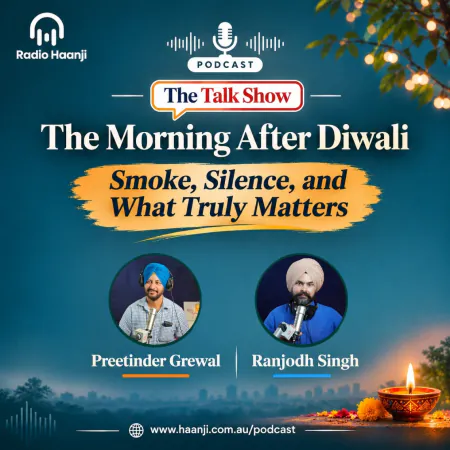

























Post-Diwali Reflections on Firecrackers, Air Pollution and Celebrating With Meaning - Preetinder Grewal & Ranjodh Singh
Host:-
 Preetinder Grewal
 Ranjodh Singh
Post-Diwali talk on Radio Haanji 1674 AM: firecracker safety, northern India air pollution, diaspora celebrations and Punjabi in Australian schools.
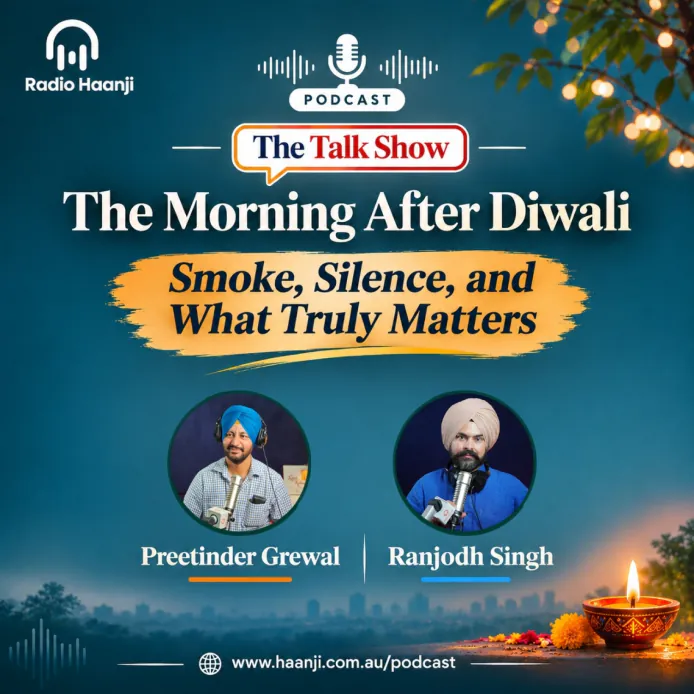
Once the lights are packed away and the sweets boxes are empty, Diwali leaves behind a mixed set of feelings. There are warm memories of family and food, and there are also questions about smoke, safety and what we are really celebrating. In this episode of The Talk Show on Radio Haanji 1674 AM Melbourne, hosts Preetinder Grewal and Ranjodh Singh sit down for an honest post-Diwali conversation that moves between nostalgia, health, the environment and the meaning of the festival itself.
The episode opens with the Punjabi folk-inspired song "Chhalla" by Tiger, written by Singh Jeet, and then settles into the kind of relaxed, thoughtful discussion that Punjabi community radio in Melbourne does best.
Growing Up With Firecrackers in Punjab
The hosts begin by looking back at childhood Diwalis in Punjab. Names like kukkad bomb and bullet bomb bring back the excitement of that time, when bursting crackers was the highlight of the festival and nobody gave a thought to pollution. They laugh about the risky tricks every child seemed to try, such as placing tins or milk containers over crackers to make a louder bang.
That nostalgia is balanced with the maturity that comes with age. Looking back, the hosts admit how dangerous those games really were, and how lucky many people were to escape without harm.
Firecracker Safety and the Cost of Carelessness
The conversation turns serious when Ranjodh Singh shares his own experience. A firework injury in his younger days permanently damaged part of his hand, and he still carries that reminder. The hosts also discuss recent tragic news, including the case of a teenager who was fatally injured when an unexploded firecracker went off while he was inspecting it.
The message is practical and simple. Keep small children well away from fireworks, never go back to inspect a cracker that has not gone off, and choose safer options such as sparklers with a bucket of water close by. Safety, they point out, is part of celebrating well.
Post-Diwali Air Pollution Across Northern India
The hosts then discuss the sharp rise in air quality index readings reported after Diwali in northern Indian cities, including Delhi, Sri Ganganagar and Jalandhar. They explain why the problem becomes so severe in winter. Thermal inversion traps smoke and fine particles close to the ground, and the topography of northern India makes it harder for polluted air to clear.
The wider health picture is also covered. Estimates from the World Health Organization, mentioned during the show, link air pollution to millions of premature deaths worldwide and to a noticeable reduction in average life expectancy. Living in Australia, where clean air, water and soil are easy to take for granted, the hosts say the contrast with fast-growing urban areas elsewhere is hard to ignore.
Consumerism, Plastic and Finding Balance
Fireworks are only one part of the story. The discussion also covers the growing commercialisation of festivals, from heavy plastic packaging to gifts bought out of habit rather than meaning. The hosts do not call for extreme bans. Instead, they argue for balance and moderation, a way of keeping cultural joy alive while taking responsibility for the environment our children will inherit.
Celebrating Diwali in Australia and Canada
The episode also looks at how the Punjabi diaspora in Australia and Canada experiences the festival. In many places, local councils organise structured fireworks displays or house-lighting competitions, giving families a safe and shared way to celebrate. The hosts also speak openly about the friction that can arise in diaspora communities over noise, unauthorised fireworks and cultural misunderstandings, and why patience and communication matter in multicultural neighbourhoods.
Listener Call: Punjabi Language in Australian Schools
One of the most thought-provoking moments comes from a listener, Preeti from Perth. She raises a concern shared by many Punjabi families in Australia: compared with languages such as French or Italian, Punjabi has far fewer structured learning resources in schools. She explains that senior students at VCE and ATAR level often hesitate to choose Punjabi because they fear lower scores or a lack of curriculum material.
The hosts acknowledge these systemic challenges and discuss the need for both institutional backing and community-led initiatives to keep mother-tongue education strong among the Punjabi community in Australia. The episode also includes birthday greetings from the studio and a little technical feedback from listeners about app streaming and home Wi-Fi setups.
The Spiritual Meaning of Festivals
The closing segment turns to poetry and philosophy. Dr. Grewal reflects on verses of Bhai Gurdas Ji about the lamps of Diwali night and on the poetry of Prof. Mohan Singh. The hosts conclude that lights, crackers and sweets are temporary, while the lasting essence of a festival lies in family unity, devotion, goodwill and inner illumination.
More Conversations to Explore on Radio Haanji
If you enjoy thoughtful talk in Punjabi, there is plenty more on the station. For a lighter mood, try Laughter Therapy, or settle in with the audio stories of Kitaab Kahani. Curious listeners can explore science, space, species and exploration on The Deep Talk. To stay informed, follow the daily news on Today Updates and the latest from back home on Indian Updates. You can also catch relaxed conversations on Boys Meetup and thoughtful reflections on Notebook.
How to Listen to Radio Haanji
Radio Haanji broadcasts on 1674 AM in Melbourne in Punjabi and Hindi. If you are outside Melbourne, you can listen to Punjabi radio online in Australia and find more episodes at haanji.com.au.
Frequently Asked Questions
What is this episode of The Talk Show about?
Who hosts The Talk Show on Radio Haanji?
Why does air quality get worse after Diwali in northern India?
How can I listen to Radio Haanji online?
What's Your Reaction?