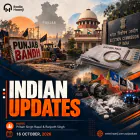










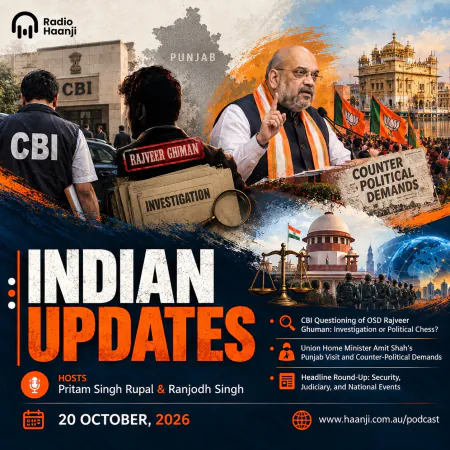











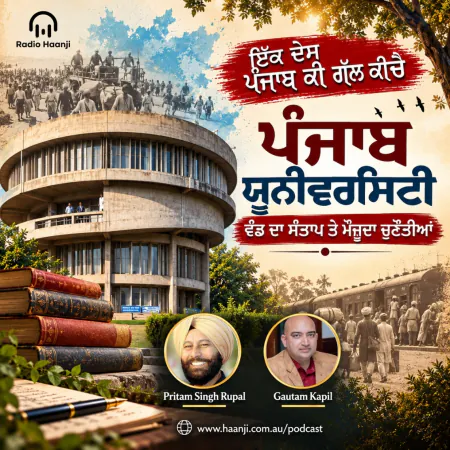
























































Pritam Singh Rupal analyzes Punjab's wheat damage and BJP's Foundation Day shifts. Get trusted diaspora news analysis free on Radio Haanji.
Indian Updates — 7 April 2026 | Punjab Crop Crisis and BJP’s Vision — Radio Haanji
In this morning’s edition of Indian Updates on Radio Haanji 1674 AM, Ranjodh Singh is joined by Senior Journalist Pritam Singh Rupal to unpack a series of developments that are reshaping the political and economic landscape for the Indian diaspora. Pritam Singh Rupal brings his decades of experience at All India Radio and deep roots in Punjabi journalism to provide rare clarity on stories that demand more than just a passing headline. Together, they explore the shifting power dynamics within India’s ruling party and the immediate crisis facing the agrarian heartland of Punjab.
The analysis begins with the Bharatiya Janata Party’s 47th Foundation Day, marked by Prime Minister Narendra Modi’s significant address on April 6. While the Prime Minister emphasized a service-oriented model and the principle of "Nation First," the discussion on Radio Haanji centers on the structural shifts within the party. Modi’s push for "One Nation, One Election" and the Uniform Civil Code reflects a drive toward national integration that critics argue may challenge the federal diversity of the country. There is a sharp critique regarding the centralization of power within the current party leadership, noting a departure from the collaborative leadership models of previous eras.
The situation on the ground in Punjab has reached a critical point as unseasonal weather and hailstorms have devastated approximately 1.25 lakh acres of the Rabi wheat crop. Farmers across the Malwa region, including districts like Fazilka and Muktsar, are facing immense financial distress with some carrying debts as high as thirty lakh rupees. Various farm unions are now demanding a compensation of fifty thousand rupees per acre to stay afloat. The conversation highlights significant skepticism regarding the Girdawari or crop inspection process, citing a history of bureaucratic delays and a lack of transparency that often prevents aid from reaching those who need it most.
Legislative focus in Punjab is also shifting toward the upcoming special Assembly session scheduled for April 13, coinciding with Baisakhi. The state government intends to introduce stricter laws against sacrilege or Beadbi by amending the Jagat Jot Guru Granth Sahib Satkar Act of 2008. While the proposed changes aim for harsher punishments and property confiscation, the debate remains polarized. The Shiromani Gurdwara Parbandhak Committee has urged the government to consult the community first, while the BJP has demanded that the law be expanded to include the protection of Hindu temples, raising complex questions about religious equality and constitutional validity.
The ripple effects of global conflict are now being felt directly in Indian markets as tensions between Iran, Israel, and the United States escalate. The functional impairment of the Strait of Hormuz has disrupted one-fifth of the world’s oil and gas supply, leading to a surge in crude prices toward one hundred and twenty dollars a barrel. For the average citizen, this means an imminent rise in the cost of fuel and fertilizers, with urea prices already jumping thirty percent. The speakers critique the mainstream media for focusing on political noise while these significant global economic threats begin to hit the pockets of common families.
As the 2026 assembly elections approach their peak, the political stakes are higher than ever for regional and national players. Polling is set for April 9 in Assam, Kerala, and Puducherry, followed by Tamil Nadu and West Bengal later in the month. These elections are widely viewed as a definitive test of public trust ahead of the 2029 Lok Sabha polls. In states like West Bengal and Kerala, the campaign has been marked by intense friction and reports of political violence, underscoring the high-voltage nature of the current democratic process.
Why Indian Updates on Radio Haanji Is Essential for the Indian Diaspora
For the Punjabi and Indian diaspora in Australia and Singapore, staying connected to the nuances of home is about more than just reading the news. Indian Updates provides a bridge to the complex realities of Punjab and India, offering a level of analysis that recognizes the deep emotional and economic ties of the NRI community. By breaking down policy shifts and agricultural crises, Radio Haanji ensures that listeners are not just informed but empowered with an understanding of how these events affect their families back home.
This commitment to high-quality Punjabi radio Melbourne and beyond is what defines the show's value to the community. Whether it is the impact of global fuel prices or the specifics of a new sacrilege law, the analysis provided by Ranjodh Singh and Pritam Singh Rupal cuts through the clutter. It serves as a trusted guide for those who care deeply about the heritage and future of their homeland while navigating life in the diaspora.
Listen to Indian Updates — Free, Every Weekday
You can stay updated with the latest in-depth analysis by tuning into Radio Haanji 1674 AM or accessing the show through your favorite podcast platform. We bring you daily insights from the heart of Punjab and India, ensuring you never miss a beat of the stories that matter most to our community worldwide.
Listen free:
Frequently Asked Questions
What happened to Punjab's wheat crops in April 2026?
The wheat crop in Punjab suffered massive damage across approximately 1.25 lakh acres due to unseasonal rain and hailstorms in early April 2026. Farmers in the Malwa region are particularly affected, leading to urgent demands for a compensation package of fifty thousand rupees per acre to mitigate their financial losses.
What is the purpose of the special Punjab Assembly session on April 13?
The special Punjab Assembly session on April 13 is convened to introduce a stricter law against sacrilege or Beadbi. The government plans to amend existing legislation to include harsher punishments and property confiscation for those found guilty of desecrating religious texts, responding to long-standing demands from various Sikh organizations.
How is the Iran-Israel conflict affecting fuel prices in India?
The conflict involving Iran and Israel has disrupted shipping through the Strait of Hormuz, a vital chokepoint for global oil and gas. This disruption has caused Brent crude prices to surge, leading to an increase in the cost of fuel and fertilizer production, which directly impacts the Indian economy.
Radio Haanji 1674 AM is Austalia's Punjabi community radio station.
Listen free at haanji.com.au | Spotify | Apple Podcasts | iOS App | Android App
Serving the Punjabi community in Australia, Canada, Singapore and world wide.
What's Your Reaction?