
















































































23 June - Indian Updates - Tensions in Uttarakhand and the Real Cost of Punjab’s Farming Crisis - Pritam Singh Rupal & Ranjodh Singh
Host:-
 Pritam Singh Rupal
 Ranjodh Singh
Join Pritam Singh Rupal and Ranjodh Singh on Radio Haanji as they unpack the tourist tensions in Uttarakhand and the real structural challenges keeping Punjab's small farmers from crop diversification.
The delicate balance between tourism and local life in India's hill states is facing unprecedented strain, while the fertile lands of Punjab remain caught in a complex web of economic policy and shifting climate patterns. In today's episode of Indian Updates on Radio Haanji, hosts Pritam Singh Rupal and Ranjodh Singh bring you a grounded, deeply human analysis of the recent clashes in Uttarakhand and the intense policy debates reshaping Indian agriculture.
From the high-altitude holy sites of the Himalayas to the hardworking border farms of Punjab, this episode connects the dots between administrative friction, community anxieties, and the survival of small-scale farmers.
Strains in the Soil of Uttarakhand: Tourism, Tensions, and Everyday Realities
Uttarakhand is grappling with severe socio-economic pressure as the summer tourist influx reaches its peak. While tourism remains a major economic driver, the sheer volume of visitors has begun to disrupt local infrastructure and daily community life, leading to visible friction.
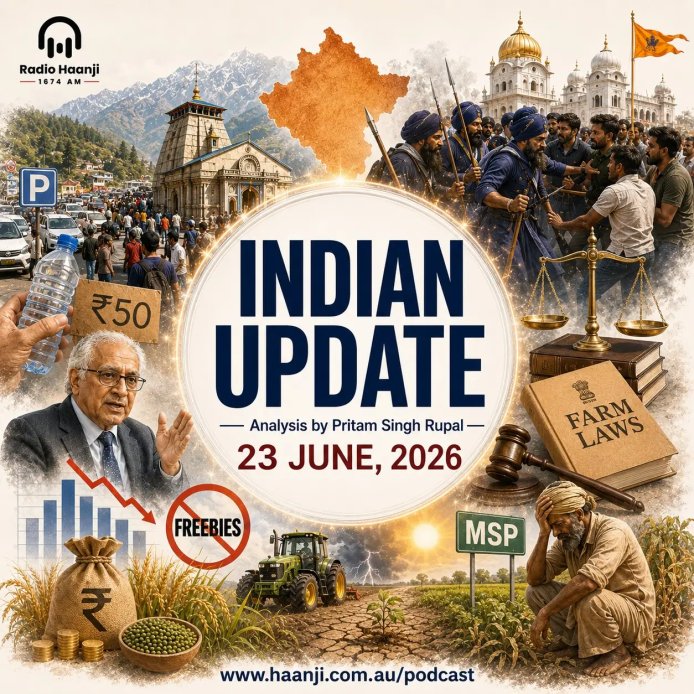
A stark manifestation of this pressure occurred recently at a prominent holy site, where a violent altercation broke out between Nihang Sikhs and local residents over parking spaces. What began as a localized dispute over space quickly highlighted deeper undercurrents of stress that accumulate when remote regions handle traffic far beyond their capacity.
This defensive local posture is further exacerbated during natural disasters. The discussion shed light on a troubling pattern of localized commercial opportunism, where some businesses heavily overcharged stranded tourists for essentials like water during floods and roadblocks. While these instances do not represent the entire community, they underscore the urgent need for better tourism management and ethical regulations to protect both vulnerable travelers and local harmony.
The Punjab Agriculture Debate: Academic Models vs. Ground Reality
The episode then shifted focus toward the ongoing socio-economic debate surrounding Punjab's agricultural landscape. Renowned agricultural economist Dr. S.S. Johl recently stirred widespread conversation by suggesting the termination of free subsidy schemes. While designed to ease the financial burden on taxpayers, the proposal has drawn significant criticism from rural communities and farm advocates.
Critics argue that Dr. Johl’s economic models resemble large-scale farming systems used in countries like the United States, making them highly impractical for Punjab, where small landholdings dominate the landscape. Many see his policy stance as closely aligned with specific political ideologies rather than a workable solution tailored to ground-level realities.
The Real-World Roadblocks to Crop Diversification
While policy experts frequently emphasize the environmental necessity of moving away from water-intensive crops like wheat and paddy, Punjab's small-scale farmers face structural vulnerabilities that make diversification nearly impossible:
-
Lack of Guaranteed Prices: Farmers hesitate to transition to alternative crops because they do not come with a dependable Minimum Support Price (MSP). Without a price safety net, changing crops is an immense financial gamble.
-
The Climate Wildcard: Rapidly changing weather patterns are shortening the gap between seasons. Premature, extreme summer heatwaves are destroying alternative options, such as the moong lentil crop, right before the harvest.
When a single climate anomaly can wipe out an entire season's income, farmers naturally stick to stable, time-tested crops. True reform requires secure financial safety nets, not just academic theories.
Frequently Asked Questions (FAQs)
What caused the recent altercations involving Nihang Sikhs in Uttarakhand?
The violent clash broke out due to a dispute over parking spaces at a holy site, highlighting the growing infrastructural strain and daily logistical friction in tourist-heavy regions during peak summer months.
Why are small farmers in Punjab hesitant to move away from wheat and paddy?
Small-scale farmers resist crop diversification primarily because alternative crops lack a guaranteed Minimum Support Price (MSP). Without this financial safety net, switching crops exposes small households to immense market volatility.
How is climate change affecting alternative crops like the moong lentil?
Unpredictable and premature extreme heatwaves are destroying crops like moong lentils right before they are ready for harvest. These climate vulnerabilities make it highly risky for farmers to abandon more resilient traditional crops.
Where can I listen to daily community and regional updates?
You can catch regular analytical updates on the Indian Updates podcast or tune into daily current events through the Today Updates stream on Radio Haanji.
What's Your Reaction?