
















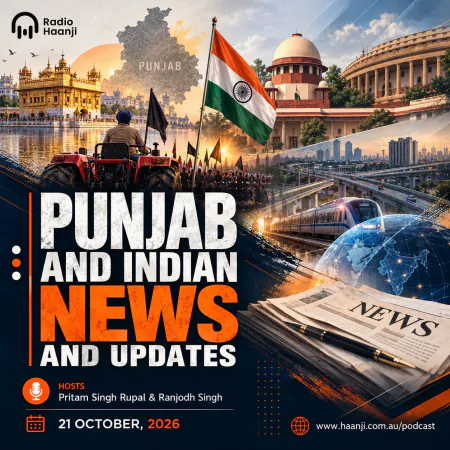













































































Pritam Singh Rupal analyzes how the Strait of Hormuz conflict and Punjab's hailstorms threaten India's food security.
Indian Updates — 06 April 2026 | Punjab Agriculture and Fertilizer Crisis — Radio Haanji
In this edition of Indian Updates on Radio Haanji 1674 AM, Ranjodh Singh is joined by senior journalist Pritam Singh Rupal to examine why Punjab’s agricultural backbone is facing a dual threat from local climate change and West Asian geopolitics. The conversation moves beyond the surface to look at how a perfect storm of environmental damage and global supply chain collapses is pushing the Indian farmer toward an existential crossroads.
The reality on the ground in April 2026 is sobering. While the wheat harvest should be a time of celebration, thousands of families across the Malwa region are instead surveying flattened fields and waterlogged crops. This localized disaster is being compounded by a massive breakdown in international trade routes, turning a seasonal challenge into a long-term threat to India’s national food security.
The Local Impact of Climate Change and Forest Decline
The immediate crisis for Punjabi farmers is visible in the fields of Muktsar, Fazilka, and Bathinda. Unseasonal hailstorms and high-velocity winds have damaged over 1 lakh acres of ready-to-harvest wheat, making it impossible for combine harvesters to function. This delay forces farmers into expensive manual labor at a time when they are least able to afford it.
Beyond the immediate weather, the structural environmental health of the state is failing. Pritam Singh Rupal highlights that Punjab’s forest cover has plummeted to just 6.59 percent. This is a staggering deficit compared to the national target of 15 percent discussed in Parliament. The lack of green cover not only exacerbates soil erosion but leaves the state’s micro-climate vulnerable to the very volatility currently destroying the winter crop.
The Strait of Hormuz and India’s Urea Supply Shock
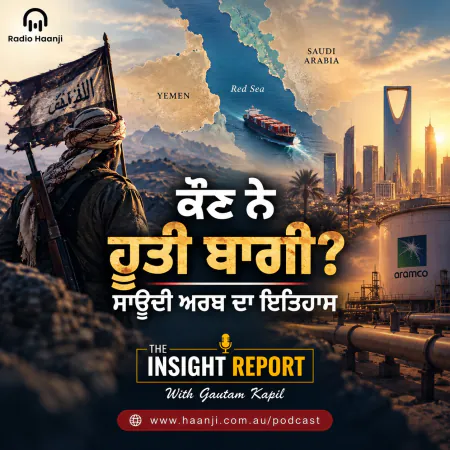
The discussion shifts to the escalating conflict in West Asia, which has effectively turned the Strait of Hormuz into a chokepoint for Indian agriculture. While global media focuses on oil prices, the hosts emphasize that for the Indian diaspora and local farmers, this is primarily a urea crisis. India remains heavily dependent on urea imports from countries like Iran to sustain the nitrogen levels in the depleted soils of Punjab, Haryana, and Uttar Pradesh.
With shipping transits through the Hormuz corridor down by over 95 percent, the cost of fertilizers has skyrocketed. This external shock is worsened by domestic failures. Local fertilizer factories, including the National Fertilizers Limited (NFL) units in Nangal and Bathinda, have faced production halts due to the reduced supply of liquefied natural gas (LNG). This reliance on expensive imports over domestic production creates a dangerous vulnerability in the national food system.
Economic Panic and the Failure of Mainstream Media
The ripple effects of this crisis are now reaching the industrial and aviation sectors. Major airlines like Air India and IndiGo have been forced to suspend or reroute flights to Israel and various Arab nations, causing significant disruption for the Punjabi diaspora traveling between Australia and India. In industrial hubs, the rising cost of energy and potential gas shortages are causing a quiet panic among factory workers, many of whom are already beginning to return to their villages.
A significant point of critique in today's episode is the role of the Indian media. Ranjodh Singh and Pritam Singh Rupal observe that while news channels are saturated with political theatre and crime stories, they are largely ignoring the economic and agricultural shifts that determine the survival of the common citizen. This neglect leaves the public unprepared for the potential food inflation and industrial shutdowns that these energy and fertilizer shortages may trigger.
The Structural Breakdown of the Wheat-Paddy Cycle
The overarching theme of the discussion is the total unprofitability of modern farming in Punjab. High debt, rising labor costs, and an unwavering reliance on the water-intensive wheat-paddy cycle have turned agriculture into a loss-making business. This structural failure is the primary engine behind the massive migration of Punjabi youth to Western countries, as the land no longer offers a viable economic future.
Restoring Punjab’s prosperity will require more than just emergency compensation for crop damage. It demands a total rethink of soil health, forest restoration, and energy independence. Until the link between global geopolitics and the local farm-gate price is addressed, the cycle of debt and migration is likely to continue.
Frequently Asked Questions
What is the current Punjab Agriculture and Fertilizer Crisis?
The Punjab agriculture crisis in April 2026 is driven by unseasonal hailstorms destroying over 1 lakh acres of wheat in the Malwa region. Simultaneously, a global urea shortage caused by Strait of Hormuz disruptions and the closure of local NFL fertilizer plants has threatened food security and the economic survival of Punjabi farmers.
Why is the Strait of Hormuz conflict affecting Indian farmers?
India imports nearly 70 percent of its urea from Gulf countries, with much of it passing through the Strait of Hormuz. Geopolitical tensions in this corridor have disrupted shipping, leading to a massive spike in fertilizer costs and supply shortages that directly impact crop productivity in states like Punjab and Haryana.
How has forest cover in Punjab reached a critical level?
Recent data discussed in Parliament reveals that Punjab’s forest cover is currently only 6.59 percent, significantly below the national goal of 15 percent. This environmental decline contributes to soil nitrogen depletion and increases the state's vulnerability to unseasonal weather patterns and climate-related crop failures.
Why have NFL fertilizer plants in Punjab stopped production?
The National Fertilizers Limited (NFL) plants in Nangal and Bathinda have faced production halts because of a severe shortage of liquefied natural gas (LNG). Disruptions in global gas supplies linked to the Middle East conflict have forced the diversion of gas to domestic consumption, leaving industrial units struggling to operate.
How are aviation and industry affected by the current crisis?
Aviation carriers like Air India and IndiGo have suspended or rerouted flights through the Middle East due to safety risks from regional conflicts. In the industrial sector, rising energy costs and gas shortages are leading to potential shutdowns, causing migrant workers to leave factory hubs for their home villages.
Conclusion
This episode of Indian Updates reminds us that the challenges facing Punjab are not isolated to its borders. The connection between a farmer in Malwa and a shipping lane in the Middle East is real and immediate. Understanding these deep structural issues is the first step toward finding a sustainable path forward for the community.
Listen to the full analysis of the Punjab Agriculture and Fertilizer Crisis on Indian Updates with Ranjodh Singh and Pritam Singh Rupal — only on Radio Haanji 1674 AM.
Listen free:
Radio Haanji 1674 AM is Austalia's Punjabi community radio station.
Listen free at haanji.com.au | Spotify | Apple Podcasts | iOS App | Android App
Serving the Punjabi community in Australia, Canada, Singapore and world wide.
What's Your Reaction?