












































































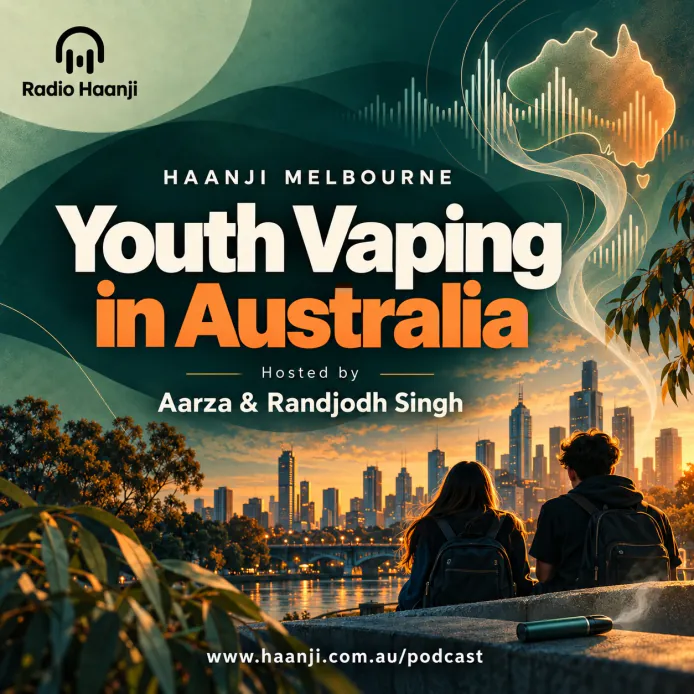
Youth Vaping in Australia: Risks, Realities & Teen Advice - Aarza & Ranjodh Singh
Host:-
 Ranjodh Singh
Explore the rise of youth vaping in Australia with Haanji Melbourne. Learn the health risks, school challenges, and advice for parents. Listen now!
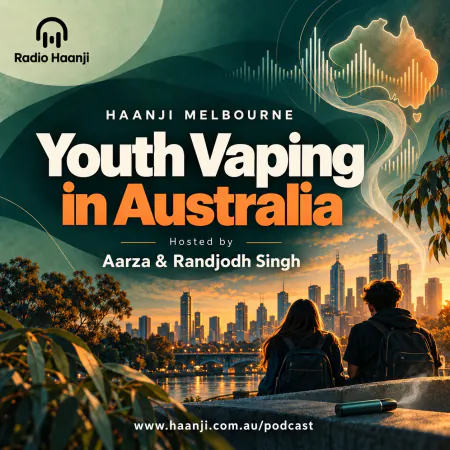
The surge in youth vaping in Australia has rapidly transformed from an emerging habit into one of the most pressing health and behavioural challenges facing families and educators today. On Radio Haanji’s flagship program Haanji Melbourne, hosts Ranjodh Singh and AAarza unpacked this escalating dilemma, exploring why young people are drawn to battery-powered devices and what happens when curiosity turns into daily chemical dependence. Drawing from real-world student encounters and community observations, their discussion cut through marketing myths to expose the day-to-day realities playing out in schoolyards, local parks, and family homes.
Understanding this epidemic requires looking past commercial claims that framed e-cigarettes as harmless water vapour or benign smoking-cessation aids. When adolescent use escalates to covert consumption in school bathrooms and bedroom hideaways, the physical, psychological, and social ramifications affect the entire family unit. By pairing candid youth perspectives with health data, this episode provides a grounded foundation for parents seeking to navigate peer dynamics, identify concealed use, and foster supportive home environments.
Where to Listen
You can hear the full discussion on Haanji Melbourne broadcast on Radio Haanji 1674 AM, hosted by Ranjodh Singh and youth presenter Aarza. Tune in through your preferred platform to catch the complete dialogue and community call-in insights:
Episode Highlights
The broadcast explored adolescent e-cigarette use across several key themes, examining personal student experiences alongside broader health statistics:
-
Deconstructing Device Mechanics: A breakdown of how battery-powered e-cigarettes turn chemical liquids into breathable aerosol mists rather than harmless water vapour, disproving early marketing narratives.
-
Social Motivation and Peer Dynamics: An analysis of why adolescents experiment, focusing on peer imitation, the desire to project a confident or rebellious persona, and the influence of social media trends.
-
Schoolyard Concealment: Practical accounts of how students disguise devices as stationery or highlighters, avoid detection in bathrooms, and create friction with teachers and classmates.
-
Health and Chemical Realities: A review of toxic compounds found in vape liquids—including carcinogens and heavy industrial chemicals—alongside the short-term and long-term damage caused to adolescent lung tissue and developing brains.
-
Australian Regulatory Landscape: A discussion on prescription-only models, retail crackdowns, illicit convenience store sales, and the disproportionate targeting of young buyers.
-
Communication Pathways for Families: Constructive strategies for parents to approach suspected substance use calmly, using structured conversations rather than punitive anger.
Why Are Teenagers Attracted to Vaping?
Teenagers are primarily drawn to vaping through peer influence, curiosity, and misleading perceptions that e-cigarettes look cool, harmless, or fashionable. Many young people mistakenly believe that vaping relieves stress, anxiety, or personal difficulties, whereas nicotine dependence quickly creates mood instability, heightened irritability, and cyclical chemical cravings that worsen underlying mental distress.
Young people rarely begin vaping with the intention of developing a long-term habit. Instead, adoption is driven by the human desire to belong, fit into peer groups, and project an image of maturity or social confidence. When an admired classmate or social media figure uses an e-cigarette, surrounding peers frequently copy the behaviour to avoid feeling excluded. What starts as experimental puffing during a social gathering often transitions into a regular routine before the user recognizes the onset of physical dependence.
The sensory appeal of e-liquids plays a decisive role in lowering a teenager's natural risk perception. By infusing products with fruit, confectionery, and dessert flavours, manufacturers systematically mask the harshness of the underlying chemicals. This creates an illusion of innocence, leading teenagers to view the habit as an amusing sensory game rather than drug ingestion. Combined with pervasive digital content glorifying device tricks, adolescent risk perception is eroded long before the health consequences become apparent.
Furthermore, many adolescents turn to vaping as a misguided self-medication tool for emotional pressures, academic stress, or family tensions. Young people frequently report reaching for a vape to calm their nerves or find a fleeting sense of control. However, because nicotine is a potent stimulant that induces rapid tolerance, the brief sensation of relief is simply the temporary satisfaction of withdrawal. Once the aerosol clears, underlying anxieties return alongside chemical cravings, trapping the user in a self-reinforcing loop.
What Are the Real Dangers and Harmful Chemicals in Vapes?
E-cigarettes deliver a potent chemical aerosol directly into the lungs, containing highly addictive nicotine, toxic solvents, and known carcinogens. Key ingredients frequently identified in vape liquids include formaldehyde, acetone, and benzene. These hazardous compounds trigger acute throat inflammation, dizzy spells, persistent coughing, nausea, and long-term irreversible respiratory and cardiovascular damage.
A common misconception among teenagers is that vaping produces benign water mist. In reality, the heating coil transforms a chemical cocktail into an ultra-fine aerosol capable of penetrating deep into the pulmonary alveoli. Inhaling these heated particles causes acute cellular irritation, manifesting in persistent coughing, chest tightness, throat irritation, and nausea. Prolonged exposure can permanently scar delicate lung tissue, setting the stage for lifelong respiratory deficits and diminished athletic endurance.
The neurological vulnerability of young people amplifies these physical risks. The human brain continues developing well into the mid-twenties, particularly in regions governing impulse control, emotional regulation, and decision-making. Nicotine directly disrupts the formation of vital neural circuits, increasing susceptibility to severe addiction and mood disorders. Adolescents who vape regularly exhibit heightened rates of attention deficits, sudden mood swings, and depressive symptoms compared to non-vaping peers.
Compounding these hazards is the widespread issue of fraudulent labeling. Extensive testing across Australia has confirmed that many e-cigarettes sold as nicotine-free contain substantial concentrations of high-strength synthetic nicotine. Users who believe they are merely inhaling harmless flavourings unknowingly consume chemical doses equivalent to several packets of traditional combustible cigarettes within a single disposable unit.
What Happens When Youths Vape at School?
When youth vaping penetrates school environments, it causes widespread classroom disruption, chronic absenteeism, and serious disciplinary interventions. Students frequently leave classes to vape in restrooms, conceal compact devices in clothing or stationery, and subject non-using peers to peer pressure or intimidation, creating widespread safety, supervision, and behavioural concerns for educators.
The physical concealment of modern vaping hardware makes institutional oversight challenging. Devices engineered to resemble standard USB flash drives, ballpoint pens, or highlighters are easily hidden inside pencil cases, sleeves, and jacket pockets. Students capitalise on these compact designs to sneak into school bathrooms during class changes or recess breaks, transforming shared communal facilities into hotspots for illicit use.
This behaviour creates severe friction within the student body. Non-vaping students often feel intimidated or uncomfortable entering school amenities, encountering groups gathered to share devices. In some instances, bystanders face pressure to sample a device or are coerced into keeping secrets for classmates. If a student reports vaping activity to staff, they risk being targeted by peers, discouraging open reporting and allowing covert habits to spread unchecked throughout academic cohorts.
For school administrations, enforcing policies demands significant resources. Caught students face suspension, loss of privileges, and academic setbacks, yet purely punitive measures rarely dismantle the underlying physical addiction. When students spend instructional time thinking about their next opportunity to vape, focus evaporates and grades deteriorate. Addressing the challenge requires schools to combine rigorous safety boundaries with targeted substance counselling.
Australian Vaping Laws and Black Market Realities
Under Australian statutory frameworks, non-prescription vapes, recreational disposables, and kid-appealing candy flavours are illegal to sell or import. Therapeutic e-cigarettes intended for adult smoking cessation require a doctor’s prescription and must be dispensed through licensed pharmacies. Despite these strict regulations, an aggressive black market continues supplying unregulated devices to minors through illicit storefronts and social media.
The Australian regulatory framework aims to prevent adolescent uptake while maintaining a controlled therapeutic pathway for adult smokers attempting to quit combustible tobacco. Statutory rules restrict legal formulations to basic menthol, mint, or tobacco flavours, prohibiting packaging that features cartoon branding or confectionery names. By requiring a health consultation, the law ensures that any e-cigarette use occurs under professional clinical supervision.
However, a resilient illicit supply chain actively undermines these safeguards. Unscrupulous retailers, convenience shops, and pop-up vendors frequently sell illegal disposable units imported under fraudulent declarations. These black-market goods lack quality controls, ingredient disclosures, or manufacturing standards, exposing purchasers to volatile battery faults and toxic chemical contaminants.
This underground distribution network targets young demographics through digital messaging platforms and neighbourhood peer networks. While law enforcement authorities conduct regular seizures and impose heavy financial penalties on non-compliant vendors, the high profit margins associated with imported disposables incentivize ongoing underground trade. For parents, understanding these market realities is vital: the legal status of an e-cigarette does not guarantee its absence from local neighbourhood stores.
How Can Parents Talk to Teens About Vaping?
Parents should approach conversations about vaping with calm curiosity, non-judgmental empathy, and factual open-ended questions rather than confrontational accusations. Using supportive language that prioritises personal wellbeing over immediate punishment helps adolescents express social difficulties, explore peer pressures, and accept medical guidance or cessation support without retreating into defensive silence.
Confrontational interrogations rarely produce positive behavioural change in teenagers. When parents react with anger, strict lectures, or immediate groundings, young people typically shut down, conceal devices more carefully, or seek validation outside the family home. Constructive interventions begin during quiet, routine moments—such as driving together in the car or discussing a news item—where the adolescent does not feel cornered by direct scrutiny.
Observing subtle physical and environmental indicators allows parents to initiate these discussions before dependencies deepen. Warning signs include unexpected sweet, synthetic aromas drifting from bedrooms, an increased consumption of water due to dry mouth, unexplained nosebleeds, or the appearance of unusual plastic casings, cords, and spare batteries. Detecting these clues provides an opening for thoughtful inquiry rather than hostile accusation.
When an adolescent admits to vaping, the primary objective is assessing their level of dependence and emotional distress. Parents should listen to the pressures their child faces, validate their challenges, and offer tangible assistance. Involving a general practitioner, school counsellor, or youth health specialist frames the recovery process around health preservation rather than criminal misconduct, providing the teen with a structured path toward sustained recovery.
Key Takeaways
-
Adolescent vaping in Australia has expanded substantially, driven by deceptive flavourings, digital promotion, and social peer imitation.
-
E-cigarette aerosols contain hazardous substances, including industrial solvents, formaldehyde, and heavy metals, that damage respiratory and cardiovascular systems.
-
Vaping devices feature deceptive packaging, with many imported products labeled as nicotine-free concealing elevated levels of addictive nicotine.
-
School campuses experience major operational disruptions as students use restrooms and concealed hardware to mask habits, leading to disciplinary actions.
-
Therapeutic e-cigarettes require a clinical prescription from a medical practitioner under Australian law, yet an illicit market continues targeting underage buyers.
-
Productive family interventions rely on empathetic, open communication rather than punitive anger to help young people address the underlying drivers of substance use.
References and Further Reading
-
National Drug Strategy Household Survey (Australian Institute of Health and Welfare) — Comprehensive national data tracking demographic shifts, frequency of consumption, and changing patterns in youth substance use across Australia.
-
Department of Health and Aged Care (Therapeutic Goods Administration) — Official regulatory overviews outlining legal access frameworks, prescription requirements, and commercial compliance standards for vaping products.
-
Quitline & Headspace Australia — National public health initiatives providing tailored clinical guidance, youth mental health resources, and cessation counselling for families.
Teen vaping represents a complex, multi-layered health challenge that cannot be resolved through punitive discipline alone. As Ranjodh Singh and Aarza highlighted on Radio Haanji’s Haanji Melbourne, safeguarding the next generation requires honest awareness, structural accountability, and compassionate guidance. By engaging in balanced conversations, staying informed on evolving device trends, and seeking professional support early, families can guide young people toward healthy choices and strong, independent lives. To hear the full conversation and explore community perspectives on this vital issue, listen to the complete episode on Spotify, Apple Podcasts, or via the Radio Haanji mobile app.
Frequently Asked Questions
What are the earliest physical signs that a teenager has started vaping?
How do modern vapes conceal their appearance from parents and teachers?
Why do some vapes cause symptoms like dizziness, nausea, or rapid heartbeat?
Can teenagers buy vapes legally in Australia with parental consent?
How can a teenager safely quit vaping once chemical dependence begins?
What's Your Reaction?