















































































Pritam Singh Rupal on Punjab's ₹1.44L cr water demand, Haryana Congress cross-vote, Delhi fire and Chandigarh murder — Radio Haanji free.
Indian Updates — 19 March 2026 | Punjab's Water War, Congress's Haryana Crisis and Two Fires in One Day — Radio Haanji
Thursday 19 March 2026 brings a Punjab-heavy edition of Indian Updates on Radio Haanji 1674 AM. Ranjodh Singh is joined today by senior journalist Pritam Singh Rupal — whose decades at All India Radio Chandigarh and deep engagement with Punjabi political journalism bring a rare clarity to stories that deserve more than surface reading. On the table today: Chief Minister Bhagwant Mann has issued what amounts to a century-old water bill to Rajasthan, the Congress party in Haryana has publicly named four of its own MLAs who betrayed the party in the Rajya Sabha election, Himachal Pradesh has introduced a dress code for government employees that has generated more debate than most policy decisions, and on a single Wednesday in the tri-city region, both a major commercial market in Chandigarh and a residential building in Delhi were consumed by fire — and a property dealer was shot dead in broad daylight outside a gym in one of Chandigarh's most secure sectors.
Punjab vs Rajasthan — A ₹1.44 Lakh Crore Bill That Has Been Waiting 66 Years
At a press conference at Chandigarh's Sector 2 on Wednesday, Bhagwant Mann placed a figure on the table that is certain to dominate the Punjab political conversation through to the 2027 elections: ₹1.44 lakh crore — the amount he says Rajasthan has owed Punjab for water drawn through the Ferozepur Feeder since 1960 without paying a single rupee.
The legal basis for this demand is a tripartite agreement signed in September 1920 between the British colonial government, the erstwhile Bikaner state (whose territory became Rajasthan after Partition), and the Maharaja of Bahawalpur. Under that agreement, Rajasthan was obligated to pay Punjab on a per-acre basis for 18,000 cusecs of water drawn continuously through what is now called the Rajasthan Feeder. Payments were made until 1960. After the Indus Waters Treaty of that year, Rajasthan quietly stopped paying — citing the new arrangement as a basis for non-payment — while continuing to draw the same quantum of water under the original 1920 agreement. Mann's demand: either pay the accumulated dues at the old agreed rate, or stop taking the water. "Rajasthan must either release Punjab's rightful dues or stop taking water," he said. He further pointed out that the 1920 agreement required a review every 25 years — a provision that previous Punjab governments never exercised in six and a half decades.
Rajasthan has not yet formally responded, and the central government has not taken a public position. Political opponents in Punjab, including BJP leader Sukhminderpal Singh Grewal, have called the announcement political theatre designed to deflect attention from governance failures at home. The BJP position is that Mann's escalating water demands are a pre-election strategy with no realistic legal pathway. What makes this announcement significant regardless of political intent is that the underlying legal claim is not frivolous. Punjab's water rights issues — SYL, inter-state river water allocation, the gap between riparian entitlement and actual distribution — are among the most structurally unresolved grievances in Indian federalism. Mann has made this specific claim about Rajasthan before, but Wednesday's press conference was the first time a formal letter to Rajasthan was confirmed and a specific rupee figure was placed on the record. Whether this goes anywhere legally remains to be seen. What it signals politically is unambiguous: the AAP government is building its 2027 campaign around the assertion that it fights for Punjab's rights where others did not.
At the same press conference, Mann also presented a detailed account of the AAP government's irrigation achievements over four years. Canal water coverage, he said, has risen from 26.5 per cent of Punjab's farmland in 2022 to 78 per cent today — from 20.89 lakh acres to nearly 58 lakh acres. A total of ₹6,700 crore has been spent on canal lining, repair and infrastructure, which Mann described as the highest ever single irrigation investment in Punjab's history. One hundred and one abandoned canals spanning 545 kilometres have been revived, including the 22-kilometre Sarhali Minor canal in Tarn Taran, which engineers found buried underground after decades of administrative neglect. Canal water is now reaching 1,446 villages for the first time since Independence. In Gurdaspur, groundwater extraction in one village has dropped from 61 per cent to around 31 per cent as a direct result of improved surface water supply. For a state whose groundwater depletion crisis has been one of the most alarming environmental stories of the past two decades, this figure — if independently verified — represents a genuinely significant shift in the irrigation model.
What Does a Dress Code Say About Governance? Himachal's New Rules Ask a Bigger Question
The Himachal Pradesh government, led by Chief Minister Sukhvinder Singh Sukhu, issued a formal directive on Tuesday through Chief Secretary Sanjay Gupta banning jeans, T-shirts and party wear from all government offices and court appearances. The order applies to every government employee — from senior IAS officers to junior officials — and is a reiteration of an earlier directive issued in August 2017 that was widely ignored. Male employees must wear formal shirts and trousers; female employees are directed to wear sarees, salwar suits, churidars or kurtas with dupattas. Violations will invite disciplinary action.
What generated far more substantive debate than the dress code itself is the second part of the directive: employees are now formally barred from expressing opinions on government policies on personal social media accounts, from sharing official information without prior authorisation, and from making political or religious statements in any public forum without approval. The notification invokes the Central Civil Services (Conduct) Rules, 1964 as the legal basis for these restrictions. These social media conduct rules are not unusual in the Indian civil services context — but issuing them alongside a dress code has given them the appearance of a broader administrative crackdown and generated significant pushback from employees and political opponents. Critics argue the government is attempting to silence bureaucratic dissent at a time when Sukhu's administration faces internal pressures. Supporters say the rules are simply enforcing professionalism and discipline that should always have been expected of public servants. The political significance is not lost on Pritam Singh Rupal, who notes that this kind of directive typically emerges when a government is anxious about the image being projected — either by undisciplined office behaviour or by employees who disagree publicly with the policies they are implementing.
Four Names, Four Faces of Congress's Haryana Crisis
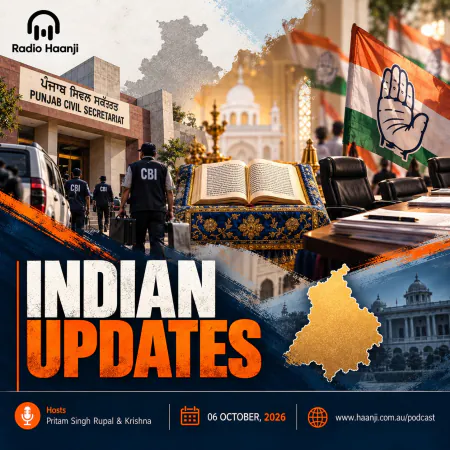
On Wednesday, Congress general secretary and Haryana in-charge B.K. Hariprasad held a press conference in New Delhi and publicly named four of the five Congress MLAs who cross-voted in Monday's Rajya Sabha election. The four are: Shally Chaudhary (Naraingarh), Mohammad Ilyas (Punahana), Mohammad Israil (Hathin) and Renu Bala (Sadhaura). A fifth name was withheld. Hariprasad confirmed that show-cause notices will be issued and the party's disciplinary committee chairman Dharampal Malik has been asked to recommend action to the AICC.
The full picture of what happened on Monday is now clearer. Congress moved 31 of its 37 MLAs to Himachal Pradesh in a pre-emptive move to prevent BJP poaching — first to a resort in Shimla, then to Kasauli, before busing them back to Chandigarh on Monday morning. Despite this extraordinary logistical operation, five of the party's legislators found a way to vote against the party whip. Four of those five votes were additionally declared invalid by the returning officer, meaning Karamvir Singh Boudh's victory over BJP-backed Independent Satish Nandal was achieved by the slenderest of margins. Congress is calling the overall episode an "Agni Pariksha" it passed. Bhupinder Singh Hooda, who engineered the Himachal operation, said the party survived despite the betrayal. Haryana Chief Minister Nayab Singh Saini put the counter-view directly: "I have never before seen Congress not trust its own MLAs."
What this episode reveals goes well beyond the Rajya Sabha seat. The four MLAs who cross-voted represent two Muslim legislators, two women legislators and a reserved constituency MLA — a cross-section that maps onto the factional geography of Haryana Congress almost exactly. The party has never successfully unified its different factions under a single leader, and that structural fragility — present through the Hooda era and well before it — continues to express itself in moments when party discipline is most needed. Congress winning a Rajya Sabha seat from Haryana despite losing five votes is the good news. Five of thirty-seven MLAs choosing to vote against their own candidate despite being moved to Himachal Pradesh specifically to prevent this is the story that deserves more honest examination.
Two Cities, Two Fires — and a Safety Crisis That Is Not Being Taken Seriously
Wednesday produced two major fire incidents within hours of each other in the tri-city region, and the details of each reveal not just accidental tragedy but a failure of infrastructure and administrative will that has been documented repeatedly without consequence.
In Chandigarh, a fire broke out around 1 pm in the mobile market of Sector 22-B — one of the busiest commercial hubs in the city, packed with mobile showrooms, electronics outlets and photography studios. The fire began on the first floor and spread rapidly through the building, fed by lithium batteries, chemicals in a photography lab and plastic casings stored within the shops. More than 15 fire tenders were deployed from Sector 17 and Sector 32 fire stations, and additional vehicles had to be called from Mohali, Panchkula and the Air Force station. The fire took nearly four hours to control. More than ten cabins and a photography lab were completely gutted, causing losses running into lakhs. No casualties were reported — a relief that was directly attributable to rapid evacuation. But the fire tender was initially blocked at the market entrance by haphazard parking and overhead loose wiring, losing critical early minutes that market traders say could have contained the damage in under thirty minutes. The market president confirmed this is not the first fire at this location. The Chandigarh Beopar Mandal stated it has repeatedly raised parking and safety concerns with the municipal corporation and administration, without meaningful response.
In Delhi, the morning told a far more devastating story. A fire broke out before 9 am in a five-storey residential-cum-commercial building near Shri Ram Chowk market, close to the Palam Metro Station in southwest Delhi. The building's ground and first floors housed a cloth and cosmetic showroom owned by Rajender Kashyap. His family — including his wife, sons, daughters, daughters-in-law and three grandchildren — lived on the upper floors. Nine members of the family were killed, including three girls aged 15, six and three years. Three others survived by jumping from the burning building; one man jumped from the third floor with his young daughter. CCTV footage captured Delhi Fire Brigade's hydraulic lift arriving at the scene — broken. Witnesses and AAP leaders including Saurabh Bhardwaj said the family was visible on the balcony, trapped and alive, while the fire brigade stood below with non-functional equipment. Prime Minister Narendra Modi announced ₹2 lakh ex-gratia per deceased; the Delhi government announced ₹10 lakh for adult victims and ₹5 lakh per child. Delhi Chief Minister Rekha Gupta ordered a magisterial inquiry. Former Chief Minister Arvind Kejriwal wrote that narrow streets, adjacent multi-storey buildings and inadequate safety arrangements make such tragedies inevitable. The inquiry will determine whether the hydraulic lift failure was a maintenance failure or a procurement failure — and whether anyone will be held accountable for it.
A Daylight Murder in One of Chandigarh's Safest Sectors
The violence in Chandigarh on Wednesday was not limited to fire. Around noon, a 31-year-old property dealer named Charanpreet Singh — a resident of Kubaheri village in Mullanpur, New Chandigarh — was shot dead in the parking area outside the Body Zone gym in Sector 9. Two unidentified assailants arrived on a motorcycle, waited for Charanpreet to park his car and step out, then fired eight to twelve rounds at close range before fleeing. He was rushed to the Government Multi-Speciality Hospital in Sector 16 and declared dead. CCTV footage captured the attackers' helmeted faces and the moment of the attack. The motive is unclear — police are investigating personal enmity, business rivalry and other angles.
What is not unclear is the location: Sector 9 in Chandigarh is not a peripheral or poorly surveilled area. It sits adjacent to some of the city's most prominent institutions, offices and hospitals. It is the kind of area where a broad-daylight armed attack is supposed to be impossible. This was also the second firing incident in Chandigarh within 24 hours — the previous day, a student leader near the Botany Department at Panjab University was shot in another targeted attack. The double incident within a single day in India's most planned and administered city is the detail that demands the most serious analytical attention. Chandigarh is not Punjab. It is not a city with gang violence at the scale seen in Amritsar or Ludhiana. When it begins to produce daylight shootings at the rate of one per day, it signals either a specific gangland escalation or a broader deterioration in the intelligence and enforcement capacity of the administration. Whether this is a Chandigarh-specific failure or a spill-over from the wider gang-crime ecosystem that has consumed Punjab's law and order conversation for years is the question the investigation will need to answer.
Why Indian Updates Matters for the Punjabi Diaspora
For the Punjabi and Indian community in Australia and Singapore, keeping pace with these developments through a single trusted daily programme is not simply a matter of staying informed. Punjab's water rights crisis has real implications for how the state manages its agricultural economy, its groundwater future and its negotiating position with the Centre — all of which affect the family land and the extended family that most diaspora Punjabis remain connected to. The cross-voting episode in Haryana is a live lesson in how Indian democratic institutions function under pressure, how parties manage loyalty and how accountability actually works at the state level. And the fires in Delhi and Chandigarh are a reminder that building safety regulations, infrastructure investment and administrative accountability are not abstract governance questions — they are questions about whether your family is safe in the home they live in. Indian Updates on Radio Haanji, available free through the Radio Haanji podcast every weekday morning, exists to make these connections clear.
Listen to Indian Updates — Free, Every Weekday
Catch today's full analysis with Ranjodh Singh and Pritam Singh Rupal on all platforms:
Listen on Spotify | Listen on Apple Podcasts | Download the iOS app | Download the Android app
Radio Haanji 1674 AM is Austalia's Punjabi community radio station.
Listen free at haanji.com.au | Spotify | Apple Podcasts | iOS App | Android App
Serving the Punjabi community in Australia, Canada, Singapore and world wide.
What's Your Reaction?