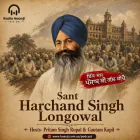













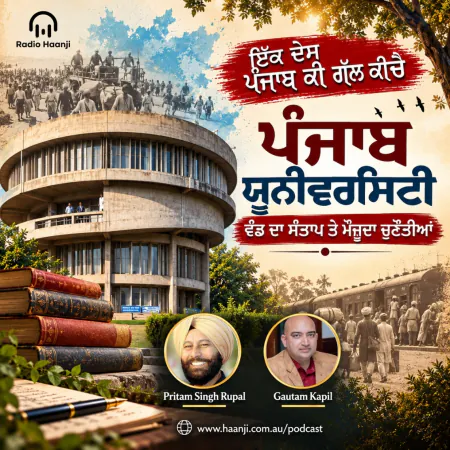

























The Searing Truth of Movie Satluj - Pritam Singh Rupal & Gautam Kapil
Host:-
 Gautam Kapil
 Pritam Singh Rupal
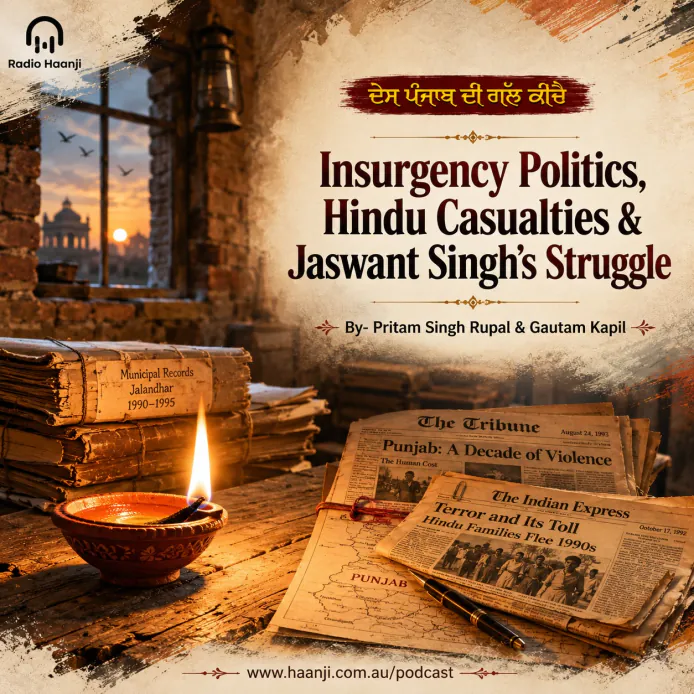
Dive deep into the unvarnished history of the movie Satluj, Jaswant Singh Khalra's human rights struggle, the suppression of media in 1995, and the political anxieties of the state. Listen to the latest episode of Des Punjab Ki Gal Kiche on Radio Haanji.
Cinema has long been a mirror to society, but when that mirror reflects the raw, uncomfortable wounds of history, the state often moves to shatter it. In the latest groundbreaking episode of Des Punjab Ki Gal Kiche on Radio Haanji 1674 AM, seasoned hosts Pritam Singh Rupal and Gautam Kapil deliver an unflinching analysis of the movie Satluj(originally titled Punjab '95). Starring Diljit Dosanjh, the film chronicles the haunting reality of Punjab's "Black Period" and the legendary human rights struggle of Shaheed Jaswant Singh Khalra. Less than 48 hours after its uncut digital release in July 2026, the film was abruptly pulled down from streaming platforms in India, igniting a massive wave of political outrage, public interest litigations, and community screenings across the Punjabi diaspora in Australia and globally.
The Dark Era: Politics, Insurgency, and the Communal Narrative
The core timeline of Satluj focuses intensely on the highly complex and traumatic phase in Punjab stretching from 1982–1983 to 1995–1996. Hosts Gautam Kapil and Pritam Singh Rupal break down how the modern discourse surrounding this film on social media is frequently manipulated. Instead of centering the dialogue on universal human rights and legal accountability, current online narratives often push the conversation back into polarized communal boxes, asking divisive questions about the targeting of specific communities to overshadow the core issue of systemic injustice.
The conversation explicitly addresses the multi-layered tragedy of the era. Innocent lives were lost across all lines—civilians, targeted families, and police officers attacked inside their homes. However, as the hosts argue, there is a fundamental difference between independent militant outfits and the actions of a democratic state. A state is bound by a constitutional framework, the judiciary, and the rule of law. When state machinery turns rogue, replacing legal processes with state-sanctioned cash rewards, promotions, and systemic extrajudicial "fake encounters," it compromises the very democracy it claims to protect.
Challenging the Darkness: The Legacy of Jaswant Singh Khalra
At the center of Satluj is the meticulously documented investigative work of Jaswant Singh Khalra, an ordinary bank employee turned human rights champion. Deeply moved by the endless stream of disappearances following Operation Blue Star and the 1984 anti-Sikh riots, Khalra began examining municipal and cremation ground records in the Amritsar and Tarn Taran regions. What he unearthed was a bureaucratic nightmare: municipal documentation proving that the Punjab Police had secretly cremated thousands of citizens as "unidentified and unclaimed" bodies to erase the evidence of illegal detentions and murders.
Khalra estimated that over 25,000 secret cremations had taken place. Fully aware that his quest for truth put his life and his family in extreme jeopardy, he famously proclaimed in his final international speeches that even a single small lamp has the power to challenge and halt the spread of absolute darkness. In a tragic execution of his own fears, Khalra suffered the exact same fate as the victims he championed; he was abducted from outside his Amritsar home in September 1995 and murdered. It was only after a high-stakes legal battle, triggered by a telegram sent to the Supreme Court by community leaders, that a CBI inquiry was ordered, culminating in the life imprisonment of several guilty police officials years later.
Why the Establishment Fears the Cinema of Accountability
Why is the current establishment so deeply terrified of a movie like Satluj? The hosts reveal the deeply entrenched nexus between political parties, the bureaucracy, and the police apparatus. The establishment routinely embraces, promotes, and grants tax exemptions to hyper-nationalistic movies that reinforce state-approved narratives. Yet, when an investigative thriller like Satluj demands structural accountability, it is instantly met with censorship battles, demands for hundreds of cuts, and sudden streaming bans.
The persistent excuse used by the political class is that depicting these historical realities "demoralizes the security forces." Pritam Singh Rupal points out that this political anxiety transcends party lines. Even when regime changes occurred in Punjab during the late 90s, the promised independent people's commissions were swept under the rug because the political elite, regardless of their banner, inherently rely on unchecked police compliance to maintain power. Banning the film is an attempt to suppress a collective memory that demands to know who holds the state accountable when it abuses unchecked power.
Muzzled Voices: Journalism and Media in the 1990s
Gautam Kapil and Pritam Singh Rupal draw a striking parallel between the controlled media landscape of today and the state of journalism in 1995. During the height of the counter-insurgency operations, the mainstream national media functioned primarily as an echo chamber for state propaganda. Press releases from the Director General of Police (DGP) were published verbatim without independent verification, and the term "terrorist" was applied broadly to bypass human rights scrutiny.
On the other hand, the vernacular Punjabi press—including prominent newspapers like Ajit and Mechanic Tribune—operated under an atmosphere of suffocating fear. Local journalists were caught in a brutal crossfire. If they reported the state's version, they faced severe threats from militant factions. If they published alternative viewpoints or questioned police brutality, they were targeted by the police, subjected to intense interrogations, or silenced permanently. This historical context reveals that the silencing of uncomfortable truths is an old institutional habit, one that directly connects the media suppression of 1995 to the sudden removal of Satluj from OTT platforms in 2026.
Frequently Asked Questions
What is the movie Satluj based on?
Why was the movie Satluj removed from OTT platforms?
Where can I listen to deep discussions on Punjabi history and culture?
What's Your Reaction?