































































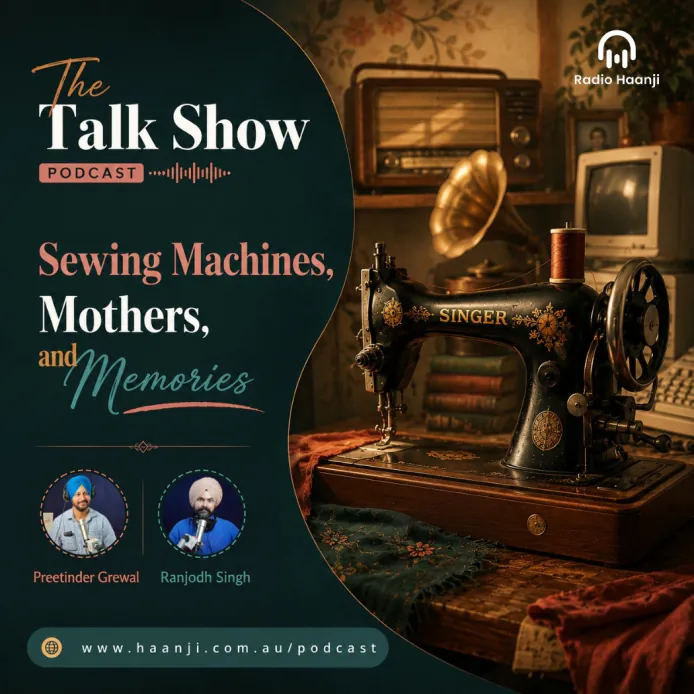
Sewing Machines, Mothers, and Memories - The Talk Show - Preetinder Grewal & Ranjodh Singh
Host:-
 Preetinder Grewal
 Ranjodh Singh
Listen to The Talk Show on Radio Haanji 1674 AM. Preetinder Grewal & Ranjodh Singh share emotional stories of mothers, sewing machines, and golden memories.
Every generation carries a treasure chest of memories, but some objects hold a special power to transport us instantly back to our childhood homes. On this episode of The Talk Show on Radio Haanji 1674 AM, hosts Preetinder Grewal and Ranjodh Singh embark on a warm, reflective journey through time. Sparked by historical milestones in global innovation, the conversation quickly shifts from mechanical inventions to the heartwarming sacrifices of our parents, the resilience of our mothers, and the simpler days of growing up in Punjab.
Historical Milestones: Inventions That Shaped Our Everyday World
The discussion opens with a look back at August 12, a date remarkably rich in technological history. On August 12, 1851, Isaac Merritt Singer patented the double-threaded, foot-pedal sewing machine, fundamentally altering garment manufacturing and domestic life worldwide. Decades later, on August 12, 1877, Thomas Edison invented the phonograph, giving humanity its very first way to record and replay sound. Continuing this trend of innovation, IBM launched its iconic Personal Computer (PC) on August 12, 1981, bringing digital power into small businesses and family homes.
While these milestones changed global industry, their true impact was deeply personal. In homes across Punjab and the broader South Asian diaspora, machines like the Singer, Usha, or Lakhshmi sewing machine were far more than mere household appliances—they were lifelines of independence, creativity, and maternal love.
The Legacy of the Sewing Machine: Mothers, Sacrifices, and Survival
As listener calls poured into the studio, the central theme of the episode emerged: the quiet, selfless dedication of mothers. Hosts and listeners shared moving personal stories about how sewing machines served as vital tools for family survival. For many households facing financial hardship or the loss of a primary breadwinner, a mother sitting at her sewing machine late into the night was what kept food on the table, paid school fees, and stitched a brighter future for her children.
From tailoring clothes and mending uniforms to intricate embroidery and crafting traditional phulkaris, mothers poured their heart and patience into every stitch. These stories echo the deep narrative traditions featured in our audio storytelling series, Kitaab Kahani, where personal history and cultural heritage intertw seamlessly.
Lighthearted Nostalgia: Washing Machines, Fruit Plucking, and Early Tech
The episode balances emotional depth with delightful humor, as callers reminisce about the quirky realities of introducing "modern" technology into traditional homes:
- The Dancing Washing Machine: Listeners laughed over memories of early semi-automatic washing machines that would vibrate so violently during the spin cycle that families literally had to chain them up or sit on them to keep them from "escaping" across the courtyard.
- The Art of Plucking Fruit: Callers shared clever childhood tricks for stealing guavas, jamuns, and mangoes from neighboring trees—often using long poles with baskets tied to the end or lowering buckets from top-floor balconies.
- Sacred Computer Labs: Early experiences with personal computers were treated with reverence. Entering a school computer lab felt like entering a temple, where students had to take off their shoes at the door and tiptoe across carpeted, air-conditioned rooms.
These shared moments reflect the joy of spontaneous camaraderie, much like the candid banter on Boys Meetup or the lighthearted reflections found in Laughter Therapy.
Connecting the Past to the Present
In today's fast-paced world, convenience is everywhere. Yet, as the hosts reflect, modern comforts have sometimes distanced us from the deep patience, community bonds, and hands-on resourcefulness that defined earlier generations. While we explore modern advancements on The Deep Talk and keep up with daily global headlines on Today Updates, Indian Updates, and life reflections in Notebook, honoring our roots keeps us grounded.
Whether it is the memory of a mother working under the soft glow of a kerosene lamp or the sound of the sewing machine wheel spinning rhythmically, these golden memories remain our most valuable heritage.
Frequently Asked Questions
What is the central theme of this episode of The Talk Show?
When was the foot-pedal Singer sewing machine patented?
How can I listen to Radio Haanji 1674 AM in Australia?
Who are the hosts of The Talk Show on Radio Haanji?
What was special about August 12 in history?
Why do sewing machines hold a special place in South Asian households?
What kind of stories did listeners share during the show?
Where can I stream full podcast episodes of Radio Haanji?
What's Your Reaction?







Related Posts