




























































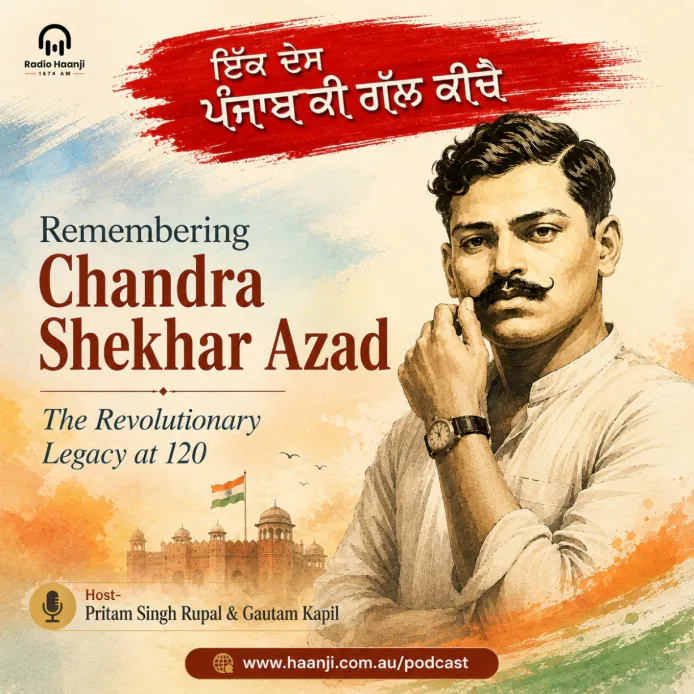
Remembering Chandra Shekhar Azad - Ik Des Punjab Ki Gal Kiche -Pritam Singh Rupal & Gautam Kapil
Host:-
 Gautam Kapil
 Pritam Singh Rupal
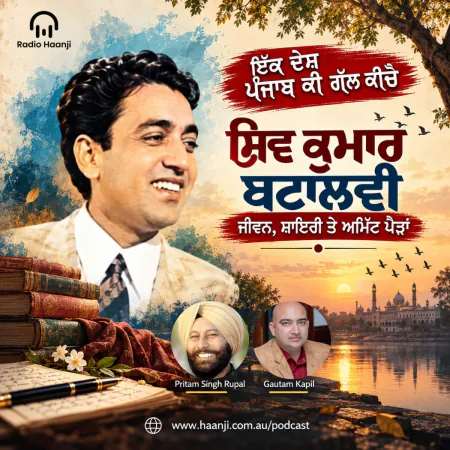
Join hosts Pritam Singh Rupal and Gautam Kapil on Radio Haanji 1674 AM as they explore the emotional and untold Punjab connection of freedom fighter Chandra Shekhar Azad.
The concept of freedom is not just a physical state but a deeply emotional and mental awakening. On today's episode of Ik Desh Punjab Ki Gal Kiche on Radio Haanji 1674 AM, hosts Pritam Singh Rupal and Gautam Kapil take us on an emotional journey back in time. We gather to remember the fierce spirit and enduring legacy of Chandra Shekhar Azad on his 120th birth anniversary, exploring a bond with Punjab that shaped the course of India's independence.
The Spark of True Freedom
True independence always begins as a thought, long before it is written into law or achieved on the battlefield. The hosts reflect on the global history of freedom, drawing a powerful comparison to the American Independence. But the core of the episode rests on the young shoulders of a 15-year-old boy. Arrested during the Non-Cooperation Movement and brought before a magistrate, he was asked his identity.
His answers were sharp and fearless: his name was "Azad" (Free), his father's name was "Swatantra" (Independent), and his home was the jail cell. For this bold defiance, he endured 15 brutal lashes. With every strike, his resolve only hardened, and the young boy permanently became known to the world as Chandra Shekhar Azad.
The Deep Bond with Punjab
Though born in Bhavra, Madhya Pradesh, Azad's heart and revolutionary vision found a powerful home in Punjab. Listeners of the Punjabi community Australia wide will feel a deep sense of pride hearing how closely his life was intertwined with the state. He served as the Commander-in-Chief of the Hindustan Socialist Republican Association (HSRA), operating under the pseudonym Balraj.
In the streets of Lahore, which became the central hub for their revolutionary planning, weapons procurement, and strategy, Azad worked shoulder-to-shoulder with Punjab's beloved sons: Bhagat Singh, Sukhdev, and Rajguru. When the tragic lathi charge claimed the life of Lala Lajpat Rai, it was Azad who provided the vital operational backing during the assassination of John Saunders, standing firmly with his Punjabi brothers in their quest for justice.
If you are moved by these historical narratives, you might also find comfort and wisdom in our audio stories at the Kitaab Kahani podcast, or delve into the mysteries of our universe with the deep talk show.
A Legacy That Lives On
The episode concludes with the heartbreaking yet deeply inspiring tale of his final moments at Alfred Park in Allahabad on February 27, 1931. Surrounded by police, Azad fought like a lion to ensure his companion could escape. True to the vow he took years ago—that he would never be captured alive by the British—he used his final bullet to embrace martyrdom on his own terms.
Because of his profound brotherhood with Bhagat Singh and his frequent depiction in the cultural art and posters across the state, many generations in Punjab hold him close to their hearts, remembering him as a native son.
While we honor the heavy sacrifices of our past, staying grounded in the present is equally important. Stay informed with our today updates and indian updates. For moments of lightness, tune into our laughter therapy episodes, join the community chatter at the boys meetup, or reflect quietly with our notebook series.
Frequently Asked Questions
How did Chandra Shekhar Azad meet Bhagat Singh?
What was Chandra Shekhar Azad's role in the HSRA?
Why did Azad use the secret name "Balraj"?
What happened at Alfred Park in Allahabad?
How did Chandra Shekhar Azad die?
Why do many people in Punjab consider Azad one of their own?
What was the difference between Azad's approach and Gandhi's approach to freedom?
What's Your Reaction?







Related Posts