











































































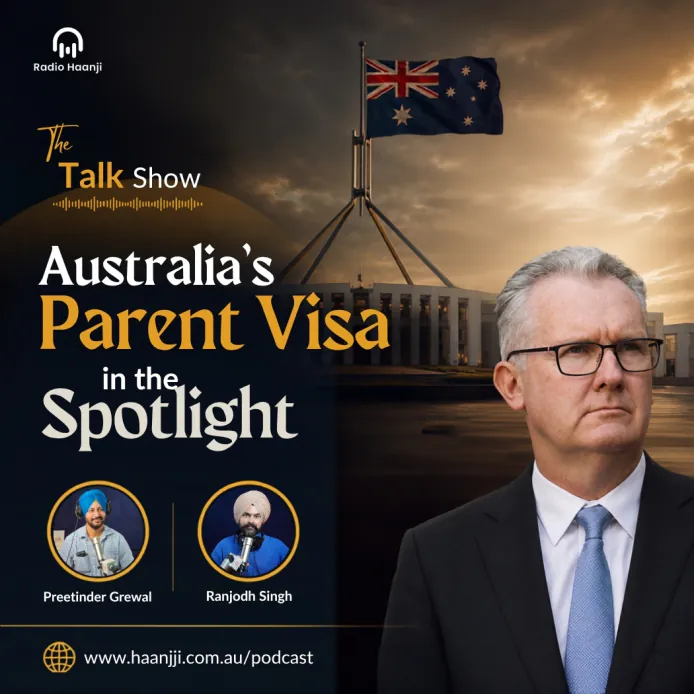
Australia's Parent Visa in the Spotlight: The Future of Onshore Applications - Preetinder Grewal & Ranjodh Singh
Host:-
 Preetinder Grewal
 Ranjodh Singh
Preetinder Pal Singh, a Registered Migration Agent (MARN 2418381) on Radio Haanji with Ranjodh Singh explore Australia's parent visa system, offshore applications, and rising costs on The Talk Show, Radio Haanji.
In this episode of The Talk Show on Radio Haanji 1674 AM Melbourne, hosts Preetinder Pal Singh, a Registered Migration Agent (MARN 2418381) and Ranjodh Singh unpack one of the most talked-about issues in the Indian and Punjabi community right now: Australia's shifting visa policy and the growing pressure on families trying to bring their parents to live with them. From delayed government announcements to visa wait times stretching past three decades, this conversation breaks down what is actually happening and what it means for everyday families across Melbourne and beyond.
If you or someone in your family is navigating the parent visa system, this episode is essential listening. Preetinder and Ranjodh go beyond the headlines to explain the numbers, the policy changes under discussion, and the real financial and emotional toll this is placing on Punjabi and Indian households in Australia.
What This Episode of The Talk Show Covers
This episode is built around four major themes affecting families with parents overseas: possible changes to Australia's visa policy, the parent visa backlog, the rising cost of sponsoring a parent, and who actually qualifies under current rules. Preetinder and Ranjodh walk through each of these in plain language, making sense of policy details that are often buried in government paperwork and news jargon.
Australia's Visa Policy Signals and Potential Shifts
The episode opens with a discussion around signals coming out of Canberra regarding possible changes to the migration and visa system, and what these could mean for temporary visa holders and their families.
Delayed Ministerial Announcement
Minister for Home Affairs Tony Burke was expected to address the National Press Club with an update on Australia's migration and visa system. That statement did not arrive on schedule, leaving families, migration agents, and community members waiting for clarity. Preetinder and Ranjodh discuss why this delay matters and what the community should be watching for next.
Onshore Application Restrictions
There is growing speculation that the government may tighten rules around temporary visa holders, including visitor visa holders, converting their status to permanent residency or extending their stay while already in Australia. The hosts talk through what this could mean in practice for parents who are currently in the country on a temporary basis.
Condition 8503 Explained
A key part of the discussion centres on Condition 8503, the "no further stay" condition sometimes attached to visitor visas. If applied more broadly, this condition could require parents and other temporary visa holders to leave Australia and lodge their next application from offshore, rather than being able to transition while still with their family. Preetinder and Ranjodh explain what this condition actually restricts and why its increased use is a concern for many households.
The Parent Visa Backlog Nobody Can Ignore
One of the most striking parts of the episode is the sheer scale of the current backlog. Preetinder and Ranjodh lay out the numbers so listeners understand exactly what they are up against.
Aged Parent Visa (Subclass 804) Wait Times
With more than 151,000 applicants currently in the parent visa pipeline, the non-contributory Aged Parent visa, capped at roughly 7,000 places a year, now carries a processing wait time of 30 to 35 years. The hosts discuss what this means for families who cannot afford the contributory pathway and are left facing a wait that spans generations.
Contributory Parent Visa Wait Times
Even the faster contributory parent visa stream has slowed considerably. Wait times that used to sit around 5 to 6 years have now stretched to nearly 15 years, according to the figures discussed in the episode. Preetinder and Ranjodh talk about how this shift is changing the calculations families make when deciding whether to pursue this route at all.
Rising Costs of Bringing Parents to Australia
Alongside longer wait times, the financial burden of sponsoring a parent has increased significantly. This episode breaks down where the extra costs are coming from.
Visa Fee Increases
Parent visa fees have recently increased by approximately 24 to 25 percent, a move the hosts connect to broader government efforts to generate revenue from migration programs. They discuss how this fee jump is landing on families already stretched thin by long wait times.
Subclass 870 Sponsored Parent Visa Costs
The Sponsored Parent (Temporary) visa, Subclass 870, offers 3-year and 5-year stay options, but comes with high application costs and a strict income threshold for sponsors, generally requiring an income around 84,000 dollars. Preetinder and Ranjodh discuss how this requirement effectively locks out many sponsoring families, even those who genuinely want to support their parents.
Bridging Visa and Health Insurance Costs
Costs for Bridging Visa B applications, needed when a parent wants to travel while their application is being processed, have climbed to around 500 to 600 dollars per couple. On top of that, mandatory private health insurance adds an ongoing cost of roughly 250 to 300 dollars per month per parent, since visitor and temporary parent visa holders are not eligible for Medicare. The hosts unpack how these recurring costs add up over years, not months.
Who Qualifies? Onshore Visa Criteria Explained
Not every family meets the criteria for permanent parent visa pathways, and this episode explains why that matters more than ever given current wait times.
The Family Balance Test
To qualify for permanent parent visa streams, applicants generally need at least half of their children to be permanently residing in Australia. Preetinder and Ranjodh explain that families who do not meet this test are left with temporary visa options as their only realistic pathway, which brings its own set of costs and restrictions.
Increased Scrutiny on Visitor Visa Extensions
The episode also touches on how closely case officers are now examining visitor visa extension requests, particularly where there is a concern that a visitor visa is effectively being used as a long-term substitute for childcare or caregiving arrangements. This added scrutiny is making it harder for families to rely on informal, extended stays.
What This Means for Punjabi and Indian Families in Melbourne
For many in the Punjabi and Indian community, parent visas are not just a policy issue, they are a deeply personal one tied to family structure, caregiving, and cultural expectations around living close to ageing parents. Preetinder and Ranjodh close the episode by reflecting on what these policy shifts, growing backlogs, and rising costs mean for real households trying to plan their future in Australia. Their conversation is grounded, practical, and aimed at helping listeners make informed decisions rather than react to headlines alone.
Explore More From Radio Haanji
If this episode resonated with you, there is plenty more to explore on Radio Haanji. For a lighter break after a heavy topic like this one, check out Laughter Therapy. If you enjoy audio storytelling, Kitaab Kahani brings stories to life in Punjabi and Hindi. Curious minds can dive into science, space, and exploration on The Deep Talk, while Today Updates and Indian Updates keep you informed on daily news from Australia and India. For casual, community-driven conversation, don't miss Boys Meetup, and for reflective, personal storytelling, tune into Notebook.
The Talk Show airs on Radio Haanji 1674 AM Melbourne, Australia's trusted Punjabi and Hindi community radio station. Listen live or catch up on past episodes anytime at haanji.com.au.
Frequently Asked Questions
What is Condition 8503 on a visitor visa?
Why are parent visa wait times so long in Australia?
What is the Family Balance Test for parent visas?
How much does it cost to sponsor a parent on a Subclass 870 visa?
Are parent visa holders eligible for Medicare in Australia?
Where can I listen to The Talk Show and other Radio Haanji podcasts?
What's Your Reaction?







Related Posts