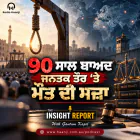





















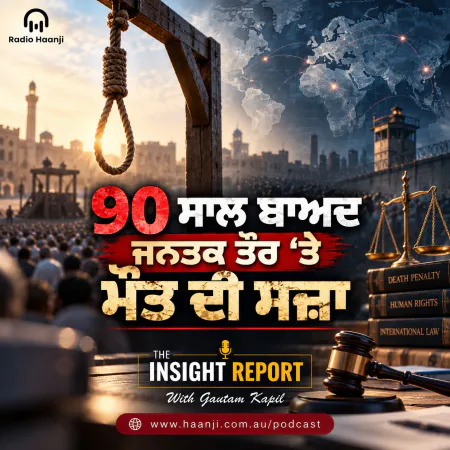
































































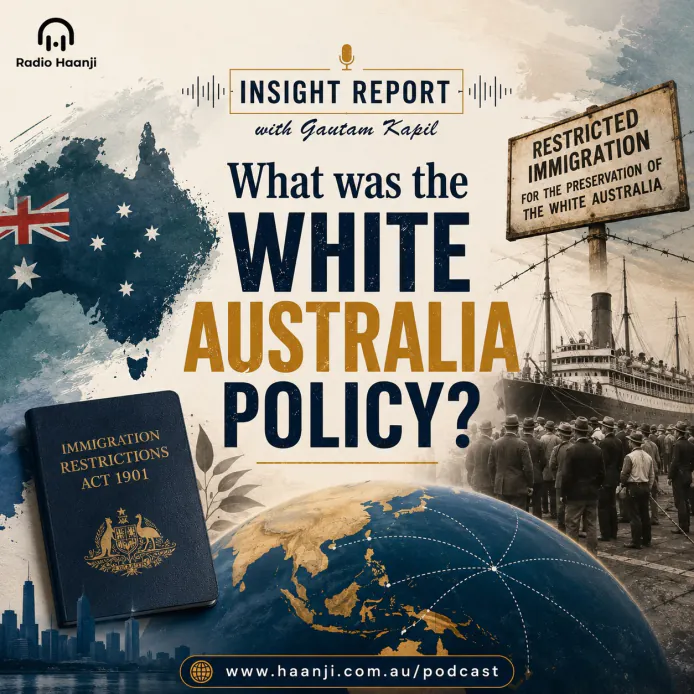

Explore the history of the White Australia Policy, Lambing Flat riots, its 1973 abolition, and UN immigration laws on The Insight Report with Gautam Kapil on Radio Haanji 1674 AM.
History has a quiet way of shaping the soil we walk on, the laws we live by, and the sense of belonging we feel in a country far from our roots. For those of us making a life in Australia today, understanding the history of immigration is not just an academic exercise—it is a deeply personal journey. In this week's episode of The Insight Report on Radio Haanji 1674 AM, host Gautam Kapil unpacks a pivotal and painful chapter of Australian history: the historic White Australia Policy.
From the violent goldfield clashes of the 19th century to its legal codification in 1901 and its ultimate abolition, this episode explores how racial exclusion once governed national entry, how it was dismantled, and where border control stands today under modern international law.
The Origins: What Was the White Australia Policy?
The term White Australia Policy refers to a historical set of government policies designed to restrict non-European immigration to Australia. Following federation in 1901, the newly formed Commonwealth Parliament passed the Immigration Restriction Act of 1901 as its primary piece of legislation.
The goal was simple yet severe: build a culturally homogenous nation by prioritizing immigrants from Britain and North-Western Europe while systematically excluding non-white migrants, particularly people from Asia and the Pacific Islands.
The Hidden Barrier: The Dictation Test
To avoid explicit racial slurs in international treaties, lawmakers devised a clever legal hurdle known as the Dictation Test. Immigration officers could require an incoming migrant to write down a 50-word passage in any European language chosen on the spot.
If an applicant from India or China spoke English fluently, the officer could administer the test in French, German, or Gaelic to guarantee failure. This mechanism allowed authorities to deport or reject unwanted migrants under the guise of language proficiency.
Tension on the Goldfields: The Lambing Flat Riots
The roots of racial exclusion stretched back long before 1901. During the gold rushes of the mid-19th century, thousands of Chinese miners arrived in Australia seeking opportunity. Tensions boiled over between European and Asian miners, culminating in the violent Lambing Flat Riots of 1860–1861 in New South Wales (modern-day Young, NSW).
Fueled by economic resentment over water usage and mining claims, European mobs attacked Chinese mining camps, destroying personal property and forcing miners out. These riots stoked political anxiety and became a primary catalyst for introducing severe state-level restrictions on non-European arrival.
Why Was the Policy Abolished?
The White Australia Policy did not disappear overnight; it was gradually dismantled in the decades following World War II before being formally eradicated in 1973 by the Whitlam Labor Government.
- Post-WWII Population Growth: Facing geopolitical shifts, Australia adopted the motto "Populate or Perish," recognizing that defense and economic growth required a larger workforce than Britain alone could supply.
- International Pressure: As nations across Asia gained independence post-WWII, Australia's openly discriminatory stance created severe diplomatic tension with key regional neighbors.
- Civil Rights Movement: Growing global human rights awareness made state-sanctioned racial discrimination morally unacceptable.
- Equal Selection Criteria: The complete removal of race from immigration rules in 1973 shifted the nation toward a merit-based system focusing on skills and family reunification.
Is Stopping Immigration Valid Under Modern UN and International Law?
In the final segment of the broadcast, Gautam Kapil examines the modern legal framework surrounding borders, national sovereignty, and international obligations.
Under international law, every sovereign nation retains the absolute legal right to manage its borders and determine immigration quotas. However, modern international frameworks—including the UN Convention on the Elimination of All Forms of Racial Discrimination—strictly prohibit nations from using race, ethnicity, or religion as criteria for entry.
Furthermore, under the 1951 Refugee Convention, countries are bound by the principle of non-refoulement, meaning they cannot forcibly return individuals fleeing persecution back to dangerous territories. While countries hold full control over total intake numbers, the discriminatory exclusion of the past remains illegal under today's global human rights commitments.
Explore More Shows on Radio Haanji
Stay connected with rich storytelling, daily news, and cultural conversations across our regular podcast lineup on Radio Haanji:
- Listen to lighthearted moments and laughter on Laughter Therapy.
- Experience heartwarming spoken narratives with Kitaab Kahani.
- Dive into science, space, species, and deep world exploration on The Deep Talk.
- Stay informed with local updates on Today Updates and global subcontinent news on Indian Updates.
- Catch youth discussions on Boys Meetup or creative writing on Notebook.
Frequently Asked Questions
What was the White Australia Policy and when was it implemented?
How was the Dictation Test used to exclude non-white immigrants?
What triggered the Lambing Flat Riots during the gold rush era?
Why was the White Australia Policy eventually abolished in 1973?
Is restricting immigration legal under international law and UN guidelines?
Who is Gautam Kapil, the host of The Insight Report?
What is The Insight Report podcast on Radio Haanji?
What is Radio Haanji 1674 AM and where does it broadcast?
How can I stream Radio Haanji online or listen to past podcast episodes?
What's Your Reaction?