






























































































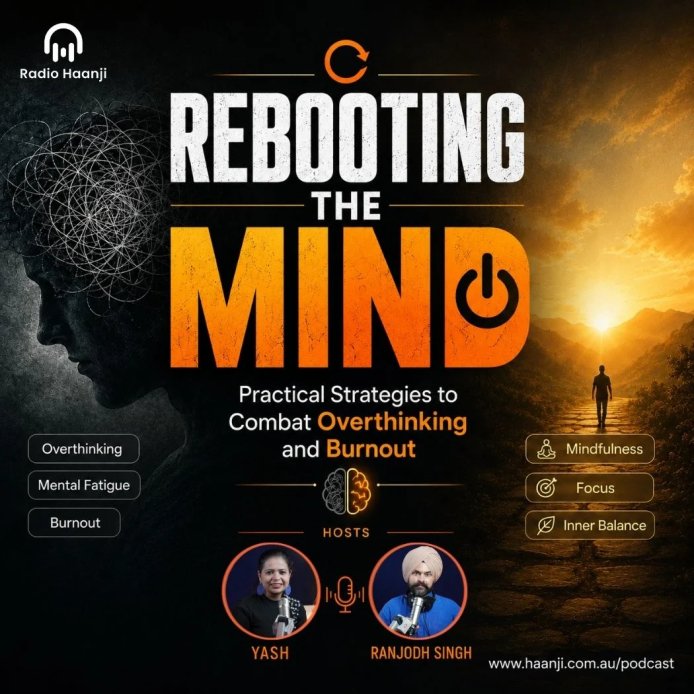
Mental Health Support - Managing Stress & Social Burnout - Yash & Ranjodh Singh
Host:-
 Ranjodh Singh
 Yash Kaur
Discover actionable steps for managing stress, overcoming social burnout, and accessing professional Australian mental health support services today.
In an era defined by constant connectivity, maintaining mental equilibrium has become a complex challenge. Many individuals find themselves running on empty, moving from hectic work weeks directly into demanding social schedules without a true moment of rest. When the activities meant to rejuvenate us leave us feeling more exhausted than before, a foundational shift in how we approach self-care is urgently required.
Navigating this terrain requires a delicate balance of personal boundary-setting and professional intervention. According to historical tracking data from mental health advocates, a significant portion of the population navigates chronic stress in isolation, often due to societal pressures to maintain a flawless external appearance. True well-being begins when we strip away the performance of happiness and look closely at our actual psychological needs.
Understanding how to access authentic Australian mental health support is a vital component of this journey. Whether you are dealing with everyday burnout or deep-seated systemic anxiety, learning to read your emotional baseline ensures that you can take actionable steps toward healing before stress evolves into a full crisis.
How to Manage Stress and Anxiety in Australia
To manage stress and anxiety in Australia, you must combine personal daily boundary-setting with professional healthcare pathways. This includes auditing your weekly energy expenditure, adopting core physical and mindful wellness routines, and visiting a local General Practitioner (GP) to secure a structured, subsidized Mental Health Plan for professional clinical guidance.
Taking control of chronic anxiety requires looking at both your immediate environment and your underlying lifestyle choices. Often, we treat stress as an external intruder rather than a systemic response to overcommitment and neglected self-analysis. By intentionally slowing down and assessing where your vitality is being drained, you stop reacting to symptoms and begin addressing roots.
Securing structural help within the Australian healthcare system is designed to be straightforward. A consultative conversation with your GP opens the door to Medicare-subsidized sessions with psychologists or counselors, ensuring that financial barriers do not prevent you from receiving evidence-based behavioral therapies tailored specifically to your life circumstances.
The Anatomy of Social Burnout: Re-Evaluating Commitments
We often schedule our weekends with outings, movies, and social gatherings under the assumption that these activities will refresh our spirits. However, returning home from a social event feeling more burdened, irritable, and drained than when you left is a primary indicator of managing social burnout.
Forcing yourself to attend parties, celebrations, or community functions simply to avoid looking left out or isolated creates a dangerous internal dynamic. This "forced enjoyment" means you are faking happiness while feeling broken inside, effectively doubling your psychological burden. True self-care requires the courage to decline invitations when your mind and body are signaling a desperate need for quiet isolation.
How to Practice Emotional Detachment from Triggers
To practice emotional detachment from triggers, you must deliberately distance your mind from the specific toxic behaviors, arguments, or negative environments that cause you psychological distress, rather than cutting ties with the people themselves. It means preserving your internal peace while remaining present for your loved ones.
Many people confuse the concept of detachment with abandonment or isolation. True detachment does not mean separating from your spouse, your children, or your family members. Instead, it is an analytical boundary line that allows you to observe a stressful situation or an emotional reaction without absorbing it into your identity.
When you practice this targeted form of detachment, you recognize that someone else’s erratic behavior or unfair criticism is a reflection of their internal state, not your worth. This shift in perspective stops the cycle of immediate reactivity, giving you the mental space needed to respond with calmness and absolute clarity.
The Power of Self-Analysis and Internal Conflict Resolution
When life becomes chaotic or a relationship begins to strain, human nature often drives us to find a quick external scapegoat. Blaming a partner, a family member, or a colleague is an easy way to put a visible face to our problems, but this externalization rarely leads to genuine resolution. More often than not, the true root causes of our distress are found within our own toxic routines, poor boundaries, or unaddressed lifestyle habits.
Before making radical, life-altering decisions, it is critical to engage in rigorous self-analysis. Sitting down quietly with yourself, walking through your choices without judgment, and allowing time to clarify the situation can prevent impulsive mistakes. Healing requires accountability; we must look honestly at how our own actions contribute to our current mental state.
Furthermore, when interpersonal conflicts emerge within a household, seeking advice from outside parties too early can muddy the waters. Involving well-meaning friends, extended relatives, or acquaintances before discussing the matter directly with the person involved frequently amplifies the misunderstanding. Resolving issues internally preserves trust and ensures that solutions are built on direct communication rather than external assumptions.
Three Daily Mental Well-Being Habits for Lasting Peace
Building a resilient mind does not require a complete overhaul of your existence; rather, it relies on the consistent execution of small, intentional, non-negotiable daily mental well-being habits.
-
Physical Exercise: Dedicate a specific window of time every single day to move your body. Whether it is a brisk walk through your neighborhood, a run, or a structured workout, physical exertion serves as a natural release valve, allowing you to quite literally sweat out accumulated psychological stress.
-
Mindful Eating: Pay close attention to what you consume throughout the day. Your body inherently understands nutrition and will send clear internal signals regarding whether your diet is sustaining your vitality or actively harming your mood and energy stability.
-
Dedicated Quiet Time: Spend at least 10 minutes a day sitting quietly on the floor rather than a comfortable bed or couch. Allow your thoughts to rise, drift, and fade away completely without passing judgment on them, utilizing this simple meditation for mental clarity and grounding.
Understanding the Migrant Mental Health Experience
The journey of relocating to a new country introduces profound psychological complexities that are frequently overlooked. In Australia, migrant mental health challenges are highly distinct, often rooted in a perpetual sense of cultural suspension. Many individuals find themselves trapped in a painful state of continuous comparison, constantly weighing their past life back home against their current lived reality.
This psychological tug-of-war can leave people feeling profoundly stuck in the middle—not entirely connected to their country of origin anymore, yet not fully integrated or understood within their new homeland. The pressure to succeed, combined with the loss of immediate, familiar family support structures, significantly escalates the risk of isolation, making cultural awareness an essential component of modern therapeutic care.
Where to Get 24/7 Crisis Support in Australia
Where to get 24/7 crisis support in Australia depends on your immediate needs, but the primary national lifelines are Lifeline (13 11 14) and Beyond Blue (1300 22 4636). Both organizations offer free, completely confidential counseling services around the clock for anyone experiencing acute emotional distress or mental health challenges.
+--------------------------------------------+-----------------+-------------------+
| Support Service                            | Phone Number    | Availability      |
+--------------------------------------------+-----------------+-------------------+
| Lifeline                                   | 13 11 14        | 24/7, 365 Days    |
| Beyond Blue                                | 1300 22 4636    | 24/7, 365 Days    |
| TIS National (Translating & Interpreting)  | 13 14 50        | 24/7, Multilingual|
+--------------------------------------------+-----------------+-------------------+
For individuals from non-English speaking backgrounds, navigating these hotlines can feel intimidating. To solve this, the Translating and Interpreting Service (TIS National) can be reached at 13 14 50, allowing you to access vital mental health crisis support seamlessly in your preferred language without cost or hesitation.
Navigating mental health recovery is rarely a sudden, sweeping transformation. As the old adage suggests, life is much like walking through an immense darkness holding only a single, modest candle. You do not need to see the entire ten kilometers of the road stretching out ahead of you to safely make progress. You only need to focus entirely on the single step directly illuminated before your feet; take that step with patience, trust the process, and the light you carry will naturally guide you safely through the remainder of your journey.
If you or someone you care about is finding it difficult to navigate stress, break through social burnout, or manage anxiety, please take that first illuminated step today. Reach out to one of the dedicated support services listed above, schedule an exploratory conversation with a trusted local GP, or share this guide with a friend who might need these words of comfort right now.
Key Takeaways
-
Energy Audits are Essential: Social gatherings can sometimes compound mental fatigue; choosing peace over social obligation is a vital step in preventing deep emotional exhaustion.
-
Detachment is Not Abandonment: True emotional resilience involves distancing oneself from negative behavioral triggers and toxic environments rather than cutting off loved ones.
-
Look Inward First: Internal self-analysis and direct, private family communication should always occur before seeking external perspectives or blaming others for personal distress.
-
Consistency Trumps Intensity: Implementing simple, daily habits like sweating through exercise, clean nutrition, and 10 minutes of grounded meditation creates a sustainable psychological foundation.
-
Professional Pathways Exist: Australia offers comprehensive national infrastructure, including subsidized GP Mental Health Plans and multilingual translation support, to ensure no one struggles alone.
References and Further Reading
-
Lifeline Australia — National crisis support and suicide prevention services offering round-the-clock intervention.
-
Beyond Blue — Comprehensive resource for anxiety, depression, and immediate short-term counseling support across Australia.
-
Translating and Interpreting Service (TIS National) — Australian Government service linking non-English speakers to vital emergency and health hotlines.
Frequently Asked Questions
What are the signs of social burnout?
Social burnout typically manifests as a profound sense of physical and emotional exhaustion following interactions that would normally be enjoyable. Key indicators include feelings of dread before social events, irritability during conversations, a desperate urge to isolate yourself, and feeling highly overwhelmed or emotionally empty even when surrounded by friends and family.
What is a mental health plan Australia?
A Mental Health Treatment Plan is an official structural program map prepared by a General Practitioner (GP) in Australia. This plan notes your specific mental health challenges and allows you to access Medicare rebates for up to 10 individual psychological therapy sessions per calendar year, making professional psychiatric and psychological care significantly more affordable.
How does emotional detachment improve relationships?
Emotional detachment improves relationships by allowing you to separate your core identity and emotional state from the reactive behaviors, moods, or specific outbursts of your partner or family members. By breaking the cycle of instant, defensive retaliation, it gives you the mental space to communicate with profound calmness, patience, and clear intentions.
Why do migrants face unique mental health challenges?
Migrants face unique challenges because they often live in a state of continuous comparison between their past life in their native country and their current reality. This can result in a feeling of being culturally isolated or stuck in the middle, amplified by the loss of immediate local support networks and the pressure to adapt seamlessly to an unfamiliar society.
How long should I meditate daily for mental clarity?
For sustainable mental clarity and grounding, dedicating just 10 minutes a day to quiet meditation is highly effective. The key factor is consistency rather than duration. Sitting quietly on the floor, allowing your thoughts to flow past without judgment, provides an immediate reset for your nervous system and helps reduce daily cognitive overload.
Listen Free — Today Updates on Radio Haanji
Catch the full episode of Today Updates for more details on these stories and other global affairs. Our daily news roundup is designed for the busy professional and community member who wants the facts without the fluff.
Radio Haanji 1674 AM is Austalia's Punjabi community radio station.
Listen free at haanji.com.au | Spotify | Apple Podcasts | iOS App | Android App
Serving the Punjabi community in Australia, Canada, Singapore and world wide.
What's Your Reaction?