

















































































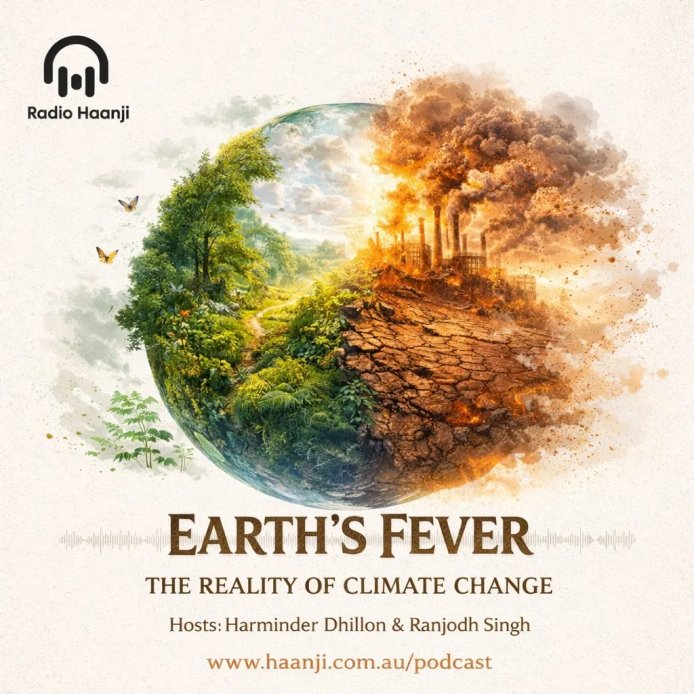
Earth's Fever: The Reality of Climate Change - Harminder Dhillon & Ranjodh Singh
Host:-
 Harminder Dhillon
 Ranjodh Singh
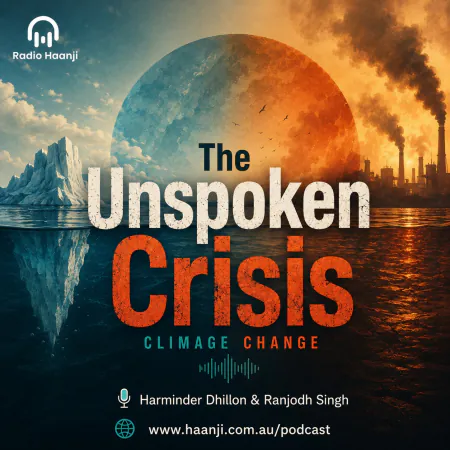
Listen to Harminder Dhillon and Ranjodh Singh on Radio Haanji as they deeply explore global warming, fake progress, and the alarming reality of climate change.
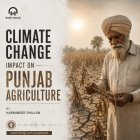
Nature has a way of speaking to us, but lately, her voice has been shaking with distress. We are witnessing a deep disconnect between human ambitions and the silent suffering of our planet. Recently, on Radio Haanji 1674 AM, listeners tuned in to a profoundly eye-opening episode of our Climate Change Special. Hosted by Ranjodh Singh with special insights from Harminder Dhillon joining from Toronto, the conversation went far beyond mere statistics. It touched the very core of our existence, questioning what we truly value and where our collective journey is heading.
The Changing Mood of Mother Nature
We often take the rhythm of the seasons for granted, trusting that spring will bring warmth and rain in its due time. However, Harminder Dhillon painted a striking picture of the shifting weather patterns in Canada. Traditionally, April is the month of life-giving showers, but this year, the heavy rains poured relentlessly into May. This sudden shift delayed planting seasons by two weeks, leaving the community waiting anxiously to reconnect with the soil. While the sun is finally shining over Toronto, this subtle disruption is a gentle warning from nature that her rhythms are losing their balance.
The Illusion of Fake Grass and Fake Progress
In our race for convenience, we have started replacing the soul of nature with artificial substitutes. The discussion brought forward a deeply resonant thought about the growing trend of artificial grass in homes and sports arenas. These synthetic carpets suffocate the earth underneath and strip away the emotional and physical healing that comes from real soil.
Medical experts have long shared that keeping our hands in natural dirt and surrounding ourselves with living greenery acts as a powerful remedy for mental stress and depression. Sadly, even athletes playing on artificial turf are facing breathing difficulties, leading to a much-needed push back toward natural grounds. Harminder elegantly tied this to a broader truth: just as fake grass damages the earth, "fake people" and corrupt leadership damage the fabric of our society. We must return to what is organic, genuine, and true.
Understanding the Climate Crisis in Simple Terms
When we hear scientific terms, it is easy to feel disconnected. But Ranjodh and Harminder broke down the reality into something we can all feel:
-
Global Warming: Imagine a blanket wrapped around the earth, stretching 35 kilometers into the sky. When the average temperature of the air within this blanket and our deep oceans begins to rise, our planet essentially runs a fever.
-
Climate Change: When this fever alters the behavior of the wind, the rain, and the seasons across the globe, we experience climate change.
-
Greenhouse Gases: The primary culprits are Carbon Dioxide (CO2) and Methane (CH4).
-
The Trapped Heat: Our earth absorbs about half of the sun's warmth, reflecting the rest back into space. But because we have thickened the atmospheric blanket with CO2 and Methane, nearly 90% of that returning heat is trapped. We are suffocating our own home.
The 1.5°C Threat: A Planet Gasping for Breath
The Paris Agreement constantly warns us about keeping the temperature rise below 1.5°C. For millions of years, the earth maintained a comforting average temperature of 13.5°C. Since the industrial revolution in 1850, we have pushed that up by 1.3°C.
Think of it like the human body. Our normal temperature is 37°C. If our body temperature rises by just 1.5°C, we suffer from a severe, life-threatening fever. Our planet is currently suffering from this exact fever, leading to melting ancient glaciers and unbearable heatwaves.
To understand the terrifying scale of this trapped heat, the conversation highlighted a heart-wrenching analogy: the daily heat trapped in our atmosphere equals the explosion of 460,000 Hiroshima atomic bombs. This silent destruction is happening every single day.
Who is Responsible for the Smoke?
Since the steam engines of 1800 first puffed black smoke into the skies of England, the air has grown heavier. Back in 1850, the carbon dioxide level was a manageable 280 PPM (Parts Per Million). Today, it stands at a choking 427 PPM, a near 50% increase.
Over 2.5 trillion tons of CO2 have been dumped into the sky. Historically, America has contributed 20% to this burden, followed by China at 11% and Russia at 7%. Today, the world pumps out 37 billion tons annually, with China leading at 33%, the US at 12%, and India at 8%, largely due to coal-generated electricity and the reliance of 220 million households on LPG.
Is This Real Progress?
The conversation left us with a haunting question. We boast about towering factories, luxurious cars, and endless modern conveniences, labeling it all as "progress." But if this progress comes at the cost of the very air we breathe and the soil that feeds us, is it not just beautifully packaged destruction? It is time we look inward, evaluate our human values, and rethink the legacy we are leaving for the generations to come.
Keep Exploring with Radio Haanji
While we navigate these heavy, life-altering topics, it is also important to maintain our emotional balance and stay connected to our roots. If you need a moment to smile and relieve stress, tune in to our Laughter Therapy episodes. To dive deep into the warmth of our heritage and storytelling, listen to our audio stories on Kitaab Kahani.
For those whose curiosity reaches beyond our planet, explore the mysteries of science and space with The Deep Talk. Stay informed about daily life with our Today Updates and Indian Updates. And for genuine, lighthearted community bonding, join the Boys Meetup or flip through the thoughts in our Notebook.
Frequently Asked Questions
What is the main difference between global warming and climate change? Global warming refers strictly to the continuous rise in the earth's average surface and ocean temperatures. Climate change is the broader impact of this warming, which includes extreme weather events, shifting seasons, and changing rainfall patterns.
Why is a 1.5°C increase in global temperature so dangerous? Just like a small rise in human body temperature causes a severe fever, a 1.5°C increase in the earth's average temperature disrupts delicate natural balances, leading to massive glacier melting, rising sea levels, and lethal heatwaves.
How does artificial grass harm the environment? Artificial grass acts like a plastic barrier that suffocates the soil beneath it, destroying natural habitats for insects and microorganisms. Furthermore, it absorbs excessive heat and deprives humans of the mental and physical health benefits that come from natural gardening.
What is the Hiroshima atomic bomb analogy mentioned in the podcast? To explain the immense amount of extra heat being trapped in the earth's atmosphere daily due to greenhouse gases, scientists compare it to the energy released by 460,000 Hiroshima atomic bombs detonating every single day.
What's Your Reaction?