













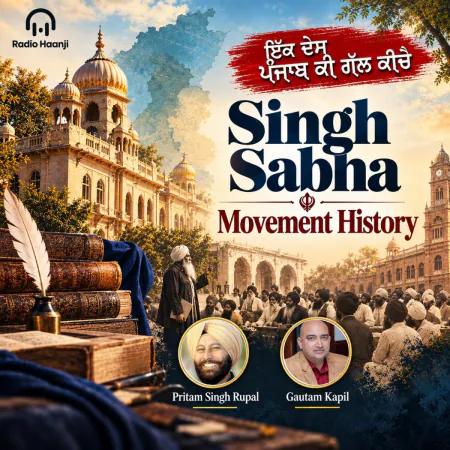





































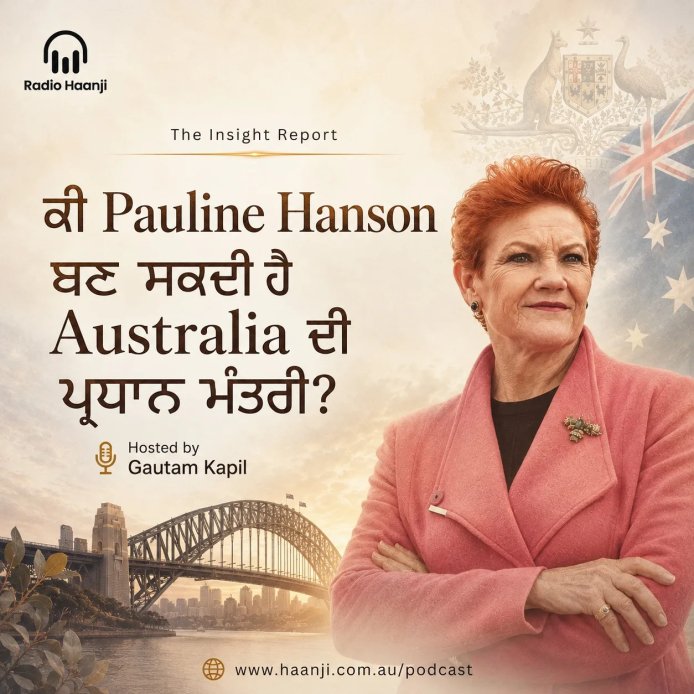
The Insigt Report - Pauline Hanson, New Guard & Australian Political History - Gautam Kapil
Host:-
 Gautam Kapil
Dive deep into Australian political history on The Insight Report with Gautam Kapil. Explore the history of the New Guard and the reality of Pauline Hanson's populist movement.
Political Whirlwinds and the Lessons of History: A Special Feature by 'The Insight Report'
The landscape of Australian politics is periodically reshaped by sudden, intense storms. These populist movements shake the political establishment for a season, but as time passes, they often fade into the background, becoming mere footnotes in history. In this special episode of The Insight Report, host Gautam Kapil uncovers the deeply human stories behind these chapters, bringing the past face-to-face with our present realities.
Mirroring History: The New Guard Movement of 1931
To truly comprehend the friction in today's political environment, we must glance back to the turbulent decade of the 1930s. In 1931, Sydney witnessed the rapid rise of the 'New Guard'—a staunchly monarchist, anti-communist faction led by Eric Campbell. This emerged during an era when communist anxieties were sweeping the globe and the fiery Labor Premier Jack Lang (affectionately known as the 'Big Fellow') held power in New South Wales. The New Guard was engineered to act as a aggressive system of checks and balances against the ruling establishment. Yet, history begs the question: are such reactionary waves ever built to last?
Pauline Hanson: A Lasting Force or a Passing Storm?
In contemporary discussions, the name Pauline Hanson and her One Nation party frequently surface as symbols of significant political disruption. However, deep political analysis reveals that her trajectory closely mirrors the historical whirlwinds of the past—movements that generate immense noise, capture public frustration, but ultimately cool down without enacting systemic change.
While media narratives often amplify her influence, the constitutional architecture of Australian governance makes her ascension to the Prime Ministership practically impossible. A Senate leader cannot directly command the lower house, nor does her party command the widespread majorities required to form government.
The 1996 Interview: When Emotion Substituted Policy
This episode revisits a defining archival moment from 1996, shortly after Hanson first entered federal parliament. Renowned journalist Liz Hayes confronted her on the program 60 Minutes, directly asking, "Are you xenophobic?"
At the time, Hanson struggled to even define the term. Once Hayes clarified that it meant a fear or hatred of foreign things, Hanson responded, "No, I don't think I am... No, I'm not." She continuously attempted to validate her platform by appealing to raw emotion and the fears of "mainstream Australians," rather than relying on structural facts. This moment serves as a timeless reminder that her brand of politics thrives primarily on tapping into public anxieties rather than offering constructive, factual blueprints.
Is Politics Just Opportunism?
Looking at global parallels, from the recent political shifts in Britain with figures like Nigel Farage pushing established leaders to the edge, it becomes clear that modern populist movements are often leveraged to scare or discipline the traditional two-party system. Whether in the United States, Canada, or Australia, the true levers of long-term economic and political power remain held by entrenched structures.
Figures like Hanson often operate on an opportunistic brand of populism. While claiming to champion the working class, their legislative track records reveal stark contradictions—such as opposing wage growth for workers or resisting corporate mandates for maternal leave, aligning instead with big business interests.
To fully understand this shifting political landscape and to learn the crucial lessons that our past offers the present, tune into this captivating episode of The Insight Report, streaming exclusively on Radio Haanji.
What's Your Reaction?