







































Batwara 1947: A Heart-Wrenching Look at Pain, Humanity, and Belonging
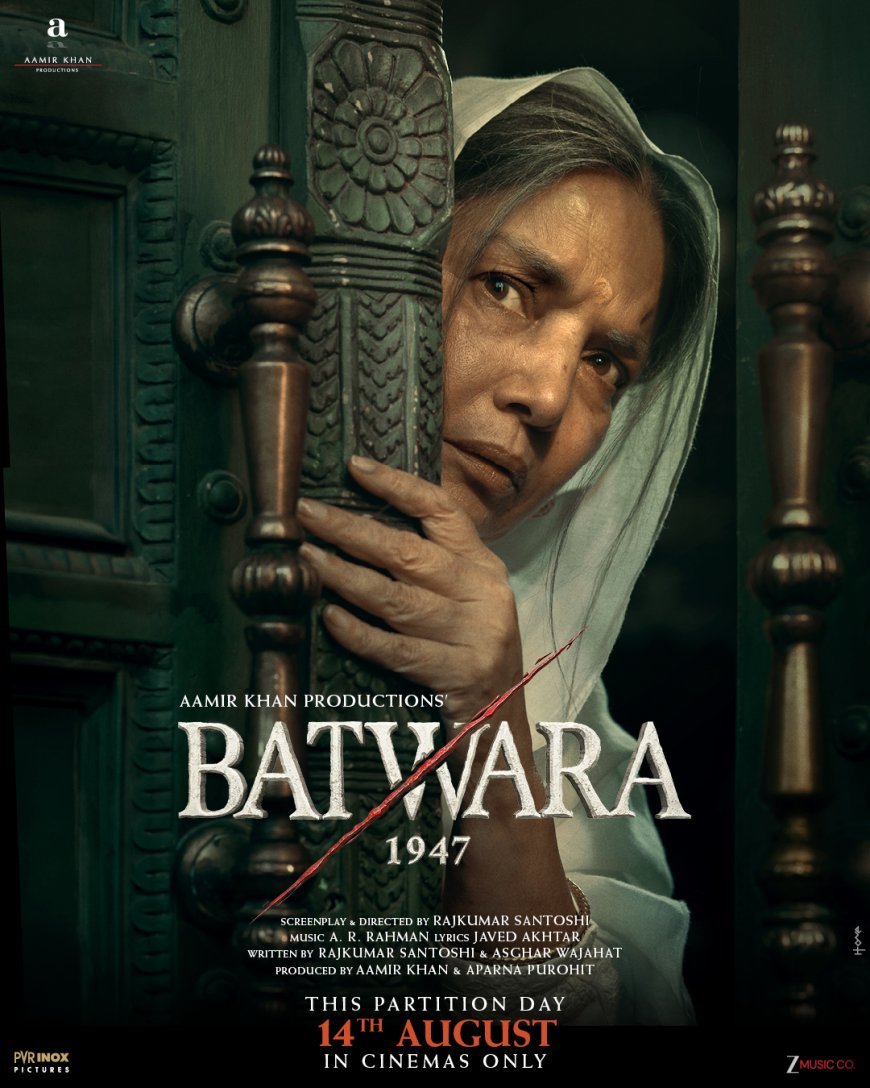
The official poster for Rajkumar Santoshi's Batwara 1947, produced by Aamir Khan, offers a deeply emotional glimpse into the painful history of the Partition. Read our reflections on this upcoming masterpiece.
The division of the Indian subcontinent in 1947 remains one of the most defining and deeply painful chapters of human history. It wasn't merely a political drawing of borders; it was a sudden, jarring separation that uprooted millions from the soil they called home, severing lifelong friendships and dividing neighborhoods overnight. Over the decades, cinema has tried to capture this vast trauma, but few upcoming projects promise to touch the human spirit as profoundly as Aamir Khan Productions’ newly retitled masterpiece, Batwara 1947.
Directed by the visionary Rajkumar Santoshi and backed by the emotional narrative depth of producer Aamir Khan, this historical drama—originally known as Lahore 1947—has recently unveiled its first look, leaving audiences deeply moved.
A Glimpse of Silent Pain and Belonging
The newly released character poster features a striking, soul-stirring portrait of an elderly woman, portrayed with unmatched grace by the legendary Shabana Azmi. Peeking through the slight opening of a weathered, intricately carved green wooden door, her eyes carry a universe of unexpressed grief, fear, and defiant attachment.
It is an image that perfectly encapsulates the theme of the movie: the agonizing reluctance to let go of the walls that witnessed your childhood, your joys, and your ancestors. The sharp, blood-red slash cutting through the word "BATWARA" across the poster reminds us of the violent disruption that altered the destiny of millions, leaving a permanent scar on our collective consciousness.
Grounded in Timeless Literary Heritage
What makes Batwara 1947 incredibly special is its literary foundation. The film is based on Professor Asghar Wajahat’s iconic and widely acclaimed play, Jis Lahore Nai Vekhya, O Jamya E Nai (He who hasn't seen Lahore has not truly been born).
The narrative beautifully shifts focus away from political arguments to shine a light on an intimate, human-centric story. It centers on an elderly Hindu woman who refuses to leave her beloved haveli in Lahore after the Partition, even when a migrating Muslim family from Lucknow is allocated the property. What follows is not a conflict of hatred, but a beautiful, slow-burning evolution of empathy, community, and co-existence. It highlights a timeless truth: human compassion recognizes no borders, and love can build a home anywhere.
A Powerhouse Creative Reunion
Beyond the poignant storyline, Batwara 1947 marks an iconic reunion in Indian cinema. Director Rajkumar Santoshi teams up with action legend Sunny Deol after nearly three decades, bringing back the creative energy that gave us unforgettable classics.
With a stellar ensemble cast including Preity Zinta, Ali Fazal, and Karan Deol, the cinematic scale of the film is grand yet deeply rooted in raw emotion. Adding to the emotional resonance is a soul-stirring soundtrack composed by the maestro A.R. Rahman, with deeply poetic lyrics penned by Javed Akhtar. The official teaser, elevated by a powerful, moving voice-over narration by Aamir Khan himself, sets a tone that prioritizes feelings and human bonds above all else.
Why This Story Matters Today
Stories about the Partition are reminders of what happens when fear divides us, but more importantly, they celebrate the resilience of the human heart. Batwara 1947 is a tribute to the unseen tears, the left-behind keys to ancestral homes, and the enduring spirit of brotherhood that survived the darkest of times.
Scheduled to hit cinemas on 14th August, this film is set to be much more than a historical period drama. It is a cinematic embrace meant to heal, remind, and connect generations through the universal language of empathy and shared heritage.
What's Your Reaction?