




















































































Milk Plastic That Biodegrades in 13 Weeks | Flinders University
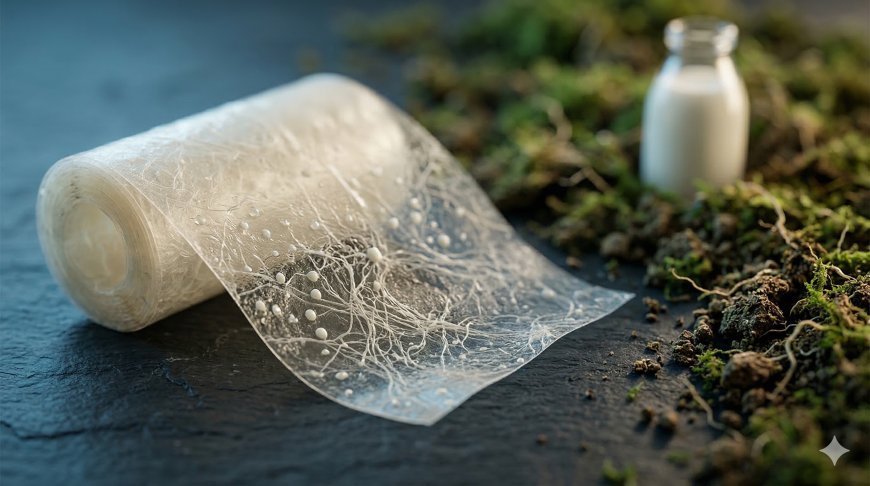
Flinders University created a biodegradable plastic film from milk protein that fully breaks down in soil in 13 weeks. Here's how it works and why it matters.
Milk-Based Biodegradable Plastic That Disappears in 13 Weeks
Every minute, roughly a million plastic bottles are purchased somewhere on earth. Most of them end up in landfill, rivers, or eventually the ocean. Conventional plastic doesn't biodegrade — it photodegrades, breaking into smaller and smaller fragments over hundreds of years while never truly disappearing.
Researchers at Flinders University in South Australia may have found something worth paying attention to: a packaging film made partly from milk protein that fully breaks down in soil within 13 weeks.
The study, published in the peer-reviewed journal Polymers in August 2025, was led by Master of Biotechnology student Nikolay Estiven Gomez Mesa, alongside Professor Alis Yovana Pataquiva-Mateus (Universidad de Bogotá Jorge Tadeo Lozano, Colombia) and Professor Youhong Tang of Flinders University's nanomaterials research group.
What Is the Milk-Based Biodegradable Plastic from Flinders University?
The material is a thin nanocomposite film made from five primary ingredients, all of which are biodegradable or readily available from existing industrial supply chains.
The central component is calcium caseinate — a powder derived from casein, the dominant protein in cow's milk. Casein makes up roughly 80% of the protein content of milk, and calcium caseinate is already manufactured at commercial scale by the dairy industry for use in food supplements and emulsifiers. No new supply chain needs to be built.
On its own, however, dried casein is brittle. It contracts, cracks, and doesn't hold up as functional packaging. To solve that, the researchers combined it with four additional materials:
- Modified starch — adds biodegradable polymer structure and improves flexibility
- Bentonite nanoclay — a natural mineral clay that reinforces the film and slows moisture transmission
- Glycerol — a natural plasticizer derived from vegetable oils that prevents brittleness
- Polyvinyl alcohol (PVA) — a synthetic but biodegradable binder that improves film integrity and durability
The manufacturing process is notably low-tech. The team used solution casting — pouring the liquid mixture into molds and drying it at just 38°C (100°F) in a standard oven. No high-pressure reactors, no specialized industrial equipment. That simplicity matters: it means this process could, in principle, be adopted by facilities in lower-resource settings without prohibitive infrastructure costs.
How Long Does It Take to Biodegrade?
To test biodegradation, the researchers used a standard soil burial test. Samples were buried in normal soil and monitored over time. The degradation data showed a consistent breakdown trend throughout the testing period, with full disintegration projected to occur within approximately 13 weeks under normal soil conditions.
For context:
| Material | Time to Biodegrade | Source | Commercial Status |
|---|---|---|---|
| Milk-protein film (Flinders) | ~13 weeks in soil | Casein + starch + nanoclay | Research stage |
| PLA packaging | 3–6 months (industrial composting) | Corn starch / sugarcane | Commercial |
| PHA bioplastic | 3–6 months (natural conditions) | Microbial fermentation | Commercial (limited) |
| Pea/soy protein film (Xampla) | ~28 days in soil | Plant proteins | Emerging |
| Conventional LDPE plastic film | 400–1,000+ years | Petroleum | Dominant |
| Standard plastic bag | 500–1,000 years | Petroleum | Dominant |
It's worth noting that the 13-week breakdown period is actually longer than a pure casein film would achieve — but that's the design intent. The added ingredients make it functional and durable enough to work as real packaging, while still degrading hundreds of times faster than anything petroleum-based.
Why Nanoclay Is the Key Ingredient
Casein and starch are naturally hydrophilic — they absorb water readily. That's a significant limitation for food packaging, where moisture is constant. A biodegradable wrapper that dissolves when it gets damp is no packaging at all.
Bentonite nanoclay solves this by distributing itself throughout the polymer matrix and creating what scientists call "tortuous pathways." Water vapor molecules attempting to pass through the film must navigate a far more complex route than in a standard film, substantially slowing moisture transmission and improving barrier performance.
The film also showed only a slight reduction in optical clarity when nanoclay was added — the researchers noted this change is imperceptible to the naked eye, meaning the packaging would look no different from conventional transparent food wrap.
"The entire formulation was designed to use inexpensive ingredients that are biodegradable and environmentally friendly to create a sustainable alternative with enhanced characteristics."
— Nikolay Estiven Gomez Mesa, lead researcher, Flinders University
Safety Testing — What the Research Found (and What's Still Needed)
Initial microbial testing found bacterial colony levels remained within acceptable limits for non-antimicrobial biodegradable films. That's a reasonable starting point for food-contact safety.
However, the researchers are transparent about what hasn't been done yet:
- Further antibacterial evaluations are explicitly recommended before commercial development
- Thermal stability testing has not been completed
- Migration testing — confirming no harmful substances transfer from the film into food — has not yet been conducted
- Performance with high-moisture and oily foods needs additional validation
These aren't weaknesses that invalidate the research; they're the normal milestones between a laboratory proof of concept and a commercially viable product. Professor Youhong Tang specifically called for further testing before any industry rollout.
"Everyone can play a part in reducing their plastic use, and finding biodegradable polymer alternatives is an important part of science helping to find solutions for industry, consumers, and the environment."
— Professor Alis Yovana Pataquiva-Mateus, Universidad de Bogotá Jorge Tadeo Lozano
The Dairy Waste Angle — Why Milk Makes Sense Beyond the Science
The circular economy argument for casein is straightforward. The dairy industry generates significant by-product streams — expired pasteurized skim milk, off-spec batches, processing residues — that currently have limited applications. The researchers specifically highlighted expired pasteurized skim milk as a potential casein source for these films.
Turning dairy waste into functional packaging doesn't just replace plastic. It adds value to something that would otherwise be discarded or require disposal costs. That makes the economics of this material more compelling than it might first appear when compared to bioplastics that require entirely new agricultural inputs.
How It's Made — Step by Step
- Dissolve calcium caseinate in water — the protein forms the primary structural base
- Blend in modified starch and PVA — starch adds biodegradable polymer structure; PVA improves durability
- Add bentonite nanoclay suspension — reinforces the film matrix and creates moisture-blocking pathways
- Incorporate glycerol — prevents the dried film from becoming brittle
- Pour into molds (solution casting) — low-tech step that produces thin, uniform films
- Dry in oven at 38°C — no high-pressure equipment needed; process is scalable in low-resource settings
How It Compares to Other Biodegradable Packaging Approaches
| Approach | Raw Material | Biodegradation | Key Advantage | Status |
|---|---|---|---|---|
| Flinders casein film | Milk protein + starch + clay | ~13 weeks (soil) | Cheap inputs, dairy waste valorization | Research |
| Xampla (pea/soy protein) | Plant proteins | ~28 days (soil) | Faster breakdown | Emerging |
| Notpla (seaweed) | Seaweed | Weeks | Non-land crop, abundant | Commercial |
| PHA bioplastics | Microbial fermentation | 3–6 months | Broad applications | Commercial (growing) |
| PLA packaging | Corn starch | Needs industrial composting | Scale, clarity | Dominant bioplastic |
| Conventional plastic | Petroleum | 400–1,000+ years | Cheap, versatile | Dominant (harmful) |
The key distinction for the Flinders film is soil biodegradability without industrial composting infrastructure. PLA — the currently dominant bioplastic — typically requires industrial composting at specific temperatures to break down. In a home garden, landfill, or natural environment, PLA can persist for years. The milk-protein film's soil breakdown within 13 weeks is a practical advantage anywhere composting facilities don't exist.
The Market This Research Is Targeting
The biodegradable packaging market was valued at approximately $13.4 billion in 2026 and is projected to reach $24.2 billion by 2036. Food packaging represents roughly 40% of total application share — the single largest segment.
The broader bioplastics market is growing at a 17.5% compound annual growth rate through 2035, driven by regulatory pressure, consumer demand, and tightening restrictions on single-use plastic globally.
Policy is accelerating this transition:
- The EU's Single-Use Plastics Directive has progressively expanded restrictions since 2021
- California's SB 54 requires all packaging to be recyclable or compostable by 2032
- Australia, India, and Japan have all introduced incentives and restrictions targeting single-use plastic
The OECD has warned that without coordinated global action, plastic production could increase by 70% between 2020 and 2040 — to over 700 million tonnes annually. The market pressure for alternatives is real, structural, and growing.
What Still Needs to Happen Before It Reaches Shelves
To be direct about it: this material is not arriving in supermarkets anytime soon. Here is what still needs to happen:
- Antibacterial and antimicrobial performance testing
- Thermal stability testing across temperature ranges relevant to food storage and transport
- Migration testing to confirm no film components transfer harmfully into food
- Extended testing with moisture-rich foods (fresh produce, dairy, meats)
- Extended testing with oily or fatty foods
- Scale-up from laboratory quantities to industrial production volumes
- Regulatory submission and approval in target markets
- Industry partnership and investment for commercialization
Moving from a peer-reviewed proof of concept to a commercially available product typically takes several years and requires manufacturers willing to fund scale-up. The Flinders team has built a solid scientific foundation. The path from here to a real product is well-defined — it's just not short.
Frequently Asked Questions
What is the milk-based biodegradable plastic developed at Flinders University?
It is a thin packaging film made from calcium caseinate (a milk protein derivative), modified starch, bentonite nanoclay, glycerol, and polyvinyl alcohol. The film biodegrades in normal soil within approximately 13 weeks while offering mechanical and barrier properties suitable for food packaging. The research was published in Polymers in August 2025.
How long does it take for milk plastic to biodegrade?
The film fully disintegrates in approximately 13 weeks under normal soil conditions, based on soil burial tests conducted by the Flinders University research team. This compares to conventional petroleum-based plastic, which can persist for 400 to 1,000 years or more.
What is casein and why is it used in bioplastics?
Casein is the primary protein in cow's milk, accounting for roughly 80% of its protein content. When dried, it naturally forms dense molecular networks that provide structural baseline integrity. Calcium caseinate — its commercially available derivative — is already manufactured at industrial scale by the dairy industry, making it an inexpensive and readily available base material for biodegradable packaging films.
Is milk-based plastic safe for food packaging?
Initial microbial testing found bacterial colony levels within acceptable limits for non-antimicrobial biodegradable films. However, the researchers have not yet completed migration testing, antimicrobial validation, or thermal stability testing — all of which are prerequisites for food-contact regulatory approval. The material shows promise but has not been fully validated for commercial food contact use.
Which university made plastic from milk?
Flinders University in South Australia, in collaboration with the Universidad de Bogotá Jorge Tadeo Lozano in Colombia. The study was led by Nikolay Estiven Gomez Mesa, with Professor Alis Yovana Pataquiva-Mateus and Professor Youhong Tang. Published: Polymers, August 2025. DOI: 10.3390/polym17162207.
What role does nanoclay play in milk-based bioplastic?
Bentonite nanoclay reinforces the film mechanically and creates "tortuous pathways" that slow water vapor transmission through the material. This addresses the natural hydrophilicity of casein-starch films, making them more effective as moisture barriers for food packaging applications.
When will milk-based biodegradable plastic be commercially available?
No commercial timeline has been announced. As of 2026, the research is in the exploratory stage. Further testing on antibacterial properties, thermal stability, food safety migration, and performance across food types must be completed before any commercial rollout. Industry investment and regulatory approval would also be required.
How does milk plastic compare to PLA bioplastic?
PLA (polylactic acid) is the currently dominant bioplastic but typically requires industrial composting facilities to break down — it won't biodegrade meaningfully in normal soil or home compost. The Flinders milk-protein film biodegrades in soil within 13 weeks without requiring industrial composting, which is a practical advantage in regions where composting infrastructure is limited.
Conclusion
The Flinders University research is a well-executed proof of concept that clears several meaningful hurdles simultaneously. It uses cheap, commercially available ingredients. It relies on a low-tech process that doesn't require specialized industrial infrastructure. It biodegrades in soil within 13 weeks. And it uses dairy by-products that would otherwise be waste.
That combination of qualities — affordability, simplicity, biodegradability, and circular supply chain logic — is exactly what has been missing from many bioplastic proposals that work in the lab but fail on economics or scalability.
What it isn't, yet, is a finished product. The researchers themselves are clear on that. Professor Tang recommends further testing. The migration and antimicrobial validations are still ahead. Commercial scale-up is a separate challenge entirely.
But as one credible contribution to the growing toolkit of plastic alternatives — alongside PHA, seaweed coatings, and plant-protein films — this one deserves attention.
Full citation: Gomez Mesa, N. E., Pataquiva-Mateus, A. Y., & Tang, Y. (2025). Exploring Biodegradable Polymeric Nanocomposite Films for Sustainable Food Packaging Application. Polymers, 17(16), 2207. https://doi.org/10.3390/polym17162207
What's Your Reaction?