



























































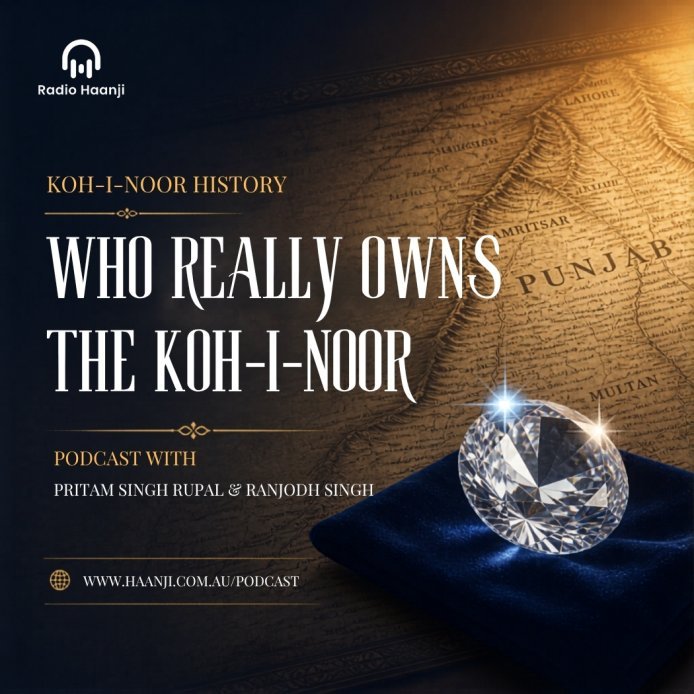
Koh-i-Noor History: Podcast with Pritam Singh Rupal & Ranjodh Singh
Host:-
 Pritam Singh Rupal
 Ranjodh Singh
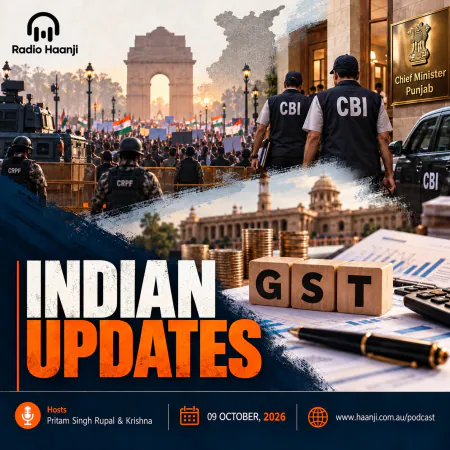
Listen to Ranjodh Singh and Pritam Singh Rupal unpack the bloody history of the Koh-i-Noor diamond. Free on Radio Haanji and Spotify.
Everyone wants the Koh-i-Noor, but nobody can agree on who actually owns it. When New York City politician Zohran Mamdani recently demanded the diamond's return to India, it sparked heated conversations across the diaspora.
To make sense of the headlines, host Ranjodh Singh sat down with special guest Sardar Pritam Singh Rupal on Radio Haanji's The Talk Show. Together, they unpacked the bloody history of the world's most debated gem and why the demand to bring it home refuses to fade.
Tracing the Diamond's Roots
The Koh-i-Noor is currently locked away in the British Crown Jewels, but Rupal reminded listeners that its story started much earlier. Records trace the 105.6-carat diamond back to the Kollur Mine in Golconda, located in modern-day Andhra Pradesh.
Rupal explained how the Kakatiya dynasty were the first documented owners. The stone then passed to the Delhi Sultanate in the early 14th century before Mughal Emperor Babur took possession of it after the Battle of Panipat. It eventually sat inside the famous Peacock Throne, acting as the ultimate prize of empire.
Maharaja Ranjit Singh's Pride
The studio conversation shifted to the Sikh Empire, a deeply emotional topic for the Punjabi community. Ranjodh Singh asked about the diamond's significance after Maharaja Ranjit Singh acquired it from Afghan ruler Shah Shuja Durrani.
For the Maharaja, the diamond was more than wealth. Rupal pointed out that Ranjit Singh wore the stone on his arm during official ceremonies as a profound symbol of Punjab's strength and sovereignty. However, after his death in 1839, assassinations and political chaos fractured the empire, eventually placing a young child, Maharaja Duleep Singh, on the throne.
A Gift or a Stolen Legacy?
One of the most intense moments of the podcast was the debate over how the British acquired the gem. After the Second Anglo-Sikh War in 1849, the British annexed Punjab and forced the young Maharaja to sign the Treaty of Lahore.
Ranjodh brought up the fact that the British government often calls this a "gift." Rupal quickly pushed back, aligning with historians who argue the British took it under extreme duress from a child. He noted that even in 2018, the Archaeological Survey of India told a court the diamond was gifted—a statement that still angers many who view it as the theft of their cultural heritage.
[Listen to more history episodes on The Talk Show → https://haanji.com.au/podcast]
The Recut and the Curse
Before wrapping up, Rupal shared a fascinating detail about the diamond's physical changes. When it reached Britain, Prince Albert had it recut because he thought it looked too dull. The process slashed its weight down to the 105.6 carats we see today.
The hosts also laughed about the diamond's famous curse. Superstition dictates that the Koh-i-Noor brings bad luck to male owners, often costing them their lives or empires, but remains harmless to female rulers.
Who Owns It Now?
To close the episode, the two discussed the current claims. Today, India, Pakistan, Afghanistan, and various Sikh organizations all actively demand ownership. Many Sikh groups argue the British should return the stone specifically to the Golden Temple or Akal Takht.
As Ranjodh and Rupal concluded, the Koh-i-Noor is far more than jewelry. It is a lingering fragment of Punjab's history. While the diamond remains in London, the political pressure discussed on the show proves the fight is far from over.
Frequently Asked Questions
Who originally owned the Koh-i-Noor diamond?
Records trace the Koh-i-Noor diamond to the Kollur Mine in Golconda, located in modern-day Andhra Pradesh. The Kakatiya dynasty were the first documented owners before the Delhi Sultanate took possession of the stone during the early 14th century.
How did the British get the Koh-i-Noor?
The British acquired the Koh-i-Noor in 1849 after annexing Punjab following the Second Anglo-Sikh War. They forced the young Maharaja Duleep Singh to sign the Treaty of Lahore, requiring him to surrender the diamond to Queen Victoria.
Is there a curse on the Koh-i-Noor?
A popular superstition claims the Koh-i-Noor carries a curse that brings ruin to any male who wears it. According to the legend, male owners will lose their empires or face tragedy, while female owners remain completely unaffected.
Who is claiming the Koh-i-Noor today?
India, Pakistan, and Afghanistan all officially claim ownership of the Koh-i-Noor. Additionally, several Sikh organizations argue the diamond belongs to the Sikh community and demand the British return it to the Golden Temple or Akal Takht.
Why did the British recut the diamond?
After the diamond arrived in Britain, Prince Albert ordered it to be recut because he was dissatisfied with its dull appearance. The recutting process improved the stone's brilliance but significantly reduced its overall size and weight to 105.6 carats.
Listen Now
Listen to today's Kitaab Kahani story free on all platforms
Radio Haanji 1674 AM is Austalia's Punjabi community radio station.
Listen free at haanji.com.au | Spotify | Apple Podcasts | iOS App | Android App
Serving the Punjabi community in Australia, Canada, Singapore and world wide.
What's Your Reaction?