


































































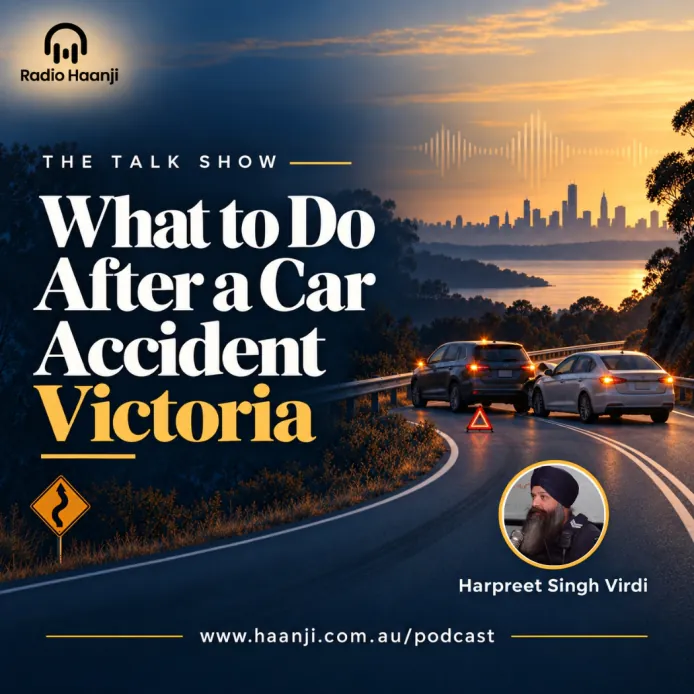
What to Do After a Car Accident Victoria: Legal Police Guide - Harpreet Singh Virdi
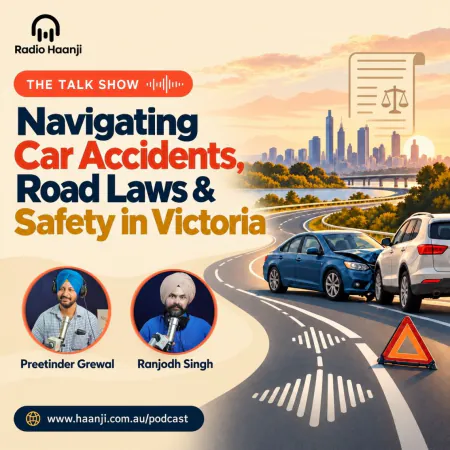
Host:-
 Preetinder Grewal
 Ranjodh Singh
What to do after a car accident in Victoria? Learn legal driver duties, what details to exchange, and police reporting rules from Radio Haanji's The Talk Show.
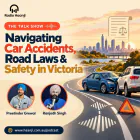
A sudden vehicle collision leaves even seasoned drivers shaken, disoriented, and unsure of their immediate legal obligations. Knowing exactly what to do after a car accident Victoria motorists experience can prevent a stressful roadside situation from escalating into criminal penalties or disputed insurance claims. On The Talk Show, broadcast on Radio Haanji 1674 AM, hosts Preetinder Grewal and Ranjodh Singh sat down with special guest Harpreet Singh Virdi from Victoria Police to unpack statutory duties, community misunderstandings, and frontline enforcement realities.
Many motorists assume that an accident scene requires immediate police dispatch, formal license inspections, and fraught arguments over who caused the impact. In reality, statutory road safety provisions outline clear, minimal requirements designed to protect public safety and facilitate civil insurance resolution. Understanding where legal duties end and where civil disputes begin is critical for staying compliant with Victorian law.
From the myth of handing over your driver's license to the hidden risks of unapproved vehicle modifications, this police perspective cuts through common assumptions. Whether you are dealing with a car park scrape or an erratic motorist, the following operational facts protect your rights and ensure your safety on Victorian roads.
Where to Listen
Catch the complete discussion on The Talk Show with hosts Preetinder Grewal and Ranjodh Singh featuring Harpreet Singh Virdi from Victoria Police, broadcast across Melbourne on Radio Haanji 1674 AM. Stream or download the full broadcast on your preferred service:
Episode Highlights
-
Mandatory Stopping Duties: The legal requirement to stop immediately at the scene of a crash and render assistance to any person in need.
-
Statutory Driver Details: The precise information required by law during an exchange versus details that remain optional.
-
Police Attendance Criteria: Clarification on when an incident demands an emergency response versus when it must be treated as a private insurance matter.
-
Handling Uncooperative Drivers: Step-by-step procedures when another motorist gives false details or refuses to cooperate.
-
Liability and Courtesy: The legal distinction between polite expressions of concern and evidentiary admissions of driving guilt.
-
Impairment Investigations: Frontline methods used by officers to detect drug and alcohol influence beyond standard breath testing.
-
Vehicle Modifications and Compliance: Why aftermarket vehicle alterations attract police defect notices and nullify insurance protections.
What Details Must You Legally Exchange After an Accident in Victoria?
Under Victorian road safety law, drivers involved in a collision must stop and provide their name, home address, and vehicle registration number to the other party. If you do not own the car you are driving, you must also provide the registered vehicle owner’s name and address details.
A common source of conflict at crash scenes is the demand to view a driver's license. Motorists often believe that withholding a physical driver's license card is an offense. As Harpreet Singh Virdi explained, Victorian law dictates that drivers are only required to exchange their name, address, and vehicle registration. Exchanging telephone numbers or physical license cards remains entirely voluntary between both parties.
If a driver suspects that the other party is providing false details or refusing to cooperate, they should avoid roadside arguments. Instead, photograph the vehicle, note down its registration number, and locate the Vehicle Identification Number (VIN) visible beneath the windshield wiper if safe to do so. Take these details directly to the nearest police station to lodge an official report, where officers can investigate using registration databases and commercial shopping center CCTV footage.
When Should You Call 000 or Report a Crash to Victoria Police?
Call Triple Zero (000) immediately if any person is injured, if vehicles present an active traffic hazard blocking roadway lanes, or if a driver exhibits aggressive criminal threats or acute impairment. For non-emergency situations without hazards or injuries, report incidents via the Police Assistance Line on 131 444 or online through Crime Stoppers.
Victoria Police officers do not attend minor road collisions simply to arbitrate damage claims or establish driving mistakes. Minor collisions where cars remain drivable and no one is hurt are civil insurance matters. Dispatch operators screen incoming emergency calls by asking two primary questions: whether anyone is physically injured, and whether a vehicle is blocking traffic flow or posing a direct safety hazard.
When a collision involves a stolen vehicle or an unidentified hit-and-run driver, police involvement changes. Officers will record a formal report and issue a police report reference number. The vehicle owner must provide this report number directly to their insurer, who then liaises with state authorities to handle recovery and claims.
Does Saying Sorry at the Scene Count as an Admission of Fault?
Saying "sorry" immediately after a crash in Victoria does not constitute a legal admission of fault or civil liability. Police officers and insurance assessors establish collision fault using objective physical evidence, road positioning, skid marks, impact damage, and independent statements rather than conversational expressions of shock or empathy.
The immediate aftermath of a collision produces shock, and many people reflexively express empathy by asking if the other party is unhurt and apologizing for the frightening situation. Drivers often worry that uttering "sorry" ruins their insurance standing or implies legal culpability. Frontline officers emphasize that courtesy is viewed as a natural human reaction to a distressing event, not formal legal evidence.
When an incident is reported, insurance companies reconstruct how the collision occurred based on point-of-impact damage, vehicle trajectory, and road compliance rules. Police accident investigations function the same way. Officers assess vehicle damage patterns and road conditions to determine which party violated traffic rules, independent of what was uttered in the heat of the moment.
Driver Behavior, Sobriety Testing, and Roadside Enforcement
When drivers display erratic driving or signs of substance impairment, standard exchange procedures pause in favor of immediate police reporting. Officers attending a scene conduct preliminary roadside breath testing for alcohol. If the breath test returns a zero or negative reading while the motorist continues to exhibit abnormal, sluggish, or erratic behavior, officers conduct specialized impaired driving assessments.
Suspected drivers undergo saliva testing for illicit substances such as cannabis, methylamphetamine (ice), and MDMA. If officers form the clinical opinion that an individual's driving abilities are compromised by prescription narcotics, illicit drugs, or other substances, they can escort the driver to a medical clinic or hospital for mandatory laboratory blood testing. Blood analysis detects a comprehensive range of intoxicating substances that roadside saliva kits cannot capture.
Witnesses observing dangerous driving maneuvers can record dashcam footage and report the incident online to Crime Stoppers or lodge a report at a police station. Submitting vehicle registration details and video files allows investigating officers to contact registered owners, identify who was behind the wheel, and lay formal driving charges without compromising witness anonymity.
How Do Illegal Vehicle Modifications Void Car Insurance Claims?
Illegal vehicle modifications that breach Australian Design Rules (ADR) can lead to police defect notices and cause insurance assessors to reject collision claims entirely. If an assessor determines that unauthorized alterations—such as oversized tires or altered suspension—contributed to non-compliance, the insurer is legally entitled to deny financial coverage.
A growing enforcement issue across Victoria involves modified four-wheel drives, such as utility vehicles and Wranglers, fitted with wide aftermarket tires extending past the vehicle's bodywork chassis or excessive suspension lift kits. Police officers inspecting these vehicles can issue immediate roadworthiness defect notices on the spot. These defects indicate that the car no longer satisfies statutory Australian Design Rules.
Before carrying out vehicle alterations, drivers must consult licensed roadworthy testers or inspect their manufacturer vehicle tire dimension placard. Specialized tire calculation applications also help drivers compare proposed wheel sizes against legal dimensional tolerances. Relying on retail shops without verifying roadworthy standards can leave motorists with expensive defect fines and voided insurance coverage following a major crash.
Key Takeaways
-
Motorists involved in a crash in Victoria are legally obligated to stop, render assistance, and exchange their full name, address, and vehicle registration.
-
Drivers do not have a statutory obligation to provide their phone number or display a physical driver’s license card to the other motorist.
-
Emergency services should only be contacted via 000 when an incident causes physical injuries, creates an active traffic hazard, or involves immediate criminal threats.
-
Expressing polite apologies or asking about someone's welfare following a crash is treated as conversational shock, not a legal admission of driving liability.
-
Victoria Police conduct drug impairment assessments and laboratory blood examinations when alcohol breath tests return negative but erratic behavior persists.
-
Vehicle modifications that breach Australian Design Rules, such as tires protruding beyond the wheel arches, can invalidate insurance claims after a collision.
References and Further Reading
-
Victoria Police Operational Traffic Guidelines — Incident response procedures, reporting thresholds, and driver exchange obligations.
-
Australian Design Rules (ADR) — National vehicle design, road safety, and structural compliance standards governing street-legal modifications.
Motor vehicle accidents are unpredictable, but knowing your exact legal duties helps you remain calm and avoid unnecessary legal complications. Ensure your vehicle meets compliance standards, keep your emergency contacts updated, and remember what information is legally necessary on the roadside. To hear the complete discussion on Victorian road rules and community safety insights, listen to the full episode of The Talk Show featuring Harpreet Singh Virdi on Radio Haanji 1674 AM via Spotify, Apple Podcasts, or the Radio Haanji App.
Frequently Asked Questions
What happens if the other driver refuses to give their details after an accident?
Do I have to call the police for a minor car accident in Victoria?
Why do police not pursue motorcyclists doing dangerous stunts on public roads?
Can I submit my personal dashcam footage of erratic driving to the police?
How do police test for drugs during a traffic stop?
How can I check if my aftermarket wheels and tires are legal in Victoria?
What's Your Reaction?