





















































Bhai Manna Singh: Life & Legacy of Punjabi Theatre - Pritam Singh Rupal & Gautam Kapil
Host:-
 Gautam Kapil
 Pritam Singh Rupal
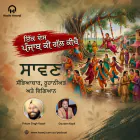
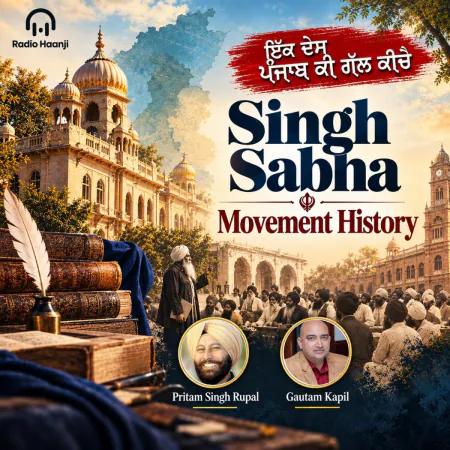
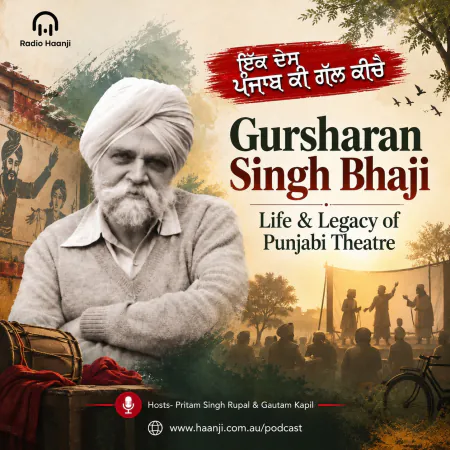
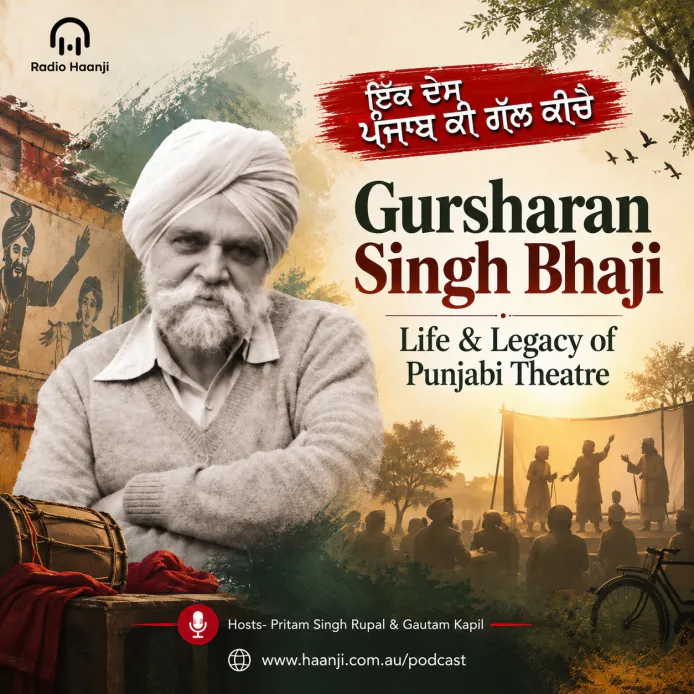
Explore the life of Gursharan Singh Bhaji on Radio Haanji's Ek Des Punjab Ki Gal Kiche with Gautam Kapil and Pritam Singh Rupal. Listen to the episode.
The power of grassroots art lies in its refusal to remain confined within gilded halls or commercial auditoriums. In Punjab’s modern cultural history, no figure embodied this truth more completely than theatre pioneer Gursharan Singh Bhaji(Bhai Manna Singh), whose street performances carried socio-political dialogue directly into village courtyards and open fields. On the Radio Haanji program Ek Des Punjab Ki Gal Kiche, host Gautam Kapil and regular contributor Pritam Singh Rupal dedicated an in-depth session to examining the life, literature, and enduring imprint of the dramatist who reshaped community consciousness.
Rather than approaching theatre as an elitist diversion, his creative evolution proved that performance could challenge authoritarian overreach, advocate for marginalized rural communities, and give voice to daily economic struggles. From his initial days working as a government analyst on major infrastructure projects to enduring state censorship and imprisonment during the 1975 Emergency, his path reflected an uncompromising dedication to public engagement.
The broadcast traced how this master storyteller transitioned between local street corners, television screens, and independent literary publishing. Through decades of activism and artistic mentorship, he built platforms that elevated revolutionary Punjabi literature, creating a cultural legacy that remains a critical reference point for understanding public theatre across North India today.
Where to Listen
Catch the full discussion of Ek Des Punjab Ki Gal Kiche hosted by Gautam Kapil and Pritam Singh Rupal on Radio Haanji 1674 AM. The broadcast can be streamed directly across major podcast platforms and the station's dedicated mobile apps.
Episode Highlights
During this broadcast of Ek Des Punjab Ki Gal Kiche, Gautam Kapil and Pritam Singh Rupal evaluated the personal evolution and artistic repertoire of the renowned dramatist:
-
Scientific Training and Public Employment: The conversation examined his early academic background, including earning a master’s degree in chemistry and his subsequent analytical posting with the Punjab Irrigation Department during the construction of the Bhakra Dam project.
-
Origins of Grassroots Dramatics: The hosts reviewed the 1958 catalyst at Bhakra Dam where exclusion from official VIP cultural events led to the construction of a makeshift performance platform from discarded concrete cubes, launching his foundational Thara Theatre.
-
Civil Liberties and Censorship: Rupal detailed the playwright’s arrest and detention during the 1975 Emergency, which served as a permanent turning point, prompting him to leave public employment and commit entirely to street performance and community publishing.
-
Profligate Literary and Stage Repertoire: The discussion cataloged his creation of over 200 plays, including critical works like Dhamak Nagare Di, Baba Bolda Hai, Eh Lahu Kis Da Hai, Chandigarh Puadh Di Jarh, and Curfew, alongside his popular televised presence as Bhai Manna Singh.
-
Institutional Publishing and Mentorship: The episode noted his foundational role in establishing Balraj Sahni Yadgar Prakashan, the political journal Samta, and the Amritsar Natak Kala Kendra, providing publishing platforms for writers like Paash and Sant Ram Udasi.
-
Contrasting Past and Modern Punjabi Theatre: The dialogue concluded with an analysis of the contemporary performing arts scene, contrasting his mass rural connection with modern theatre’s shift toward academic seminars and isolated urban performances.
Who Was Gursharan Singh Bhaji?
Gursharan Singh Bhaji was a pioneering Punjabi playwright, director, and cultural activist born on September 16, 1929, in Multan (now in Pakistan). Educated with an M.Sc. in chemistry, he transitioned from government service into community theatre, writing over 200 plays and championing democratic expression across rural Punjab.
Following the partition of 1947, his family settled in Amritsar, establishing a permanent base at their family residence, Guru Khalsa Niwas. Though trained as a scientist and employed as a materials expert assessing cement quality, his artistic instincts were inextricably linked with social justice, community rights, and secular democratic ideals.
His work reached far beyond traditional stage playwriting. As an actor, he participated in Punjabi cinema, performing in productions such as Man Jeete Jag Jeet (1973), Mutiyaar, and Bhabo. On television, his character Bhai Manna Singh on Doordarshan became so iconic that rural audiences throughout Punjab frequently addressed him by the character's name. Over his multi-decade career, his cultural labor was honored with prestigious awards, including the Sangeet Natak Akademi Award in 1993, the Kalidas Samman, and major state recognitions, alongside vast public felicitations organized by ordinary citizens in Barnala and Moga.
How Did Thara Theatre Begin at Bhakra Dam?
Thara Theatre began in 1958 at the Bhakra Dam site when project workers were barred from attending VIP cultural rehearsals organized for visiting dignitaries. In protest, Gursharan Singh gathered discarded concrete test blocks to erect a raised platform (thara), staging original plays directly for the labor workforce.
Before that event, major state infrastructure celebrations prioritized elite guests, including Prime Minister Jawaharlal Nehru and Soviet leader Nikita Khrushchev, bringing in distinguished classical and folk performers such as Gopi Krishna, Yamini Krishnamurthy, Pandit Birju Maharaj, Lal Chand Yamla Jatt, and Surinder Kaur. When working-class laborers were denied access to view the preparations, the incident catalyzed Gursharan Singh's creative defiance.
Using the very building blocks of the dam that had undergone strength testing in his laboratory, he constructed a stage that removed commercial barriers between actors and the audience. That initial platform laid the operational blueprint for the Punjabi street theatre (Nukkar Natak) movement. It demonstrated that impactful theatrical production did not require sophisticated sets, proscenium arches, or lavish sponsorships; an open clearing and a shared message were enough.
What Made His Plays a Voice for Common People?
Gursharan Singh's plays addressed immediate economic distress, agrarian crises, caste inequities, state brutality, and political opportunism. Rather than using oblique metaphors, he staged direct scripts in accessible everyday language, addressing issues like anti-Sikh violence in Baba Bolda Hai and religious-feudal exploitation in Eh Lahu Kis Da Hai.
Whenever a critical socio-political event unfolded in Punjab, he reacted almost instantaneously through the medium of drama. In the aftermath of the 1984 violence, his production of Baba Bolda Hai delivered sharp political critique without retreat. Similarly, works like Chandigarh Puadh Di Jarh critiqued governmental policy and administrative neglect, while Curfew explored the stifling atmosphere of state crackdowns. In plays like Kiv Koorhe Tutte Paal and Parakh, he drew on historical Sikh episodes and the actions of the Gurus to challenge orthodoxy and social hypocrisy.
His stage events were accompanied by direct interaction. Prior to beginning a street performance, he regularly addressed the gathered crowd, analyzing local working conditions, land inequality, and civil liberties. Through the Amritsar Natak Kala Kendra (later the Amritsar School of Drama) and his independent publication initiatives, he cultivated an ecosystem that supported fellow progressive writers, transforming theatre into a vehicle for public education and democratic resistance.
Key Takeaways
-
Gursharan Singh transitioned from an analytical chemist in the Punjab Irrigation Department to the undisputed architect of modern Punjabi street theatre.
-
The Thara Theatre movement was founded in 1958 out of direct solidarity with Bhakra Dam workers who were excluded from high-profile state cultural programs.
-
He endured imprisonment during the 1975 Emergency, which prompted his full-time dedication to independent arts, grassroots staging, and political literature.
-
His creative output exceeded 200 stage and street plays, notably featuring seminal works such as Baba Bolda Hai, Dhamak Nagare Di, and Eh Lahu Kis Da Hai.
-
Through Balraj Sahni Yadgar Prakashan and the periodical Samta, he published pioneering writings from prominent Punjabi poets, including Paash and Sant Ram Udasi.
-
Alongside national accolades such as the 1993 Sangeet Natak Akademi Award, his television portrayal of Bhai Manna Singh permanently embedded his public identity into Punjab's cultural fabric.
The artistic life of Gursharan Singh Bhaji demonstrated that performance achieves its highest purpose when it mirrors the struggles and hopes of ordinary people. By taking theatre away from sheltered urban spaces and anchoring it in rural community life, he proved that a committed voice can challenge inequality and inspire civic courage. To understand the full scope of his journey, creative catalog, and contemporary relevance, tune in to the complete broadcast of Ek Des Punjab Ki Gal Kiche on Radio Haanji via Spotify, Apple Podcasts, or the official Radio Haanji app.
Frequently Asked Questions
Why was Gursharan Singh widely referred to as Bhaji?
What was the role of the publication Samta?
Did Gursharan Singh perform in professional films or television?
How did the 1975 Emergency impact his theatrical journey?
What distinguishes his Thara Theatre from conventional proscenium drama?
What's Your Reaction?