





























Is Roblox Safe for Kids? Hidden Dangers Parents Must Know
6 countries banned Roblox. Australia hasn't—yet. Sexual content, predators, suicide encouragement exposed. Essential safety guide every parent must read.
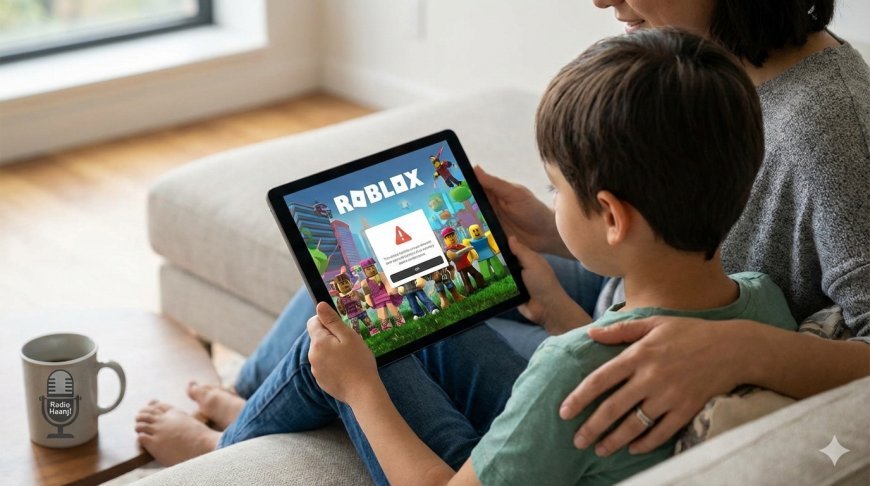
Roblox and Children: The Hidden Dangers Parents Need to Know
If your child plays Roblox, this article contains information you need to read today. What appears to be a harmless children's gaming platform has become the center of a global safety crisis, with mounting evidence of child exploitation, sexual content, predator access, and even encouragement of self-harm.
Six countries have already banned Roblox entirely. Australia hasn't—yet. But in February 2026, Australian Communications Minister Anika Wells sent an urgent letter to Roblox Corporation demanding answers about "graphic and gratuitous user-generated content" on the platform, including sexually explicit material and content encouraging suicide.
This comprehensive guide explains what makes Roblox dangerous, how the platform operates financially, what's being done globally, and most importantly, what Australian parents can do right now to protect their children.
What is Roblox and Why Should Parents Care?
Roblox is not just another video game. It's a massive online platform where users—primarily children—can create their own games, play millions of user-generated experiences, and interact with other players from around the world. Think of it as a combination of a game, a social network, and a creative studio, all rolled into one.
The numbers are staggering. As of early 2026, Roblox has approximately 151 million daily active users, with over 79 million people actively playing every month. The platform hosts roughly 40 million user-created games, and in 2024 alone, users spent 73.5 billion hours inside the Roblox universe.
Here's what makes it different—and more dangerous—than traditional video games: Roblox is largely unmoderated user-generated content. Anyone can create a game. Anyone can chat with anyone else. And while the company has implemented some safety measures, the sheer scale of content and interactions makes effective monitoring nearly impossible.
Why Australia Hasn't Banned Roblox Despite Safety Concerns
This is one of the most pressing questions Australian parents are asking. In late 2024, Australia passed groundbreaking legislation banning social media platforms for children under 16 years old. Platforms like Instagram, TikTok, Facebook, and Snapchat fell under this ban.
Roblox, however, was initially excluded.
The reason? Roblox is classified as a "gaming platform" rather than a "social media platform," despite the fact that it has all the features that make social media dangerous for children: direct messaging, group chats, public forums, user-generated content, and the ability to form relationships with strangers.
This classification loophole has become increasingly controversial. In February 2026, Minister Wells wrote to Roblox Corporation stating: "Even more disturbing are ongoing reports and concerns about children being approached and groomed by predators, who actively seek to exploit their curiosity and innocence."
Following these concerns, Australian authorities have now indicated that protocols for platforms like Roblox will be implemented starting March 2026, bringing it under the same scrutiny as traditional social media platforms.
The Real Dangers: What's Actually Happening on Roblox
Understanding the specific risks helps parents make informed decisions and have meaningful conversations with their children.
1. Sexual Exploitation and Predator Access
Multiple lawsuits and government investigations have revealed that predators are using Roblox to target minors. In January 2026, a case in Florida made international headlines when two siblings, ages 12 and 15, were allegedly kidnapped by a 19-year-old they initially met on Roblox.
This wasn't an isolated incident. Spain's Civil Guard issued a statement warning that reports of sex offenders using Roblox to extort minors have become "much more frequent," with several minors in Murcia maintaining direct contact with pedophiles through the platform.
The problem is structural. Research has shown that adults can easily create accounts claiming to be children, allowing them to communicate directly with actual children. One prominent investigation demonstrated that even with maximum parental restrictions enabled, inappropriate content was "remarkably easy" to encounter.
2. Sexually Explicit Content
As far back as 2014, Roblox users reported "sexual, violent, frightening, hateful, racist, and drug-related content" directed at children on the platform. A decade later, the problem persists and has arguably worsened.
Recent research shows that users with underage accounts may be exposed to racial slurs and verbalized sex acts in voice chats. One YouTube investigation in late 2025 demonstrated that inappropriate content remains very easy to find on Roblox—even with all parental restrictions activated.
Australian eSafety Commissioner Julie Inman Grant has expressed being "highly concerned by ongoing reports regarding the exploitation of children on the Roblox service, and exposure to harmful material."
3. Suicide and Self-Harm Content
One of the most disturbing issues is content encouraging self-harm and suicide. Minister Wells' letter specifically mentioned "suicidal material" present on the platform.
This aligns with broader concerns about the addictive nature of the platform and its potential psychological impact on vulnerable young users. The platform's design—with endless games, social pressure, virtual currency, and constant notifications—can create patterns of compulsive use that exacerbate existing mental health struggles.
4. Financial Exploitation
Roblox uses a virtual currency called "Robux" that children can purchase with real money. While monthly spending limits can be set, the pressure to buy items, access certain games, or keep up with friends creates a constant financial demand.
More concerning is a phenomenon called "beaming"—where children's accounts are hacked and all their purchased items stolen. This affects not just the virtual property, but the real money that parents have spent and the child's emotional wellbeing.
The Money Behind Roblox: A $5 Billion Business Model
Understanding how Roblox makes money helps explain why safety issues have persisted despite years of complaints. Roblox is not primarily a game company—it's a platform operator that makes money by taking a cut of virtually every transaction.
Revenue and Growth
Roblox generated $4.89 billion in revenue in 2025, representing a 35.77% increase from the previous year. The company's revenue has grown explosively:
- 2019: $508 million
- 2020: $924 million (82% growth)
- 2021: $1.92 billion (108% growth)
- 2022: $2.23 billion
- 2023: $2.79 billion
- 2024: $3.60 billion
- 2025: $4.89 billion
In just six years, Roblox increased its revenue by nearly 10 times.
How Roblox Makes Money
The business model has three main components:
Robux Sales (Primary Revenue Source): Players purchase Robux (the virtual currency) with real money. Roblox earns approximately $12.50 for every 1,000 Robux sold. In 2020, 35% of revenue came through Apple's App Store and 19% through Google Play Store, with the remaining from direct sales and subscriptions.
When Robux is spent inside a game, Roblox takes 47.5% of every transaction. The remaining 52.5% is split between the game developer and payment processing fees. This means Roblox profits from every in-game purchase, whether it's clothing for an avatar, access to a special area, or game upgrades.
Roblox Premium Subscriptions: For a monthly fee, users get bonus Robux, the ability to trade items, and access to premium features. Premium subscribers have higher retention rates and spend significantly more, creating a stable recurring revenue stream.
Advertising and Partnerships: Major brands like Disney's Marvel, Lego, Warner Bros., Walmart, and Toys"R"Us have advertising deals or sell Roblox-branded merchandise. The platform also hosts virtual events with artists and celebrities.
The Platform Economy
Roblox operates what's called a "platform economy." It doesn't create the games—users do. It doesn't moderate all the content—that's technically impossible at this scale. Instead, it provides the infrastructure and takes a percentage of everything that happens.
In 2024, Roblox paid out $923 million to game creators. While this sounds generous, remember that this represents only about 25% of the company's total revenue. Roblox keeps the majority.
This creates a fundamental conflict of interest. More users and more content mean more revenue. But more users and more content also mean more opportunities for exploitation, more things to moderate, and more potential harm. The financial incentive pushes toward growth, not safety.
Global Response: Countries That Have Taken Action
Australia is far from alone in its concerns. Since mid-2025, a wave of countries has either banned Roblox or launched major investigations.
Countries That Have Banned Roblox
As of February 2026, the following countries have completely banned access to Roblox due to child safety concerns:
- Qatar (August 2025)
- Kuwait (August 2025)
- Iraq (October 2025)
- Palestine (November 2025)
- Russia (December 2025) - Cited "inappropriate content" and alleged extremist material
- Egypt (February 2026) - Egyptian Supreme Council for Media Regulation banned the platform
Additionally, Bahrain's parliament is drafting legislation to ban Roblox, and Lebanon's government has been urged to take similar action after reports showed 30% of minors in the country could be exposed to inappropriate content.
Countries Investigating or Restricting Roblox
Netherlands: The Dutch government began reviewing Roblox in January 2026. The Netherlands Authority for Consumers and Markets (ACM) launched investigations to determine if the platform is safe for use in the European Union. Age verification became mandatory in the Netherlands on December 1, 2025.
Spain: The Civil Guard issued warnings about sex offenders using Roblox to extort minors, with multiple documented cases in southern Spain.
Kazakhstan: MP Unzila Shapak proposed government action in January 2026, citing pedophilia, scammers targeting minors, and highly addictive elements exposing children to sexual or violent material.
Kyrgyzstan: Parliament member Janybek Amatov raised restrictions on Roblox and similar platforms following the presence of pedophiles.
Indonesia: Authorities requested Roblox strengthen chat filters and enhance child safety, warning that failure to comply could result in a ban. The city of Surabaya imposed local bans in schools.
United States: At least 35 federal lawsuits have been filed against Roblox, with cases consolidated into multi-district litigation in the U.S. District Court for the Northern District of California. Louisiana Attorney General Liz Murrill filed a lawsuit in January 2026 accusing Roblox of failing to protect children from exploitation. Florida's Attorney General also subpoenaed the company for information about age verification and chat moderation policies.
What Roblox Has Done (And Why It's Not Enough)
In response to mounting pressure, Roblox implemented several safety changes in late 2025 and early 2026. Understanding these measures—and their limitations—is crucial for parents.
Age Verification System (January 2026)
Starting January 1, 2026, all Roblox users must undergo facial age estimation to access chat features. Users either upload a government ID or use their device camera to scan their face for age verification.
Users are grouped by age: under 9, ages 9-12, 13-15, 16-17, 18-20, and 21+. For children under 9, chat is disabled by default unless a parent provides consent after their own age check.
The Problem: Early reports show the system is deeply flawed. Millions of users report incorrect age estimations—adults being labeled as children and vice versa. Privacy advocates question uploading government IDs or facial scans to a third-party company. And technical-savvy users have already found workarounds.
Age-Based Chat Restrictions
Minors can now only chat with other users in similar age groups, not with adults. Users can add "trusted connections" to chat across age groups—like siblings.
The Problem: Nothing stops an adult from creating an account with a fake age. Recent testing showed that bypassing these restrictions remains "remarkably easy" for determined predators.
Enhanced Parental Controls
Parents can now access a "Parental Insights" dashboard to monitor who their children chat with and set time limits.
The Problem: This assumes all parents are tech-savvy enough to find and use these controls. Many menus have historically been hidden behind unlabeled icons. Additionally, frustrated parents whose children are locked out of social features are reportedly giving consent without fully understanding the risks.
Content Filtering and Moderation
Roblox employs AI-driven content filtering and human moderators to block inappropriate content. The company states it uses "industry-leading policies" and filters designed to block sharing of personal information.
The Problem: Research showed that moderators could bypass AI content filtering by simply changing fonts in chat. With 151 million daily users and 40 million games, effective real-time moderation is functionally impossible. Bad content slips through constantly.
The Side Effects Already Being Seen
The damage from Roblox isn't theoretical—it's happening now to real children.
Documented Harms
Child Grooming and Abduction: The Florida kidnapping case in February 2026 involved two siblings groomed through Roblox. Court filings in the multi-district litigation allege that some children were groomed through Roblox and later exploited on other platforms after predators moved the relationship off-platform.
Psychological Impact: Parents report mood swings, secrecy, reluctance to discuss gameplay, and unhealthy emotional attachment to specific players—all warning signs that something inappropriate may be happening.
Digital Addiction: The platform's endless content, social pressure, virtual currency system, and notification design create compulsive use patterns. Some children show signs of genuine addiction, becoming distressed when access is limited.
Financial Harm: Beyond hacked accounts, children are exposed to constant spending pressure. Some parents report unauthorized charges of hundreds or even thousands of dollars.
Exposure to Harmful Ideologies: Beyond sexual content, some Roblox experiences have been found to contain extremist content, hate speech, and violent material completely inappropriate for the platform's young user base.
What Australian Parents Can Do Right Now
Given the regulatory uncertainty and Roblox's documented safety problems, parents cannot rely on the platform or the government to keep their children safe. Here are practical steps you can take immediately:
1. Understand What Your Child is Actually Doing
Don't just ask "Are you playing Roblox?" Ask specific questions: Who are you talking to? What games are you playing? Have you made any online friends? Has anyone asked you to move to another app to chat?
Pay attention to warning signs: secrecy about gameplay, emotional attachment to online "friends," mood changes after playing, reluctance to discuss what happens in-game.
2. Set Up Proper Parental Controls
Create your own Roblox account and link it to your child's account. This unlocks additional controls:
- Manage or block which games your children can access
- Set time limits on play sessions
- Monitor chat interactions
- Restrict friend requests
- Disable direct messaging entirely
For children under 13, these controls are essential. For teenagers, they remain important even if your child protests.
3. Keep Gaming in Public Spaces
Roblox should be played on a family computer in a shared room, never behind a closed bedroom door. Predators rely on privacy and isolation. Visibility alone acts as a powerful deterrent.
If your child must play on a mobile device or laptop, position yourself where you can occasionally see the screen.
4. Explain Online Safety Clearly
Children need to understand that people met in games are not the same as friends from school or family members. Even friendly, helpful players can misrepresent who they are.
Teach specific rules: Never share personal information (real name, school, location, phone number). Never agree to meet someone from a game in real life. Never move conversations to another app if an online "friend" suggests it. Tell a parent immediately if someone makes you uncomfortable.
5. Monitor Financial Activity
Set strict spending limits. Review all Robux purchases. Watch for unauthorized charges on your credit card. Consider using prepaid cards instead of linking credit cards directly to the account.
Explain to your child that the virtual items have no real value and that social pressure to buy things in a game is something they should resist.
6. Know How to Block and Report
Make sure both you and your child know how to block abusive players and report inappropriate content. If your child encounters something disturbing, they should tell you immediately, and you should report it not just to Roblox but potentially to the eSafety Commissioner or local police.
7. Consider the Age Question Seriously
The Entertainment Software Rating Board (ESRB) rates Roblox as suitable for ages 10 and older. However, given the documented safety issues, many child safety experts now recommend against allowing children under 13 to use the platform at all, and strong parental supervision for children 13-16.
You know your child best. Consider their maturity level, their ability to recognize manipulation, and their willingness to come to you if something feels wrong.
The Bigger Picture: What Needs to Change
Individual parental vigilance is necessary but insufficient. Systemic change is required.
Regulatory Action
Australia's decision to bring Roblox under the same regulatory framework as social media platforms (effective March 2026) is a positive step. The eSafety Commissioner has warned Roblox that it faces potential fines of up to $49.5 million if compliance testing shows the platform hasn't fulfilled its legal obligations.
However, regulations must be enforced, not just announced. The Classification Board is reviewing whether Roblox's PG classification (last assigned in 2018) remains appropriate.
Platform Accountability
Roblox needs to prioritize safety over growth. This means:
- Investing more heavily in human moderation, not just AI filtering
- Implementing truly effective age verification that can't be easily bypassed
- Defaulting to the most restrictive safety settings, requiring parents to actively opt into riskier features rather than opt out
- Being transparent about the scale of safety violations and what's being done about them
- Limiting the addictive design features that keep children compulsively engaged
Industry Standards
The problems with Roblox exist across many platforms that combine gaming with social features. Industry-wide standards for child safety in online gaming are desperately needed.
Final Thoughts
A platform making nearly $5 billion annually has apparently prioritized profits over the safety of its predominantly child user base. From sexual exploitation to suicide content, from predator access to financial manipulation, the documented harms are serious and ongoing.
Australia's initial decision to exclude Roblox from its social media ban reveals how companies can exploit classification loopholes to avoid regulation. The platform acts like social media, functions like social media, and creates the same dangers as social media—but because it's labeled a "game," it initially escaped scrutiny.
For Australian parents, the message is clear: you cannot assume that because something is popular with children, it is safe for children. Roblox demonstrates that the opposite can be true.
Stay informed, stay involved, and stay vigilant. Your child's safety in the digital world depends on it.
This article is published by Radio Haanji, Australia's number one Indian radio station. For more important discussions on topics affecting the Australian community, tune in to 1674 AM Melbourne or visit www.haanji.com.au
What's Your Reaction?