




































































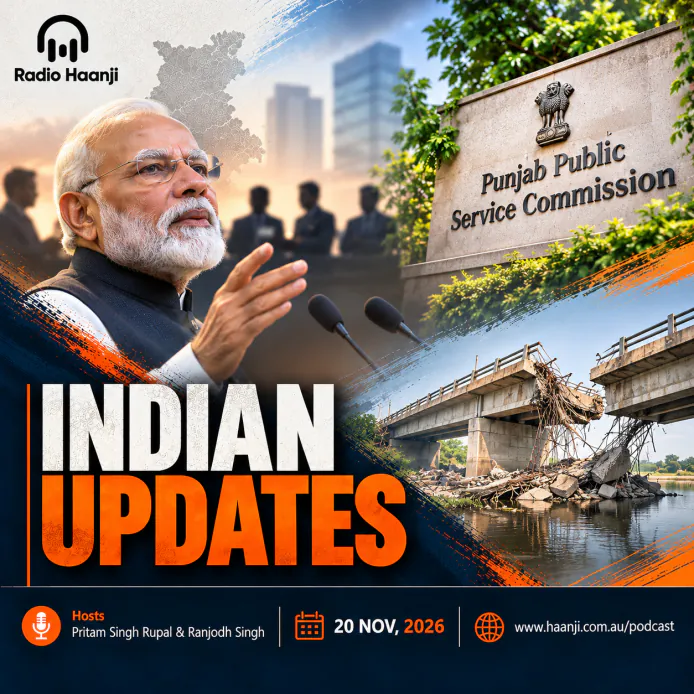
20 Nov - Indian Updates - Punjab PCS Stayed & Patiala Bridge Collapse - Pritam Singh Rupal
Host:-
 Krishna Bhardwaj
 Pritam Singh Rupal
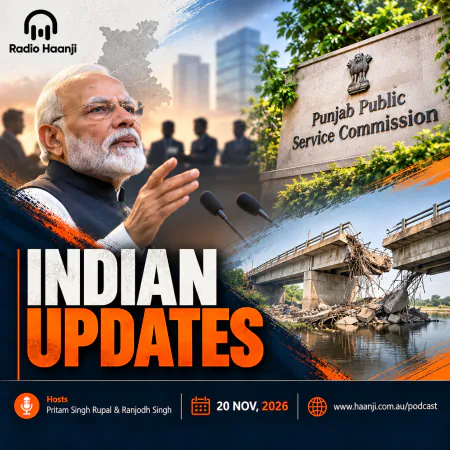
Listen to the 20 November 2026 Indian Updates on Radio Haanji. Pritam Singh Rupal analyzes PM Modi's message to FICCI on job growth, the High Court stay on Punjab PCS recruitment, and the Patiala Bhakra Canal bridge collapse.
Every news cycle brings a fresh wave of headlines, but the real story often lives in the space between official statements and ground reality. In the 20 November 2026 edition of Indian Updates on Radio Haanji 1674 AM, host Krishna sat down with senior political analyst Pritam Singh Rupal to unpack three major developments that cut straight to the heart of governance, accountability, and public trust in India and Punjab.
To catch the full conversation and stay informed with daily analysis, visit the Indian Updates show page or tune into global headlines on Today Updates.
PM Modi’s Rare Reality Check to Corporate India and the Missing Piece
For over twelve years, Prime Minister Narendra Modi has maintained a largely formal, business-friendly rapport with India’s corporate sector. That is why his address at the Annual General Meeting of FICCI in New Delhi caught so many observers off guard. Breaking away from routine pleasantries, the Prime Minister directly asked industrialists why private-sector job creation and employee wages have failed to grow, even after the government slashed corporate taxes from 30 percent to 22 percent and reduced GST across numerous products.
He even acknowledged from the podium that the room would not erupt in applause for what he was about to say,calling it a necessary look at ground reality.
While Pritam Singh Rupal welcomed the fact that unemployment and economic imbalance were finally addressed from the country’s highest office, he pointed out a glaring contradiction beneath the surface. Publicly scolding industry leaders might dominate media debates for a few days, but speeches alone do not create jobs or raise salaries.
Over the past decade, labor protections in India have been steadily weakened. Rules governing the eight-hour workday,mandatory overtime pay, and the right to form trade unions have been diluted, stripping workers of their collective bargaining power. Meanwhile, India’s largest conglomerates continue to enjoy massive policy benefits with little obligation to answer to industry bodies like FICCI. Without a strong, enforceable regulatory framework in the private sector that ties corporate incentives to fair staffing and wage growth, the gap between corporate profits and worker livelihoods will remain unresolved.
The Punjab PCS Recruitment Stay: A Test of Transparency
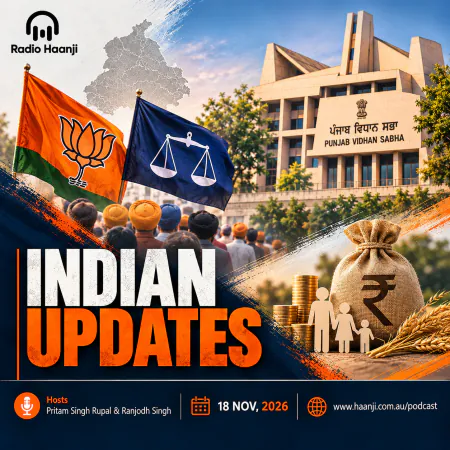
In Punjab, the spotlight has shifted to the Punjab and Haryana High Court, which has placed an interim stay on the Punjab Civil Services (PCS) recruitment results and interview process until December 16.
The court’s intervention followed petitions highlighting troubling anomalies in the written examination. Red flags quickly surfaced, including an unusually high number of qualifiers from a single examination center, clusters of consecutive roll numbers clearing the test together, and allegations that certain shortlisted candidates cleared the mandatory Punjabi language requirement only after the application deadline had passed.
As Rupal observed, this controversy carries heavy political weight. Until now, the current Punjab government had built a relatively clean reputation around merit-based hiring, with few credible allegations of bribery or favoritism in previous recruitments. The PCS stay has handed opposition parties, including the BJP and Congress, a potent issue,with leaders alleging a recruitment scam and demanding a CBI probe.
Punjab’s Public Service Commission (PPSC) carries the long shadow of past scandals from decades ago. Whether the current anomalies stem from administrative lapses or deeper irregularities will only become clear once the High Court reviews the summoned records. With state elections on the horizon, how this matter unfolds after December 16 will be closely watched by thousands of aspiring youth.
The Patiala Bridge Collapse: Beyond the Political Blame Game
Infrastructure failures rarely announce themselves, and the sudden collapse of a highway bridge over the Bhakra Canal on the Patiala bypass was a stark reminder of how fragile public safety can be. Two trucks plunged into the canal when the structure gave way. Fortunately, no lives were lost, though one driver was injured and highway traffic had to be diverted.
Unlike centuries-old bridges giving way to age, this was a modern highway structure. Yet, almost immediately after the concrete fell, Punjab’s political parties rushed into a familiar blame game. Opposition voices blamed the state government for poor maintenance, while Union Minister Ravneet Bittu pointed fingers at illegal sand mining and overloaded trucks.
Rupal cut through the noise with a straightforward administrative fact: the collapsed bridge sits on a National Highway managed by the National Highways Authority of India (NHAI), under the Union Ministry of Road Transport and Highways. The state government has no role in its construction, toll collection, or structural upkeep. Those responsibilities belong squarely to central authorities and the private contractors who collect tolls on these routes.
Furthermore, blaming heavy trucks for a national highway bridge collapse misses the point entirely. National highways are engineered to carry heavy commercial freight and military equipment. If a bridge cannot handle loaded trucks, the failure lies in construction quality and oversight, not traffic. Had a passenger bus carrying fifty or sixty people been crossing at that exact moment, Punjab would have faced a major tragedy. The Punjab government’s subsequent demand for a comprehensive structural audit of all NHAI bridges across the state is a necessary first step, provided it leads to real accountability.
Quick Pulse on Punjab Politics
Alongside the three main stories, the broadcast also touched on two developing political storylines in the state:
-
Congress Insaaf March: Former Punjab Congress president Raja Warring announced the launch of an Insaaf March from Ludhiana, assuring party workers that upcoming assembly election ticket distribution will involve fair consultation.
-
SGPC Presidential Election: The Shiromani Gurdwara Parbandhak Committee convened its general house for its annual presidential election, with 138 eligible voters out of the 185-member house participating and Harjinder Singh Dhami widely expected to retain the post.
Whether it is corporate accountability in New Delhi, exam integrity in Chandigarh, or highway safety in Patiala, the common thread running through the day's news is simple: systems only work when accountability is enforced before a crisis hits.
If you are looking to explore more from Radio Haanji 1674 AM, unwind with all laughter therapy episodes, listen audio stories, or dive into the deep talk show (special show on science, space, species and exploration). You can also catch fresh conversations on Boys Meetup and Notebook.
Frequently Asked Questions
What did PM Narendra Modi ask industrialists at the FICCI AGM?
Why did the Punjab and Haryana High Court stay the Punjab PCS recruitment?
Who is responsible for the Patiala bypass bridge collapse over the Bhakra Canal?
What happened during the Patiala Bhakra Canal bridge collapse?
What's Your Reaction?







Related Posts