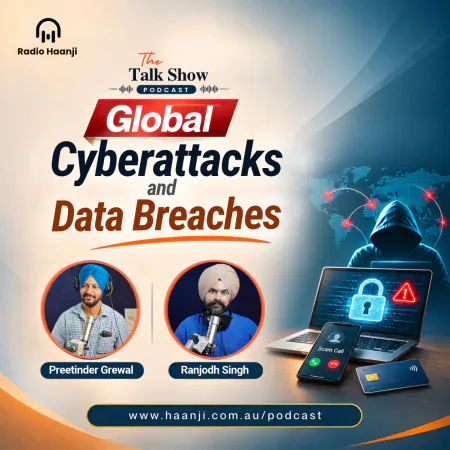



























































































Global Cyberattacks, Data Breaches and How to Stay Safe Online - The Talk Show - Preetinder Grewal & Ranjodh Singh
Host:-
 Preetinder Grewal
 Ranjodh Singh
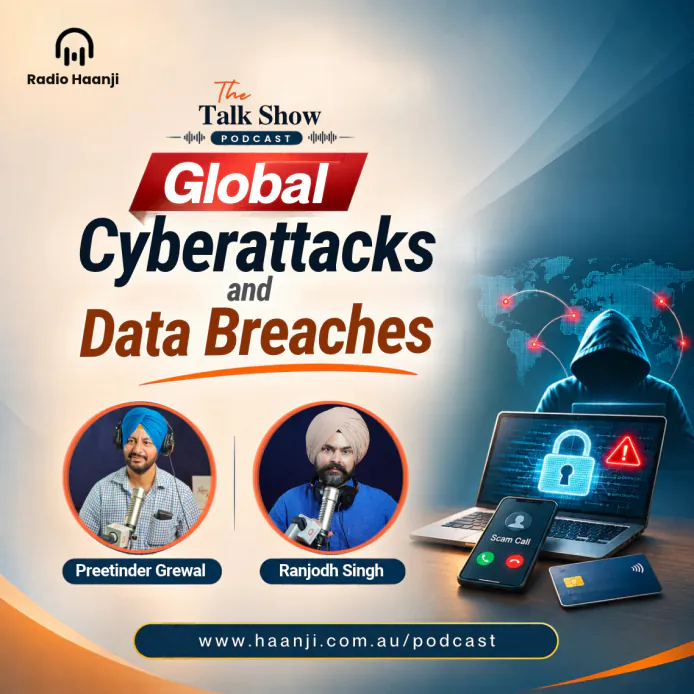
Preetinder Grewal and Ranjodh Singh discuss major global cyberattacks, Australian scams, and practical tips to protect your data on Radio Haanji.
Every week, another headline tells us that a big company has been hacked, and every week more families in our community lose money to a message, a call or a website that looked completely real. In this episode of The Talk Show on Radio Haanji 1674 AM Melbourne, hosts Preetinder Grewal and Ranjodh Singh talk about cybersecurity in plain Punjabi, with real stories from listeners and simple steps anyone can take to protect their money and identity.
If you could not catch the live broadcast, this article gives you the main points, and you can listen to the full conversation on the Radio Haanji podcast page.
What This Episode Covers
The conversation moves from large global cyberattacks to everyday scams that reach ordinary phones and inboxes. The hosts explain how attackers work, share their own experiences, take calls from listeners, and finish with a practical checklist for banking, devices and what to do if your details are stolen.
Major Cyberattacks and Data Breaches Discussed
Malicious Code Found on 178 Major Websites
The hosts discuss a recent incident in which attackers used a weakness in a web platform to place harmful JavaScript on 178 well-known websites. Organisations across technology, media, travel and banking were reported to be affected, including dozens of financial institutions. According to the discussion, the code was designed to skim credit card details, collect browser cookies and screenshots, and redirect cryptocurrency payments to the attackers' wallets. Thousands of dollars in stolen crypto had already been confirmed.
The key lesson is that even a trusted brand's website can be compromised, so a legitimate-looking checkout page is no guarantee of safety. That is why the later tips on virtual cards and instant bank alerts matter so much.
Older Apple Devices Are Being Targeted
The hosts also talk about malware aimed at older versions of iOS on iPhones and iPads. Devices running the latest updates were described as protected. If you or your parents are still using an old phone or tablet, updating the software, or replacing the device, is one of the easiest ways to close that door.
Cybercrime in Australia by the Numbers
The episode refers to a report from the Australian Signals Directorate showing more than 82,000 cybercrime reports in a single year, which works out to roughly one report every six minutes. The hosts also touch on other recent incidents, including an attack on an international sporting federation and the local impact on well-known Australian businesses and superannuation funds. For daily headlines on stories like these, you can follow our Today Updates podcast.
Common Scams Every Punjabi Family Should Know
Phishing and Cloned Websites
Scammers send emails or text messages that appear to come from a bank, Centrelink, Medicare or the ATO and push you to click a link. The link leads to a copy of the real website built to steal your login or card details. Dr. Grewal shared a personal story of ordering a jacket from a cloned version of a well-known retail site. A cheap bracelet arrived instead, and the scammers used the delivery tracking number to win the bank dispute. Always check the web address carefully before you pay.
Ransomware and Identity Theft
Ransomware locks the files of a business or an individual and demands payment, usually in cryptocurrency. Stolen identity documents such as passports and driver licences are also sold on the dark web, which is why a data breach can cause problems months or years later.
SIM Swapping and Payment Redirection
In a SIM swap, a criminal takes over your mobile number so they can receive your bank one-time passcodes. In payment redirection, a hacked business email is used to send a genuine-looking invoice with changed bank details. Both are especially risky for small business owners and anyone paying tradies, landlords or suppliers by bank transfer.
AI Voice Cloning and Fake Threat Calls
Scammers now use AI to copy a family member's voice and fake an emergency. Others run so-called digital arrest calls or pose as police or immigration officers, demanding immediate payment. A real agency will never ask you to pay urgently over the phone. Hang up, take a breath and call the organisation back on its official number. If you enjoy learning how this kind of technology works, our science and exploration show The Deep Talk is worth a listen.
Real Stories From Radio Haanji Listeners
Several callers joined the conversation with their own experiences. One listener explained how a free app downloaded by his children led to an unexpected $25 charge, and how his email had earlier been compromised through a fake message inside a rideshare driver app. Another caller suggested that AI may now be driving more attacks than traditional state-backed hackers, and recommended keeping three to four days of water and essentials at home in case infrastructure is ever disrupted.
A rideshare driver described how his account was hacked and funds were moved to an overseas bank, leaving him with a negative balance of about $1,200. Because support kept passing him between representatives, the hosts advised him to escalate the matter to the relevant ombudsman and to use AI tools to help draft a clear, step-by-step complaint. Another caller found $183 had been spent at a fuel station while his physical card was still in his car. Because he had instant bank notifications turned on, he blocked the card within minutes and got the money back.
Practical Cybersecurity Tips From the Episode
Passwords, Passkeys and Authenticator Apps
Switch to passkeys wherever they are offered, so you can sign in with your face or fingerprint. Use an authenticator app instead of SMS codes, and use a reputable password manager rather than reusing the same password across accounts.
Banking and Card Safety
Use virtual cards in Apple Pay or Google Pay, which generate a dynamic security code, for online shopping. Keep a separate spending account with a limited balance for your everyday card, and do not link your main savings to it. Turn on instant push notifications for every transaction, even a single dollar, and lock cards you are not using from inside your banking app.
The hosts also explained the Australian deposit guarantee, which protects up to $250,000 per account holder per authorised bank. Sub-brands that operate under the same parent licence share a single limit, so it is worth checking who actually holds your money.
Device and Online Habits
- Use a different email address for shopping and apps than the one you use for banking or myGov.
- Restart your computer and close old browser tabs every week.
- Use an ad blocker, stick to HTTPS websites and avoid public Wi-Fi.
- Give children their own email and device so free game downloads do not put your main device at risk.
- Avoid sharing your travel plans on social media while you are still away.
What to Do If Your Details Are Compromised in Australia
Place a free credit ban with the credit reporting agencies, Equifax, Experian and Illion, so no one can take out a loan in your name. Then contact IDCARE, the free national identity and cyber support service, on 1800 595 160 or through idcare.org. Contact your bank straight away as well.
Listen to the Full Episode
This episode of The Talk Show is available free on the Radio Haanji podcast page, and you can tune in live to Radio Haanji 1674 AM in Melbourne or listen online from anywhere in Australia at haanji.com.au. Share it with your parents, your kids and anyone in your circle who uses a phone to bank.
More From Radio Haanji
If you enjoyed this conversation, explore more of our Punjabi and Hindi programs:
- Indian Updates for news and stories from India and the community.
- Notebook for thoughtful conversations worth taking notes on.
- Boys Meetup for relaxed, honest chats among friends.
- Laughter Therapy when you need a good laugh after a heavy topic.
- Kitaab Kahani for audio stories you can enjoy anywhere.
Frequently Asked Questions
What is The Talk Show on Radio Haanji 1674 AM?
What is a passkey and why is it safer than a password?
How can I protect my bank card when shopping online?
What should I do if my identity has been stolen in Australia?
How much of my money is protected if a bank fails in Australia?
Where can I listen to Punjabi podcasts online in Australia?
What's Your Reaction?