























Pakistan-India Cricket Boycott Explained: Radio Haanji's The Talk Show Analysis
Pakistan boycotts India match at T20 World Cup 2026. Radio Haanji's The Talk Show hosts discuss why it happened, impacts on cricket & fans worldwide. Full analysis.
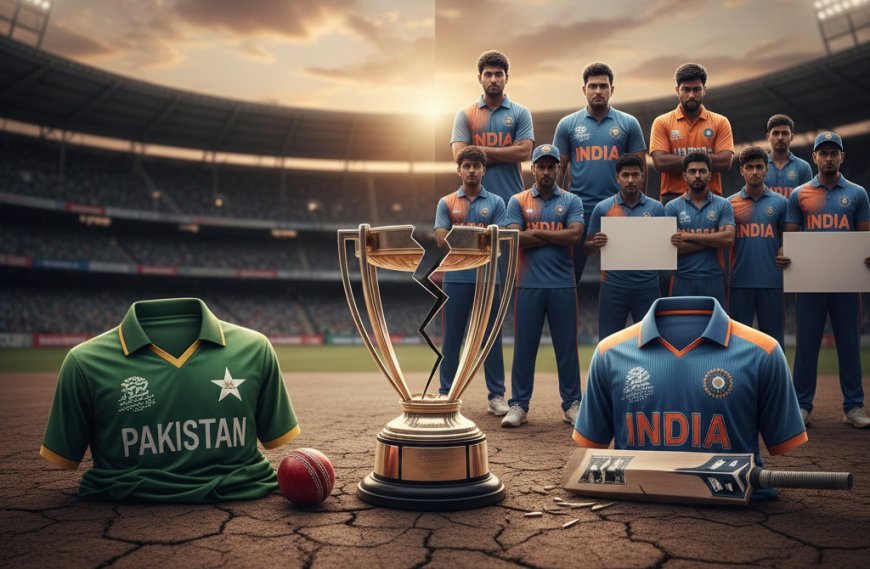
The cricket world has been rocked by an unprecedented decision. Pakistan's government has announced that their national team will boycott the high-stakes group match against India at the T20 World Cup, scheduled for February 15, 2026. This isn't just another controversy—it's a moment that could reshape the future of international cricket.
Recently, hosts Preetinder Grewal and Ranjodh Singh discussed this explosive development on The Talk Show(Click here to explore all episodes) one of the most popular shows on Radio Haanji 1674 AM, Australia's leading Punjabi radio station. Their conversation captured what millions of cricket fans worldwide are feeling: shock, disappointment, and a deep concern about where the sport is heading.
What Exactly Happened?
On February 1, 2026, the Pakistani government made a stunning announcement. While granting permission for their cricket team to participate in the T20 World Cup being co-hosted by India and Sri Lanka, they explicitly stated that the team would not take the field in the match scheduled for February 15 against India.
The announcement came through a post on the Government of Pakistan's official social media, but what shocked everyone was that it initially didn't specify any reason. Cricket fans, commentators, and administrators were left scratching their heads.
But the pieces of this puzzle started coming together quickly.
Why Is Pakistan Taking This Stand?
Prime Minister Shehbaz Sharif later confirmed what many had suspected. Pakistan's decision is a show of solidarity with Bangladesh, who were controversially kicked out of the tournament by the International Cricket Council (ICC).
Here's the backstory: Bangladesh had requested that their T20 World Cup matches be shifted from India to Sri Lanka due to security concerns. When the ICC refused and subsequently removed Bangladesh from the tournament entirely—replacing them with Scotland—it sent shockwaves through the cricket community.
Pakistan's Interior Minister and Pakistan Cricket Board (PCB) Chairman Mohsin Naqvi didn't mince words, accusing the ICC of practicing "double standards" in how they treat different member nations.
But there's another layer to this story. Naqvi blamed India for recent attacks in Balochistan where dozens of civilians and security personnel were killed in coordinated terrorist attacks. The emotional and political context runs deep—Pakistan and India have fought four wars since 1947, and tensions between these nuclear-armed neighbors remain perpetually high.
Prime Minister Sharif put it this way during his cabinet meeting: "We have taken a very clear stand on the T20 World Cup that we won't play the match against India because there should be no politics on the sports field". The irony of citing politics as a reason while making a political decision wasn't lost on observers.
The Benefits Pakistan Sees in This Decision
From Pakistan's perspective, this boycott serves several purposes:
Taking a Principled Stand: By standing with Bangladesh, Pakistan positions itself as defending fairness and equal treatment in international cricket. They're challenging what they see as India's disproportionate influence over the ICC and global cricket governance.
National Pride and Sovereignty: For many Pakistanis, this decision represents standing up to what they perceive as Indian dominance. On the streets of Karachi and Lahore, fans have expressed support, with one fan saying the move was necessary to challenge India's "arrogance".
Solidarity with Muslim Nations: The Bangladesh situation has created a sense of regional solidarity, with Pakistan viewing the ICC's treatment of Bangladesh as unfair given that India refused to travel to Pakistan for the Champions Trophy in 2025 under similar security concerns.
Setting a Precedent: Pakistan may be hoping this forces the ICC to reform its governance structure and decision-making processes to be more equitable for all member nations.
The Serious Drawbacks and Consequences
However, the costs of this decision are substantial and potentially devastating:
For the Pakistan Cricket Team
The Pakistani team will automatically forfeit the match and lose two crucial points in Group A. In a tournament where margins are razor-thin, this could be the difference between advancing to the Super Eight stage or an early exit. Remember, Pakistan were shocked by the United States in the 2024 T20 World Cup, leading to their group-stage elimination.
Pakistan captain Salman Ali Agha made it clear: "The India game is not in our control. It was the government's decision". The players find themselves caught in the middle of a political chess game, unable to compete in what would have been the biggest match of the tournament for them.
For the Pakistan Cricket Board (PCB)
The financial implications could be catastrophic. The India-Pakistan fixture has historically been the most lucrative and widely followed fixture at any cricket tournament. Broadcasting rights, sponsorship deals, and ICC revenue distribution could all take massive hits.
Cricket expert and commentator Harsha Bhogle warned that Pakistan would be among the countries "most affected" by any reduction in ICC revenue, as they rely heavily on these funds compared to cricket powerhouses like India, England, and Australia.
The ICC has warned the PCB about "significant and long-term implications for cricket in its own country". Potential sanctions could include:
- Suspension from ICC tournaments
- Financial penalties and damages
- Loss of hosting rights for future events
- Docking of World Test Championship points
- Other member nations refusing bilateral series
For Global Cricket
This sets a dangerous precedent. If there is no India-Pakistan game on February 15, it will be the first instance of the blockbuster match being forfeited at an ICC World Cup.
Cricket administrators worry this could trigger a domino effect. If teams can selectively participate in tournaments based on political considerations, the entire structure of international cricket could collapse. What's to stop other nations from following suit when political tensions arise?
The Fan Perspective: When Politics Kills the Game
And this brings us to perhaps the saddest part of this entire saga—what it means for fans like you and me who just want to watch good cricket.
The India-Pakistan cricket rivalry is one of sport's greatest spectacles. When these two teams face off, over a billion people tune in. The atmosphere is electric, the pressure is immense, and the cricket is usually phenomenal. It transcends the sport itself, becoming a cultural event that brings families together and stops entire nations in their tracks.
As discussed on The Talk Show podcast on Radio Haanji, this boycott robs millions of cricket lovers of one of the few opportunities they get each year to see these rivals compete. India and Pakistan haven't played bilateral cricket since 2012. Fans only get to see them clash at multi-nation tournaments like the World Cup, Asia Cup, or Champions Trophy.
The ICC acknowledged this, stating the decision "is not in the interest of the global game or the welfare of fans worldwide, including millions in Pakistan".
When politics interferes, everyone loses. The young Pakistani pacers don't get to test themselves against India's star batsmen. Indian players miss out on the unique pressure-cooker environment. And fans worldwide are denied high-quality entertainment they've been craving.
What Happens Next?
The situation remains fluid. Pakistan's squad has arrived in Sri Lanka and will begin their tournament campaign against the Netherlands on February 7. They'll play the United States on February 10 and Namibia on February 18.
But the February 15 date looms large. Will Pakistan actually go through with the boycott? Could last-minute negotiations produce a resolution?
There's also the possibility that Pakistan and India could meet again if both teams advance to the semifinals or final. Captain Agha said if that happens, they will "go back to" their government "and act on their advice". This leaves open the possibility of an even more dramatic scenario—what if Pakistan reaches the World Cup final against India? Would they boycott that too?
Former England captain Kevin Pietersen captured the absurdity perfectly, asking: "Would Pakistan refuse to play the World Cup final?"
The Bangladesh Factor
Bangladesh's removal from the tournament was the trigger for this crisis. When Bangladeshi fast bowler Mustafizur Rahman was expelled from the Indian Premier League due to political tensions, it created a cascading effect. Bangladesh refused to play in India, citing security concerns. The ICC removed them entirely rather than accommodating their request for neutral venues—the same request India makes regularly and gets approved.
Political commentator Shashi Tharoor called the entire situation "pretty disgraceful" noting that "sport has been politicised in this way on both sides".
Voices from the Cricket Community
The reaction has been sharply divided:
Supporting Pakistan's Decision:
- Former Pakistan wicketkeeper Kamran Akmal said "Enough is enough"
- Many Pakistani fans see this as a necessary stand against perceived Indian dominance
- Former captain Shahid Afridi urged the ICC to prove through actions that it treats all members fairly
Criticizing the Decision:
- Indian cricket legend Sunil Gavaskar suggested Pakistan might reverse their stance once reactions pour in
- Former Indian spinner Harbhajan Singh argued the ICC has every right to take legal action
- Cricket experts warn this could severely damage Pakistan's cricket ecosystem
Will There Be Punjabi Commentary on This Historic Moment?
For those of us in the Punjabi-speaking diaspora community, stations like Radio Haanji play a crucial role in helping us process and understand these complex situations. The beauty of Punjabi radio in Australia—whether you're in Melbourne or Sydney—is that it provides context, emotional resonance, and community connection that mainstream English media often misses.
The Talk Show, featuring the insightful analysis of Preetinder Grewal and Ranjodh Singh, represents the kind of thoughtful discussion this situation demands. When you listen to a Punjabi podcast or tune into Punjabi FM online, you're not just getting news—you're getting perspectives shaped by cultural understanding and community values.
For cricket fans across Australia looking for the best Punjabi radio coverage, Radio Haanji has established itself as the go-to source. Whether you prefer listening through their FM station, streaming online, or catching up on podcasts, they've built a reputation for quality analysis and engaging discussion.
My Take: Where Cricket Needs to Go From Here
Having followed cricket for years and listened to countless discussions on platforms like Radio Haanji's latest Punjabi podcast series, here's what I think needs to happen:
The ICC Must Reform: The governing body can't continue operating with perceived biases toward certain member nations. If India can refuse to travel to Pakistan and get accommodation through hybrid models, that same courtesy must extend to all member nations equally.
Separate Sport from Politics: I know this sounds idealistic, but cricket needs stronger protections against government interference. The ICC should establish clear protocols that prevent selective participation based on political considerations.
Prioritize the Fans: At the end of the day, cricket is entertainment. When administrators and governments make decisions, they should consider the millions of fans who save money, take time off work, and plan their lives around these matches.
Create Better Communication Channels: The fact that this crisis developed so quickly suggests the ICC lacks effective diplomatic mechanisms to resolve disputes before they escalate.
Financial Fairness: Revenue sharing needs to be restructured so that smaller cricket nations aren't entirely dependent on ICC distributions, giving them more independence and leverage in decision-making.
The Bottom Line
Pakistan's boycott of the India match at the T20 World Cup represents a watershed moment for international cricket. It's a complex situation with no easy answers—rooted in legitimate grievances about fairness and equal treatment, but potentially catastrophic in its consequences for Pakistan cricket, the tournament, and the sport globally.
For cricket fans—whether you're listening to Punjabi radio stations in Australia, catching the latest Punjabi podcast in Melbourne or Sydney, or streaming Punjabi FM online from anywhere in the world—this is heartbreaking. We just want to watch our teams compete at the highest level.
The conversation that Preetinder Grewal and Ranjodh Singh sparked on The Talk Show on Radio Haanji 1674 AM reflects what so many of us are feeling. Cricket has always been more than just a game in South Asian culture. It's family gatherings, it's national pride, it's shared moments of joy and heartbreak.
When politics prevents these matches from happening, it doesn't just hurt the players or the administrators—it hurts the fabric of our cricket-loving communities worldwide.
As this situation develops, one thing is clear: the decisions made in the coming days will shape international cricket for years to come. Will the ICC find a way to resolve this crisis? Will Pakistan reverse course? Or are we witnessing the beginning of a new, fragmented era in world cricket?
Only time will tell. But for now, millions of fans are left wondering: when did the game we love become so complicated?
Want to hear more in-depth analysis and community perspectives on this developing story? Tune in to The Talk Show with hosts Preetinder Grewal and Ranjodh Singh on Radio Haanji 1674 AM, Australia's number one Punjabi radio station. Whether you prefer listening live, streaming online, or catching their latest podcasts, Radio Haanji delivers the thoughtful cricket coverage and cultural commentary that keeps Australian Punjabi communities connected to the sport they love.
Listen to Radio Haanji live streaming, download the Punjabi radio app(Android & iOS) , or visit the website to explore the best Punjabi podcasts covering cricket, current events, and community stories. From Melbourne to Sydney and across Australia, Radio Haanji remains your trusted source for Punjabi talk shows and authentic South Asian perspectives.
About Radio Haanji: Radio Haanji 1674 AM is Australia's premier Punjabi radio station, broadcasting quality content including news, entertainment, and sports commentary. With popular shows like The Talk Show, Radio Haanji has established itself as the leading Indian radio station in Australia for Punjabi-speaking communities. Whether you're looking for the latest Punjabi comedy podcasts, insightful talk shows, or comprehensive cricket coverage, Radio Haanji delivers authentic voices and perspectives that resonate with South Asian audiences across Melbourne, Sydney, and throughout Australia.
Related Podcast
T20 ਕ੍ਰਿਕਟ ਵਰਲਡ ਕੱਪ: ਭਾਰਤ ਪਾਕਿਸਤਾਨ ਮੈਚ ਵਿਚਲੀ ਰਾਜਨੀਤੀ ਬਨਾਮ ਵਪਾਰਕ ਤਾਣਾ-ਬਾਣਾ
Date: 06 Feb 2026 Duration: 10 mins
Haanji Melbourne is Radio Haanji's Prime Time Talkback Show which broadcasts live from our Melbourne studio from Monday to Friday at 10:00 AM. This show is hosted by prime host Preetinder Grewal and his co-hosts are Balkirat Singh. This show has different themes on different days. Show hosts bring new topics to talk about and callers share their views and life experiences about the same content or topics.
What's Your Reaction?