








































Diamond Sports Club Melbourne - Basketball & Volleyball - Sikh Games 2026 - Preetinder Grewal
Host:-
 Preetinder Grewal
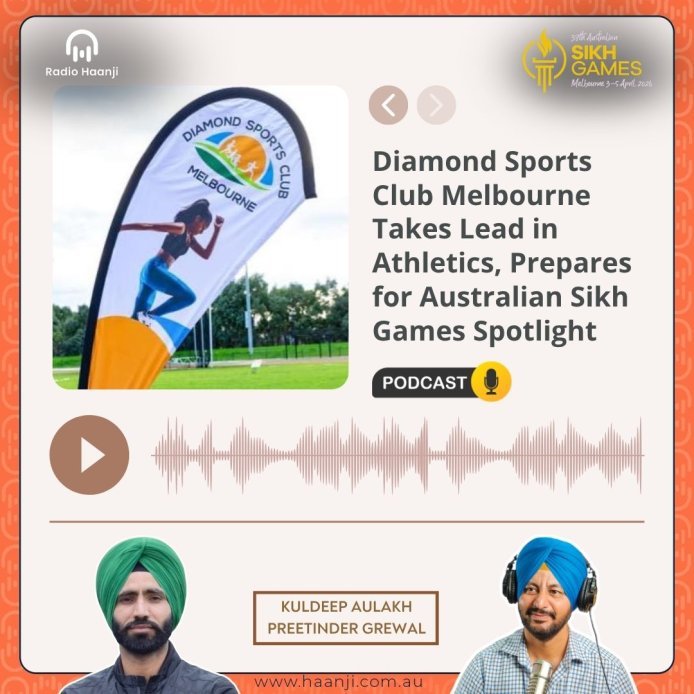
Diamond Sports Club Melbourne brings basketball and volleyball to the 38th Australian Sikh Games 2026. Kuldeep Singh Aulakh on youth sport, Under-15 teams, and community.
Most of the clubs preparing for the 38th Australian Sikh Games in Melbourne have been talking about track and field, bhangra, or gatka. Diamond Sports Club Melbourne is talking about rebounds and blocks.
In a recent conversation with Radio Haanji host Preetinder Singh Grewal, club representative Kuldeep Singh Aulakh laid out what Diamond Sports Club has been building since 2017 — and why basketball and volleyball deserve the same attention at the Sikh Games as any other discipline.
Who Is Diamond Sports Club Melbourne?
The club started around 2017–2018 with one clear idea: give Melbourne's Punjabi community a structured place to play sport. Not just occasionally. Properly, with regular training, age categories, and a pathway to compete.
Kuldeep Singh Aulakh has been part of that journey from close to the beginning. He talks about the club the way people talk about something they actually built, not something they inherited. The early days were about convincing families that weekend sport was worth the commitment. That conversation has gotten a lot easier.
Today, Diamond Sports Club has around 40 to 50 active players across its basketball and volleyball programmes. What stands out is the age spread — there are competitive Under-15 and Under-17 divisions, which means the club isn't just running adult social sport. It's building something with a longer timeline in mind.
Training runs every Saturday and Sunday at local courts across Melbourne's south-eastern suburbs. The consistency matters. Aulakh made a point of saying that discipline — showing up, putting in the work — is what separates clubs that last from clubs that quietly disappear after a few years.
What the Club Is Actually Preparing For
The 38th Australian Sikh Games are coming to Melbourne in April 2026, and Diamond Sports Club is going in with full teams.
Their basketball and volleyball squads have been training specifically for the competition format. Aulakh said the preparation has been intense — the kind of training schedule that makes weekend commitments feel like a serious obligation rather than a casual option.
What's less obvious but just as important: Aulakh and several other Diamond Sports Club members will also serve as event organisers for athletics at the Games. That dual role — competitor and organiser — reflects something genuinely interesting about how community-run events like the Sikh Games actually function. The people who care most are usually the ones doing both.
Other clubs around Australia are coming to Melbourne with similar ambitions. Punjab Lion Club Adelaide has been building toward this from South Australia, while Sikh United Melbourne has focused on creating structured youth development pathways for the next generation of Sikh athletes. Diamond Sports Club fits into that picture — another piece of a community taking sport seriously.
The Youth Development Argument
The part of the conversation worth sitting with is what Aulakh said about getting kids involved early. His recommendation: start between 8 and 10 years old.
That sounds early to some parents. But his reasoning holds up. By the time a kid is 14 or 15, their habits around physical activity and team commitment are largely set. A child who has been playing basketball since they were 9 — learning how to lose, how to train, how to take instruction — arrives at Under-15 competitions with more than just skills. They arrive with an understanding of how sport actually works.
The Punjabi community in Melbourne has grown considerably over the past decade. With that growth comes all the pressures that come with it: kids navigating two cultures, parents balancing work and community, questions about where sport fits in a household that's already stretched. Aulakh's answer is that sport is not a distraction from those pressures. It's one of the better tools for managing them.
The Under-15 and Under-17 divisions at the Sikh Games exist precisely because this argument has been made — and accepted — at the organisational level. Younger athletes competing against their peers, in a Sikh cultural context, with parents watching from the stands. That combination doesn't happen by accident.
For anyone wanting the full picture of what the Australian Sikh Games involves across all age groups and disciplines, the complete guide to the Australian Sikh Games 2026 covers everything from registration to the event schedule.
The 38th Australian Sikh Games: What Makes Melbourne Different
The Australian Sikh Games have been running for 38 years. That's not a number that gets thrown around carelessly — it represents four decades of families, clubs, and communities deciding that Sikh sport deserves its own stage.
Melbourne as the host city for 2026 carries some weight. It's one of the largest Punjabi-Australian communities in the country, with clubs spread across the eastern suburbs, Dandenong, and further south. The local draw should be significant.
The Games cover a wide range of disciplines — not just ball sports. The bhangra and giddha competition is a major drawcard for families who want to see cultural performance alongside athletics. And the coaching infrastructure behind the event has been strengthened this year too — the Sikh Games 2026 coaches conference brought together coaches from multiple sports to align on standards and preparation.
Diamond Sports Club's contribution — competitive basketball and volleyball, plus organisational support for athletics — is one part of a much larger picture.
Why Basketball and Volleyball Deserve More Attention in Sikh Sport
Be honest: when most people picture the Sikh Games, they picture athletics, wrestling, or gatka. Basketball and volleyball sit slightly outside that mental image.
Aulakh didn't make a big argument about this. He didn't need to. The club has 40 to 50 players training every weekend. The Under-15 and Under-17 programmes exist because demand exists. If basketball and volleyball were a novelty, the numbers wouldn't hold up year after year.
What the Sikh Games format does well is give those sports a legitimate platform. A young player from Melbourne who might never have represented anything can put on a club jersey, travel to a proper venue, and compete against teams from Sydney, Adelaide, Brisbane, and beyond. That experience is different from a local league. It connects them to something larger.
The broader context matters here too. According to Basketball Australia, participation in community basketball has grown steadily among multicultural communities across the country, with South Asian participation specifically increasing in Victoria. Clubs like Diamond Sports Club are part of that shift, and the Sikh Games provide the competitive infrastructure that club-level training points toward.
How to Get Involved
If you're in Melbourne and interested in Diamond Sports Club, the starting point is straightforward: show up to training. The club operates on Saturdays and Sundays at courts in the south-eastern suburbs. Whether you're a player, a parent of a young player, or someone who wants to volunteer, Aulakh's message during the Radio Haanji interview was consistent — the club needs people who are willing to show up.
For the Sikh Games specifically, the opportunity to volunteer extends beyond playing. Organisers need people for logistics, timekeeping, setup, and the dozens of other roles that make a multi-sport event function. The coaches conference earlier this year made clear that the Games run on community effort, not just institutional support.
Majha Youth Club is another example of this kind of grassroots mobilisation — their approach to the Australian Sikh Games 2026 shows what clubs across different regions are building simultaneously. The Sikh Games work because multiple clubs are making the same bet on community sport at the same time.
You can also listen to the full Diamond Sports Club interview on Radio Haanji 1674 AM — the conversation with Kuldeep Singh Aulakh covers the club's history, training philosophy, and preparations for the Games in detail.
Frequently Asked Questions
What sports does Diamond Sports Club Melbourne compete in at the Sikh Games?
Diamond Sports Club Melbourne fields teams in basketball and volleyball at the 38th Australian Sikh Games 2026 in Melbourne. The club also has members serving as event organisers for the athletics programme.
When did Diamond Sports Club Melbourne start?
The club was established around 2017–2018 with the goal of providing structured sport for Melbourne's Punjabi community, focusing on basketball and volleyball across multiple age groups.
Can children join Diamond Sports Club Melbourne?
Yes. The club actively recruits young players, with competitive Under-15 and Under-17 divisions. Kuldeep Singh Aulakh recommends parents get children involved from around 8 to 10 years old.
When and where does Diamond Sports Club Melbourne train?
The club trains on Saturdays and Sundays at local courts in Melbourne's south-eastern suburbs. Contact the club directly for current venue details.
What are the Australian Sikh Games 2026?
The Australian Sikh Games are an annual multi-sport competition for the Sikh and Punjabi community in Australia, now in their 38th year. The 2026 event is being held in Melbourne in April. Events include track and field, ball sports, bhangra, giddha, gatka, and more.
How many players does Diamond Sports Club Melbourne have?
The club currently has approximately 40 to 50 active players across its basketball and volleyball programmes.
How can I volunteer at the Sikh Games 2026 Melbourne?
The Games rely heavily on community volunteers for logistics, timekeeping, and event management across all disciplines. Reach out through clubs participating in the Games or through the official Sikh Games organisers for volunteer opportunities.
Listen to the full Radio Haanji interview with Kuldeep Singh Aulakh from Diamond Sports Club Melbourne on Radio Haanji 1674 AM or on the Radio Haanji podcast. For more Sikh Games 2026 coverage, explore our complete guide to the Australian Sikh Games 2026 and the Sikh Games 2026 coaches conference recap.
What's Your Reaction?







Related Posts